

AI TO DRIVE MUMBAI TO BE POWER ECONOMY
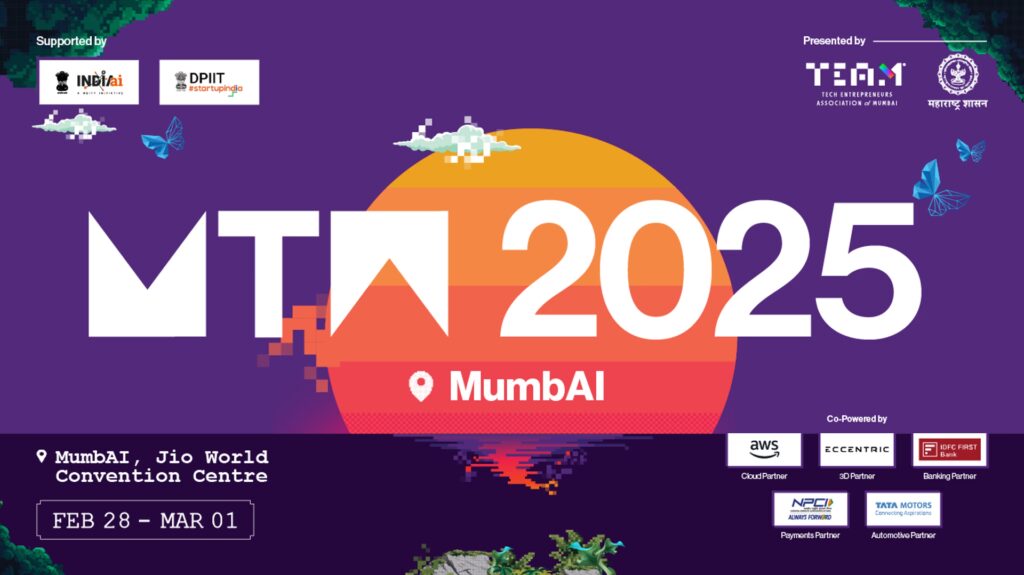
Mumbai Tech Week 2025, held from February 24 to March 1, spotlighted AI’s transformative role in governance and business, reinforcing Mumbai’s rise as an AI hub.
Key leaders like Piyush Goyal, Ashwini Vaishnaw, and Devendra Fadnavis joined industry pioneers including N. Chandrasekaran, Uday Shankar, and Akash Ambani in shaping critical discussions on policy, innovation, and digital transformation.
The event united government, tech, and business to drive India’s AI-forward future.
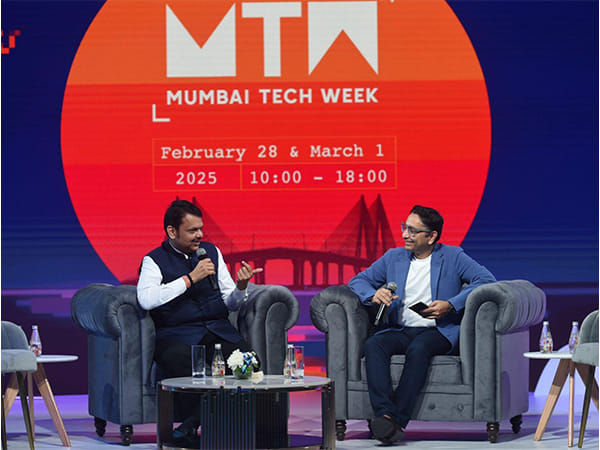
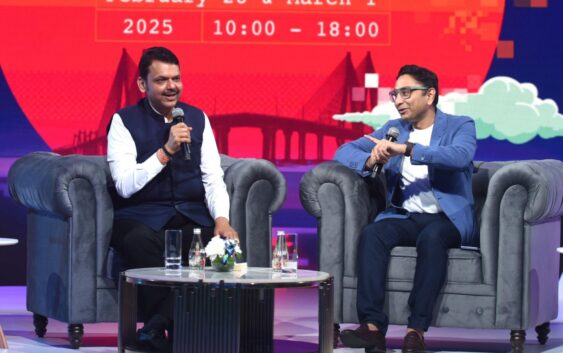
At Mumbai Tech Week 2025, Maharashtra Chief Minister Devendra Fadnavis unveiled a strategic roadmap to position the state as Asia’s AI hub, targeting $140 billion in economic value and over 100 unicorns by 2035. Key initiatives include the launch of the M-Hub startup incubator, the “Aaple Sarkar” AI governance partnership with Meta, and a major push for cybersecurity, aimed at accelerating Maharashtra toward a $1 trillion economy.
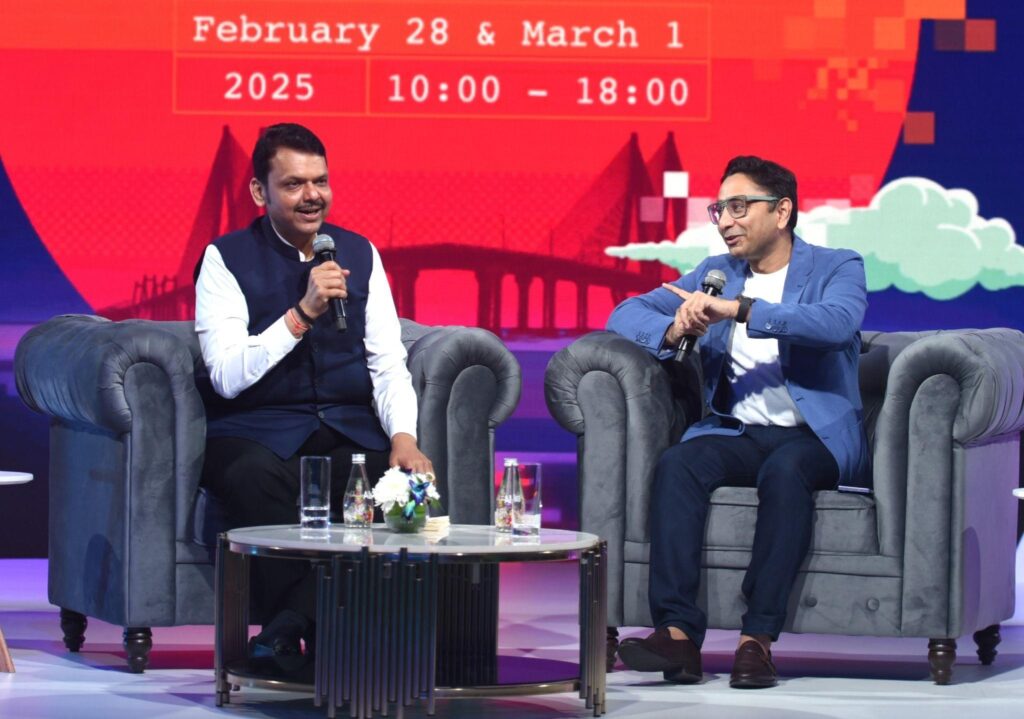
Devendra Fadnavis, at Mumbai Tech Week 2025, positioned Mumbai as India’s AI capital, tied AI and tech to economic growth and Mumbai’s GDP contribution, and stressed AI‑driven governance for faster, citizen‑centric public services. He highlighted smart‑city and digital‑infrastructure projects to support a global‑ready tech ecosystem, mentioned the “1945” cyber‑complaint helpline for rapid response, and cast Mumbai Tech Week 2025 as Asia’s largest AI‑focused event aiming to make Mumbai the “AI Use‑Case Capital” of Asia.
“Mumbai has long been the bedrock of entrepreneurial activity, and the government, in partnership with TEAM,is committed to supporting new-age entrepreneurs building the city,” he said.
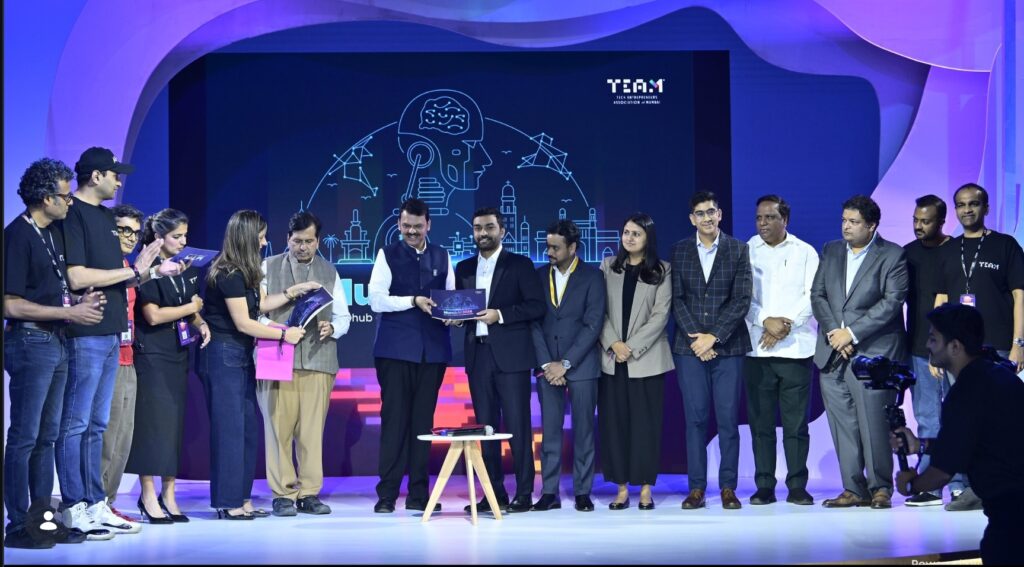
Hon’ble Chief Minister Devendra Fadnavis met with TEAM, reaffirming Maharashtra’s commitment to making Mumbai *‘The AI Sandbox of Asia’* through Mumbai Tech Week 2025.
He celebrated TEAM’s impact—65+ founders, $60B+ valuation, 10,000+ members—and highlighted partnerships in talent, infrastructure, and women-led tech growth.
A bold step toward Viksit Bharat, powered by innovation, inclusion, and Mumbai’s rising tech spirit.
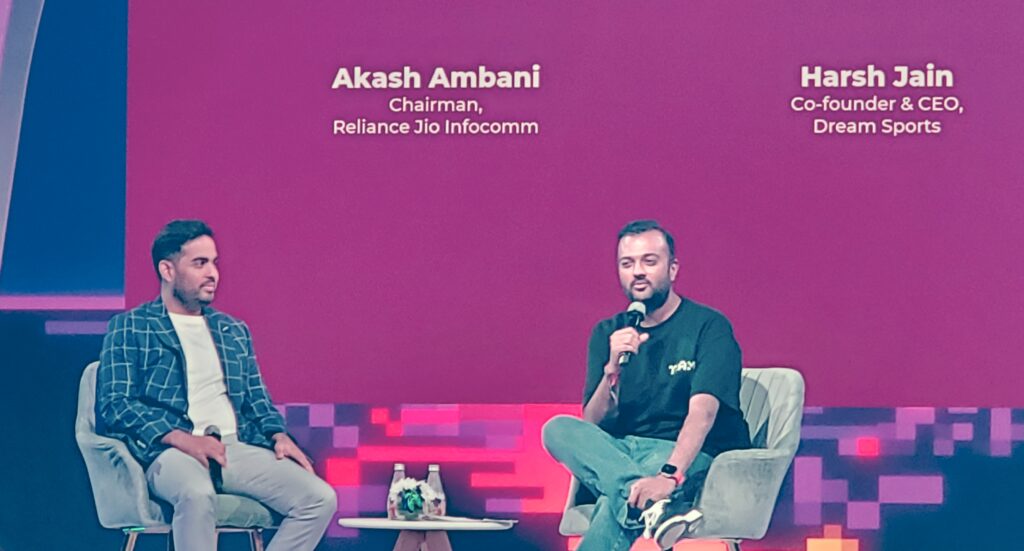
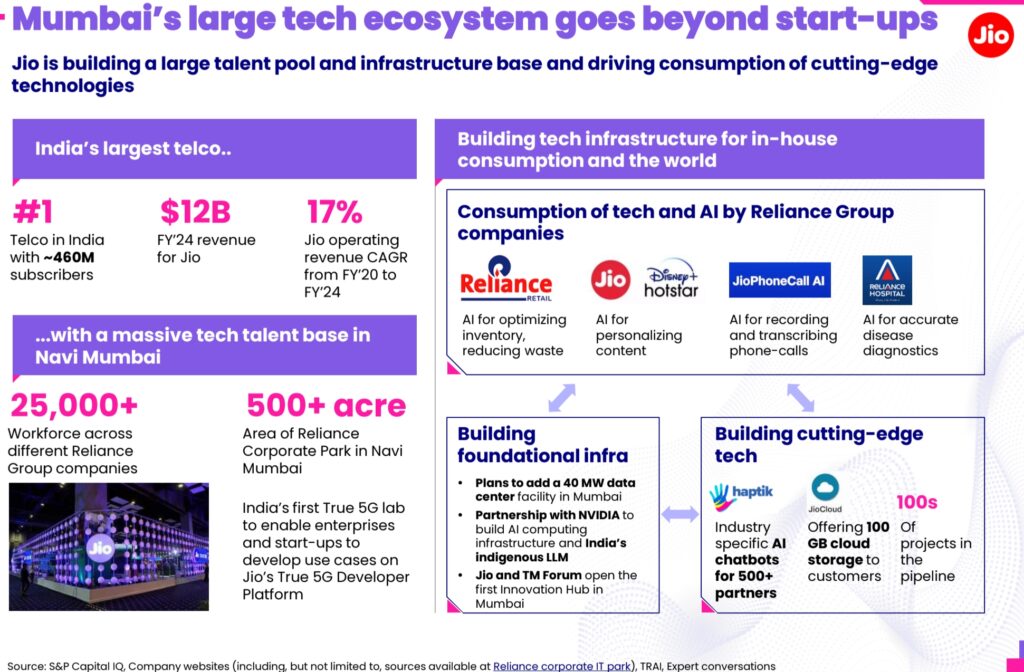
Akash Ambani, Chairman of Reliance Jio, delivered key insights on AI’s transformative potential during his fireside chat at Mumbai Tech Week 2025, held February 28 to March 1. He positioned AI as central to India’s economic future and Jio’s strategy.
Economic Impact
AI will propel India to double-digit GDP growth by powering infrastructure, R&D, and talent attraction, in line with national visions. Jio is building a gigawatt-scale data center in Jamnagar and employs over 1,000 AI specialists to support this.
Jobs Evolution
AI transforms jobs rather than eliminating them, akin to how the internet spawned fintech, e-commerce, and creator economies on YouTube and Instagram. New opportunities will emerge, with Jio using AI for 95% proactive network coverage across India’s population.

Adoption Urgency
Companies ignoring AI face obsolescence; adoption is essential across a five-layer stack: connectivity, compute, devices, content, and intelligence.This framework targets sectors like education, healthcare, and agriculture.
Jio’s Vision
Discussions covered 5G-AI integration, digital public infrastructure, and scaling services for 1.4 billion users. He unveiled initiatives like Jio Brain for enhanced user experiences.
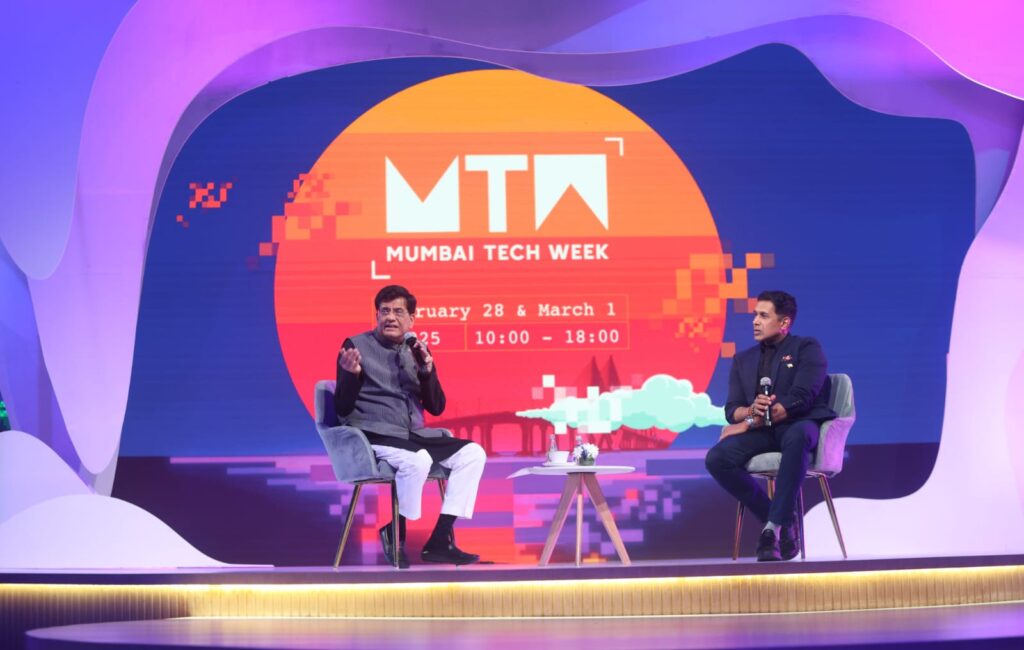
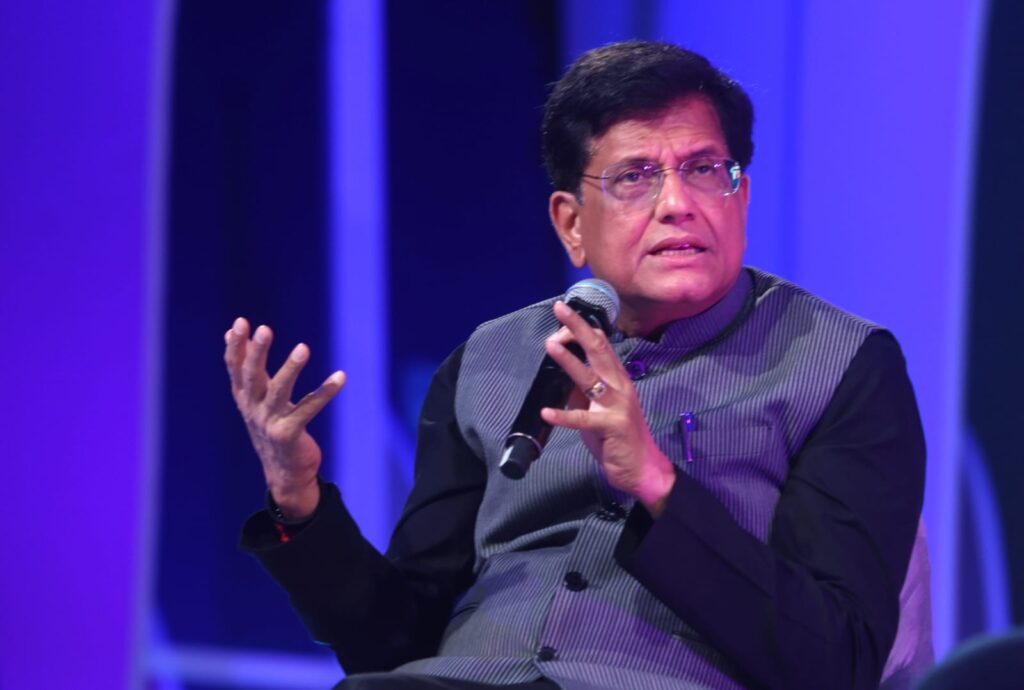
At Mumbai Tech Week 2025 (held February 28 – March 1, 2025), Union Minister for Commerce and Industry Piyush Goyal emphasized India’s trajectory as a global AI powerhouse, highlighting the nation’s commitment to responsible AI development, ethical usage, and sovereign AI capabilities.
Here are the detailed key takeaways from his address and interactions:
1. India as a Global Leader in Responsible AI
Ethical AI Development: Goyal underscored India’s commitment to building AI that is inclusive, ethical, and sustainable, ensuring it serves humanity rather than just driving efficiency.
Global AI Partner: The Minister emphasized that the “world’s AI journey is incomplete without India,” highlighting India’s potential to provide AI solutions globally.
Focus on the Global South: He advocated for democratizing technology to ensure AI benefits reach the Global South, aiding in the achievement of Sustainable Development Goals.
2. Mumbai as a Potential Tech Hub
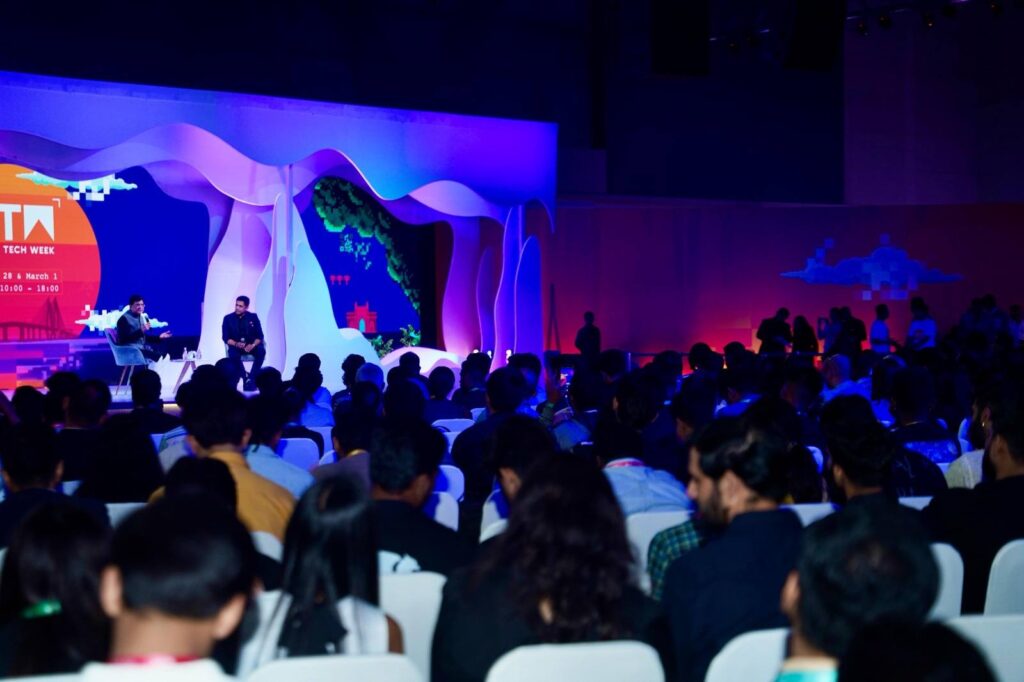
Infrastructure & Capital: Goyal expressed confidence that Mumbai is poised to become India’s next major tech hub, supported by significant investments in infrastructure, capital, and talent availability.
“MumbAI” Integration: The event showcased Mumbai as a city where AI intersects with industry, finance, media, and arts, framing it as the ‘AI Use Case Capital of Asia’.
3. Government as an Enabler of Innovation
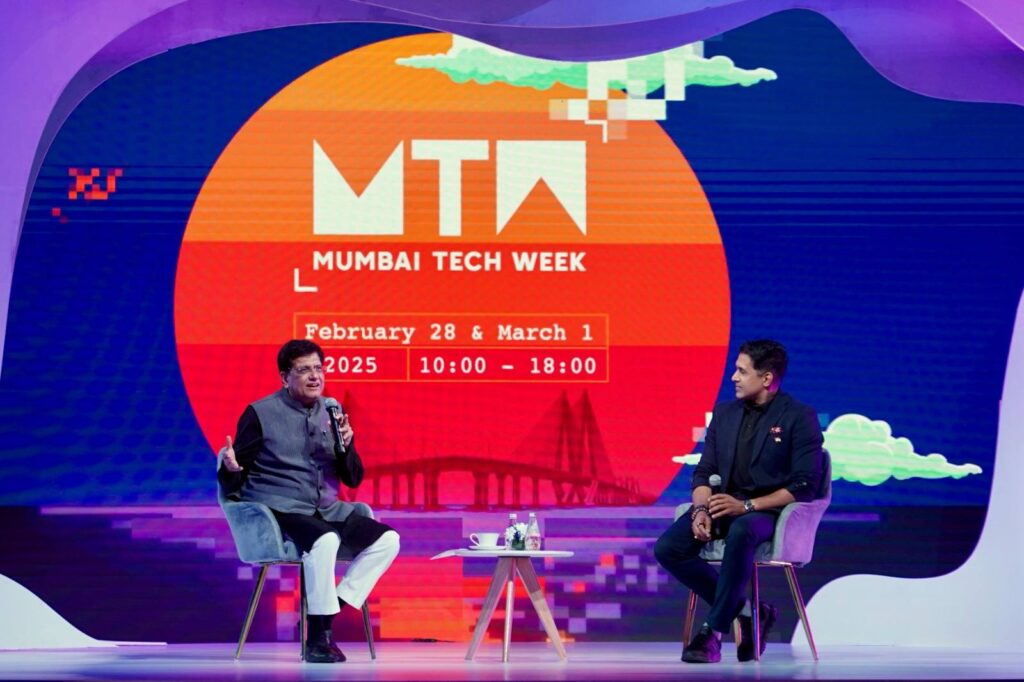
Startup & Entrepreneur Support: He lauded the Modi government’s sound policies for acting as an enabler, encouraging entrepreneurs to take risks and innovate rather than relying on traditional business models.
Digital Public Infrastructure (DPI): Goyal pointed to India’s success in building robust DPI for 1.4 billion people, stressing that this foundational work makes India a leader in AI adoption.
4. Need for Indigenous Technology (Sovereign AI)
Large Language Models (LLMs): He highlighted that, given India’s diversity, the nation is actively building its own LLMs and AI models rather than relying solely on foreign technology.”
India AI Stack”: Goyal supported the development of a comprehensive “India AI stack” that includes foundational computing infrastructure, research, and governance.
5. Economic & Tech Growth
40% Growth Projection: The AI industry in India is projected to grow by over 40% by 2025, with massive integration across sectors.
Skill Concentration: He noted India’s high AI skill penetration and focus on creating a skilled workforce to address future technological challenges.
During his address, Goyal encouraged entrepreneurs to leverage AI for productive and transformative purposes rather than just consumer convenience.
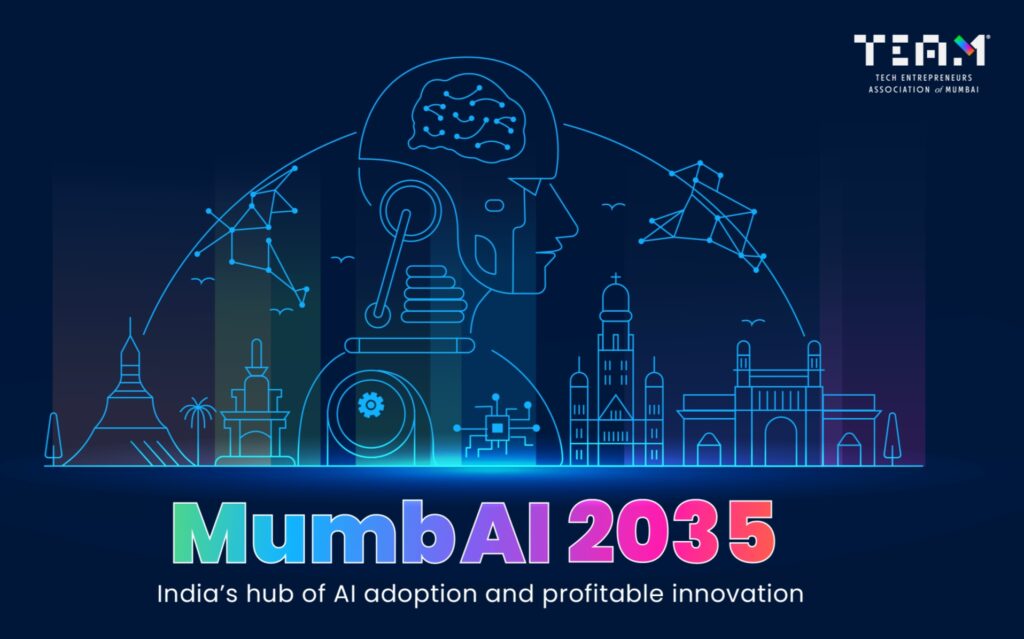
The MumbAI 2035 report, launched by the Tech Entrepreneurs Association of Mumbai (TEAM) with McKinsey at Mumbai Tech Week 2025, envisions Mumbai as India’s AI capital by 2035 through robust startup growth and ecosystem collaboration. It highlights AI-driven economic impacts and actionable recommendations for infrastructure and talent.
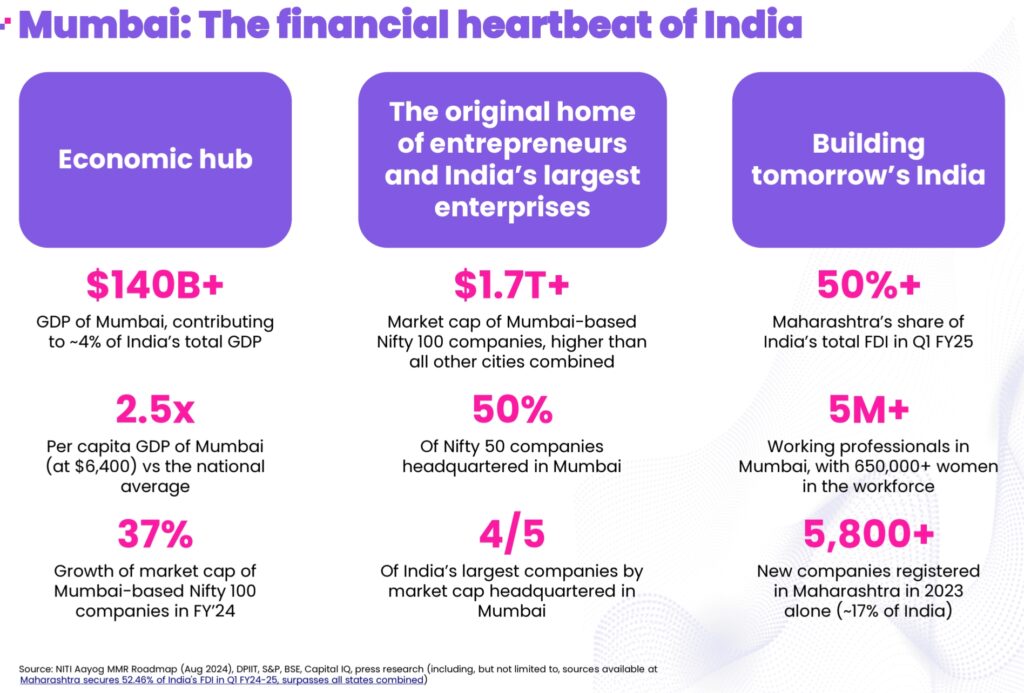
Growth Projections
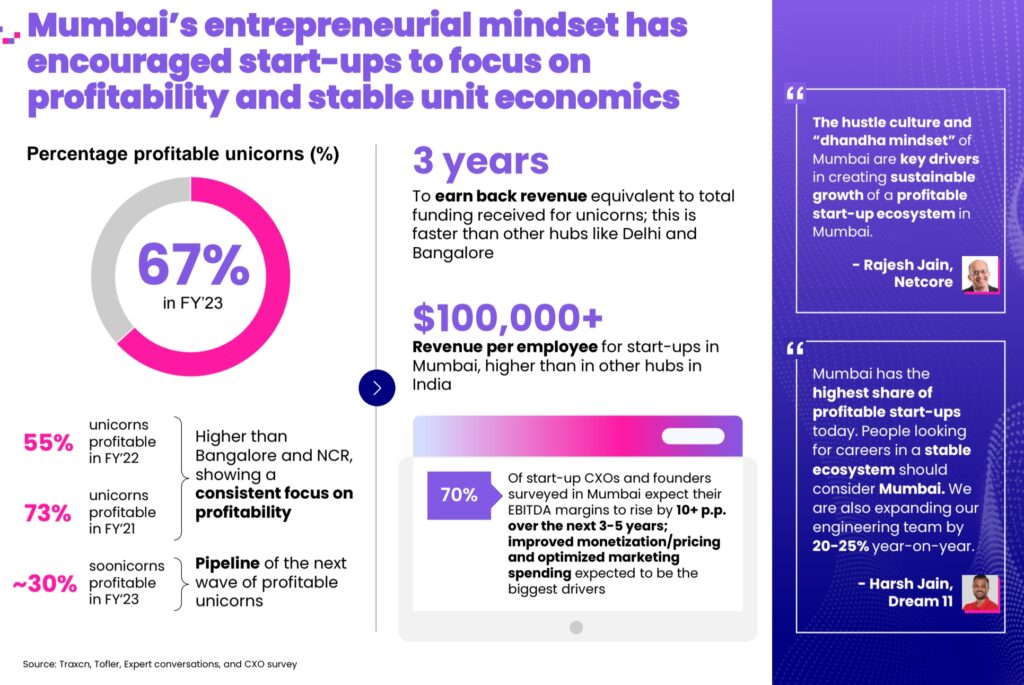
Mumbai’s startup ecosystem is projected to exceed 100 unicorns by 2035, up from 21 current ones where 67% are profitable, generating 10,000 direct engineering jobs today. These AI-focused startups could contribute 15% to the city’s GDP growth and attract over $450 billion in FDI over the next decade. The city already contributes 4% to India’s GDP, hosting 39 Nifty 100 companies including four of the top five by market cap.
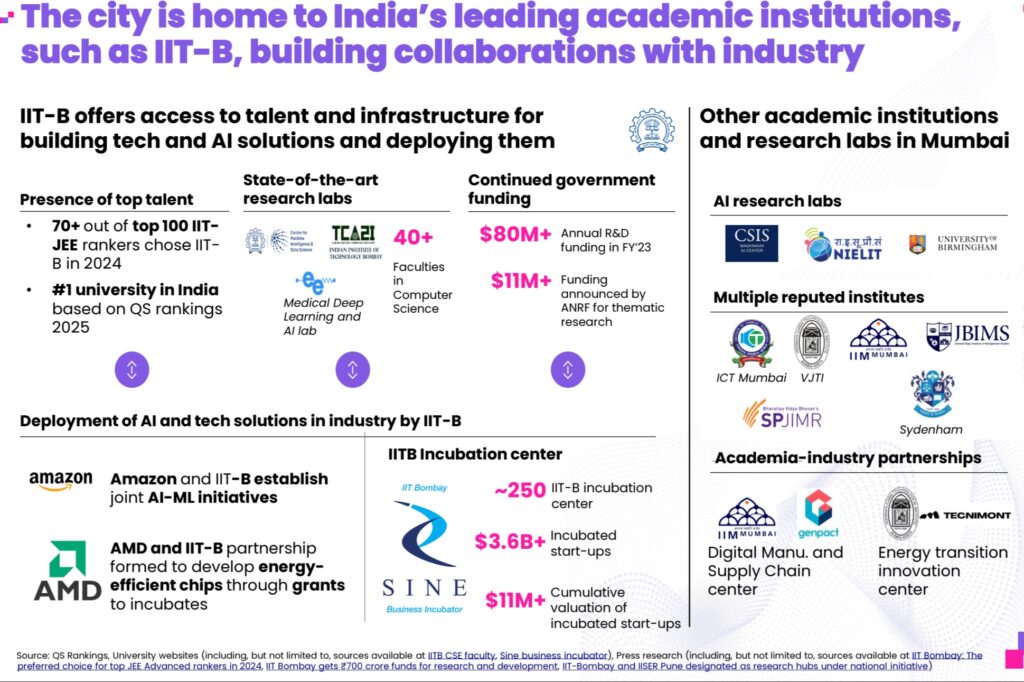
AI Adoption Trends
Currently, 67% of surveyed Mumbai startup founders have integrated AI into software development and testing, backed by over 50% of India’s data center capacity. Nifty 50 enterprises and public-sector innovations are driving adoption, with companies expected to invest over $6 billion in AI by 2035. Mumbai leads in enterprise tech, media, entertainment, and EdTech sectors.
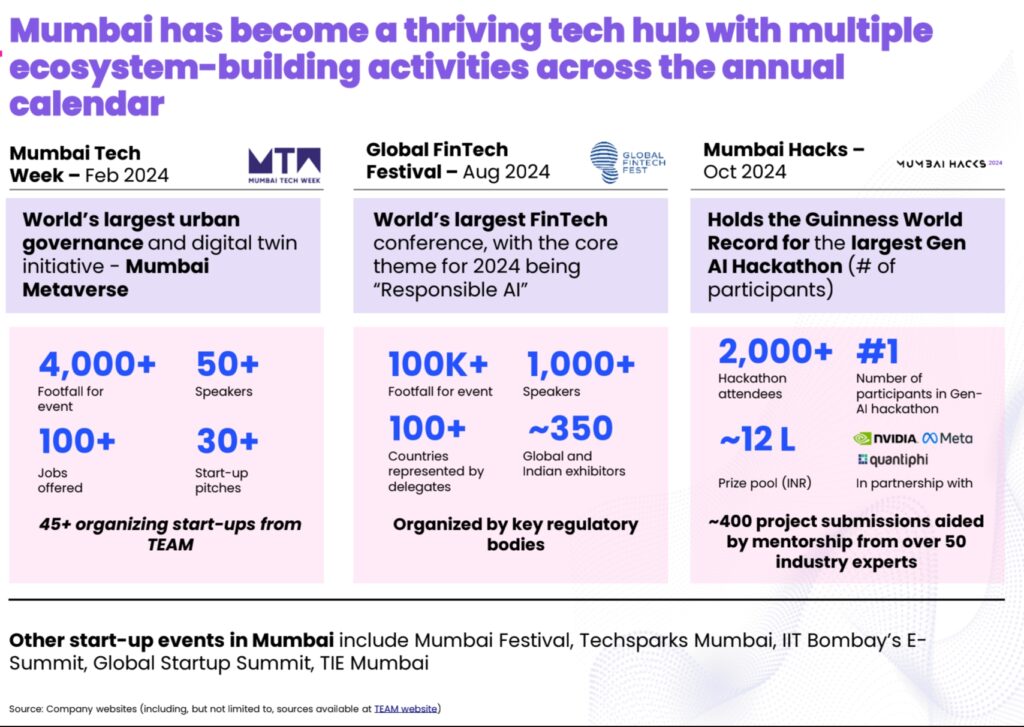
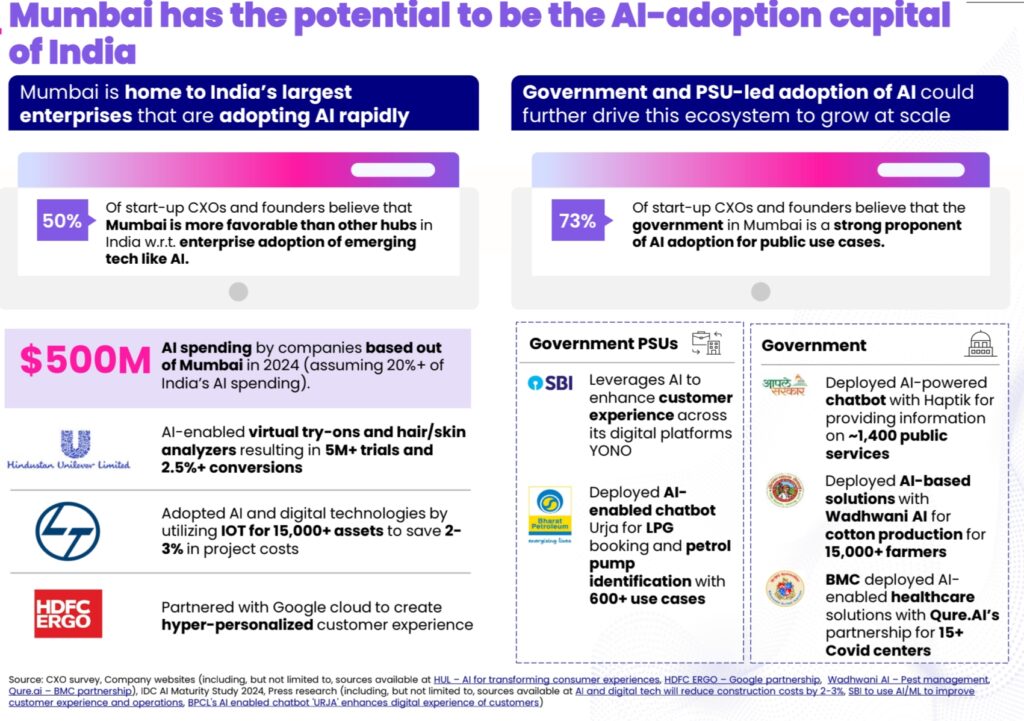
Key Recommendations
Establish AI-focused B.Tech and M.Tech programs to produce 15,000 AI-ready professionals annually, alongside upskilling 100,000 via TEAM commitments. Identify 10 public-sector challenges for startups, boost AI spending in 10+ Nifty 50 firms, and invest in tech parks, affordable housing in Thane/Navi Mumbai, and infrastructure like coastal roads. Foster public-private ties modeling New York City’s tech rise to attract global talent.
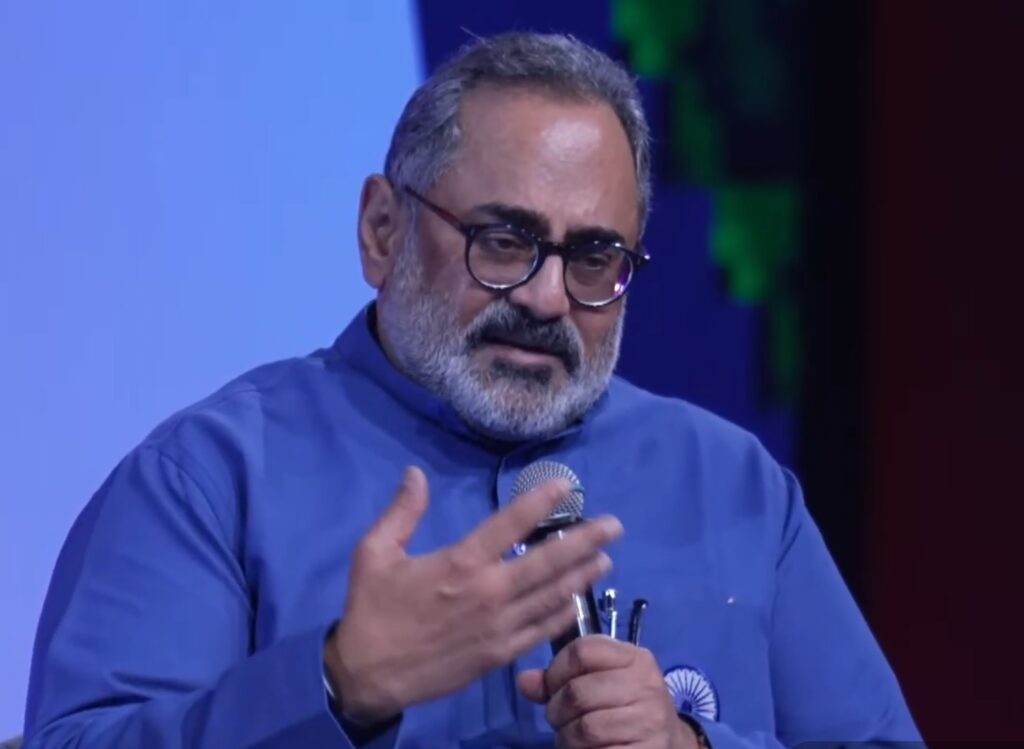
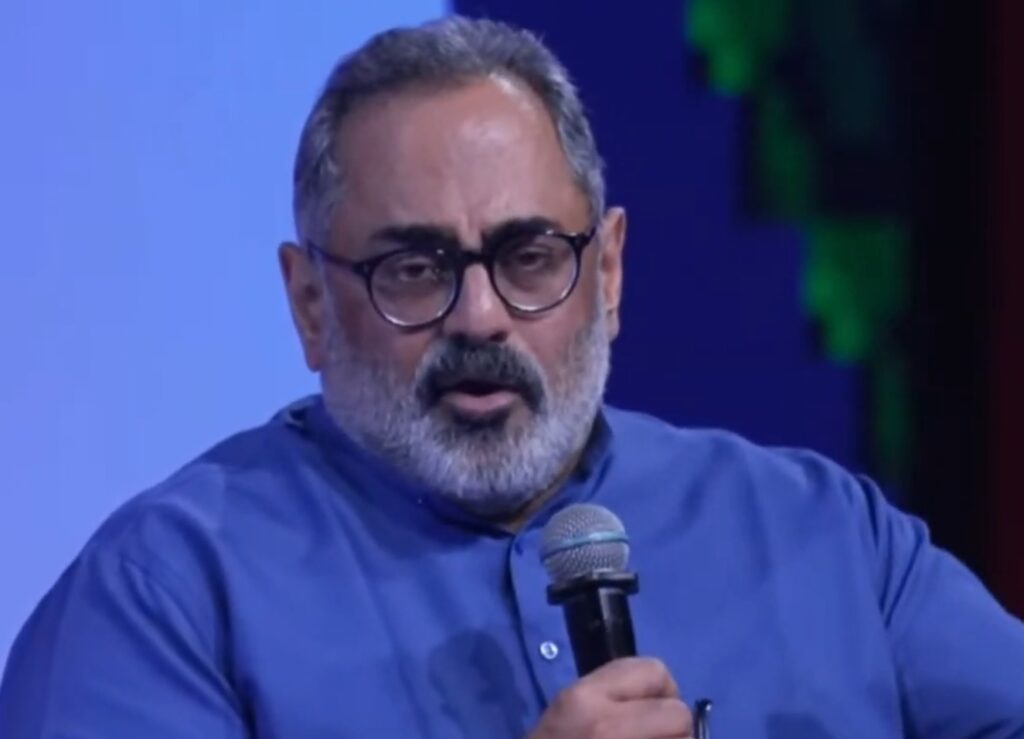
At Mumbai Tech Week 2025 (MTW’25), held in early 2025, former Minister of State for Electronics and IT Rajeev Chandrasekhar highlighted India’s rapid shift towards a $1 trillion digital economy, emphasizing AI in governance (GovAI) as the biggest use case and the importance of sovereign AI development. He focused on building a “Digital-First Nation” through AI, semiconductors, and a robust startup ecosystem.
Key Highlights from Rajeev Chandrasekhar at MTW ’25:
India’s AI Future: He highlighted
India’s shift toward a “digital-first” economy and the critical role of AI and deep tech in bolstering the nation’s global standing.
AI in Governance (GovAI): He positioned AI as a tool for governance to enhance public service delivery, describing it as India’s biggest AI use case.
Deep Tech & Semiconductors: He addressed the growing importance of hardware infrastructure alongside software, noting India’s goal to be a leader in deep tech.
Sovereign AI: Discussions emphasized creating India’s own AI capabilities to avoid dependency on foreign AI engines, ensuring AI understands Indian context.
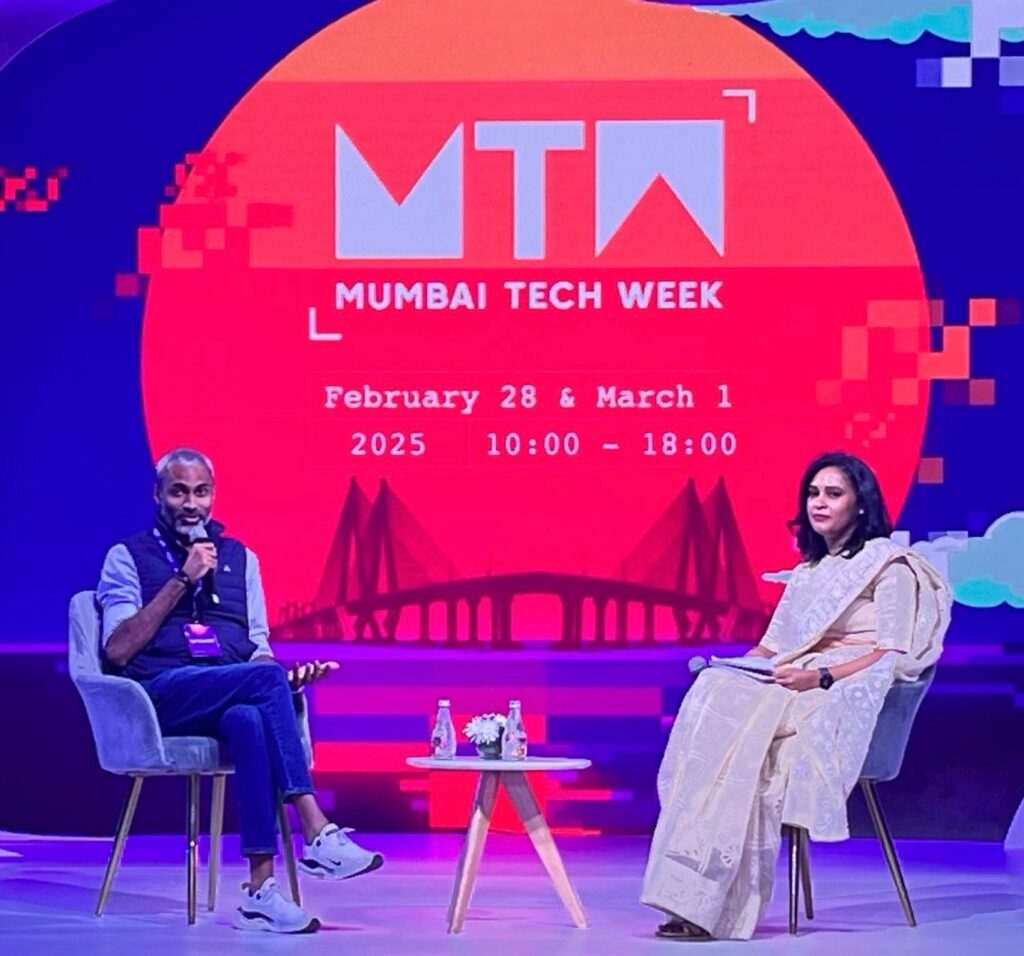
At Mumbai Tech Week (MTW) 2025, Sandhya Devanathan, Vice President and Head of Meta India, highlighted India’s unique position as the “AI Use Case Capital” and detailed Meta’s strategy to integrate AI, messaging, and the creator economy.
AI: The Core of India’s “Techade”Devanathan emphasized that India is not just adopting AI but leading global usage patterns.
Open Ecosystems: She advocated for open-source AI (like Meta’s Llama models) as the fastest way to drive safe, scalable innovation across the country.
Massive Adoption: India has become the largest market for Meta AI globally, with hundreds of millions of users already interacting with it for daily queries.
Hyper-Localization: She noted that Indian startups are increasingly customizing open-source models (e.g., Sarvam AI) to build applications in local languages.
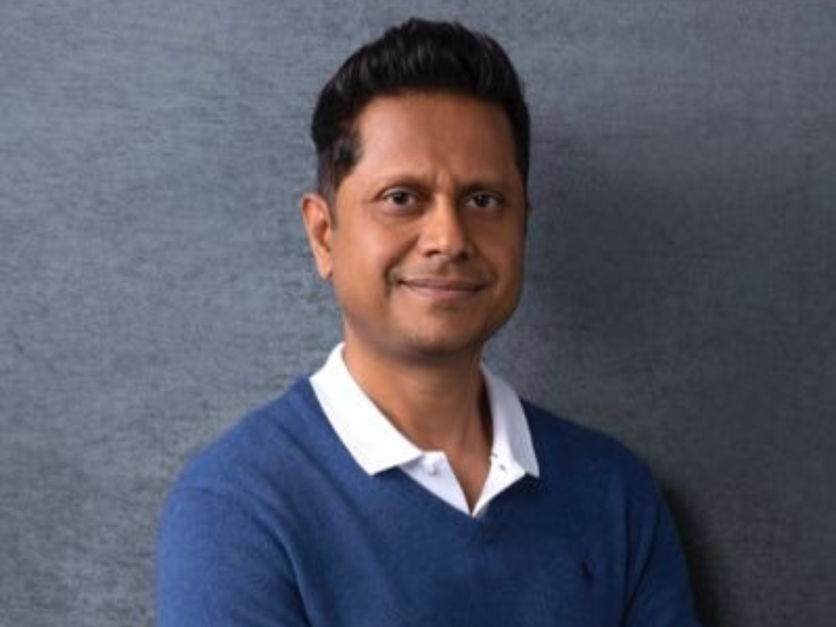
At Mumbai Tech Week 2025, Mukesh Bansal—the visionary behind Myntra and Curefit—emphasized that while the “AI hype” is massive, the real value lies in moving beyond shallow applications to deep, process-reimagining technology.
AI is set to become the most powerful profitability lever for businesses in the near term. According to Bansal, most companies can realistically add 1–2% to their bottom line within 18 months, rising to 4–5% within three years — a transformational shift, particularly for the majority of firms operating on margins below 15%.
For these companies, AI adoption is no longer optional — it’s a strategic imperative. And the message to leadership is unambiguous: CEOs who move early and decisively will be the ones shaping what comes next.
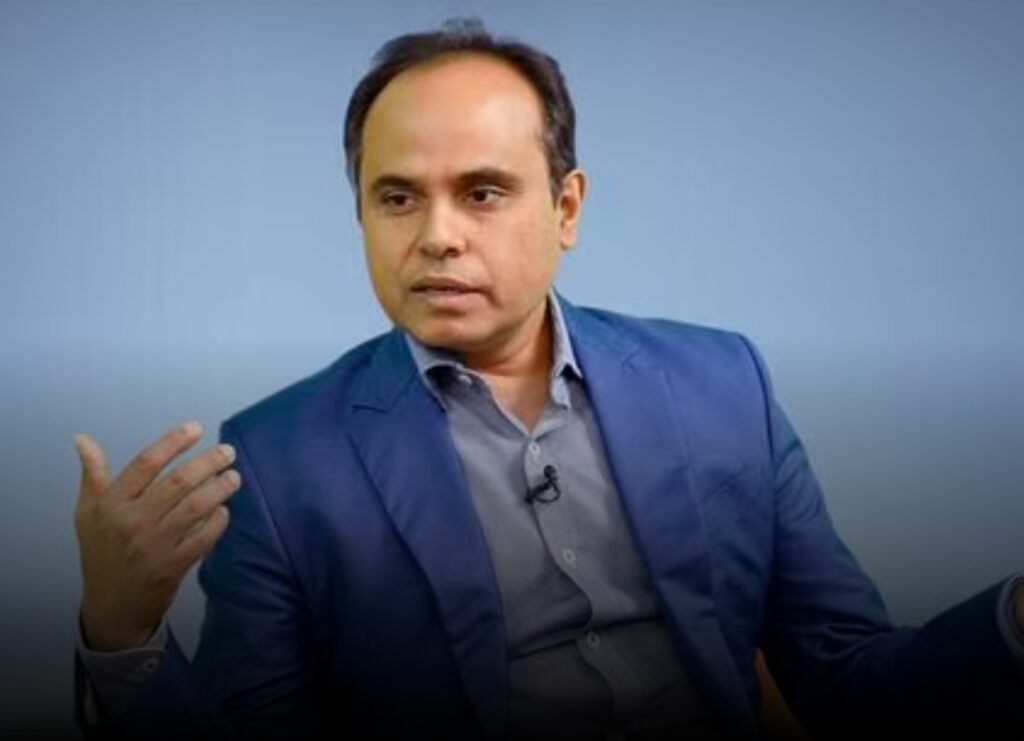
Srikanth Velamakanni is the Co-founder and Group CEO of Fractal, a leader in AI and analytics. At Mumbai Tech Week 2025 and similar 2025/2026 forums, he highlighted that AI is moving from efficiency to creating entirely new revenue opportunities, with a strong focus on Sovereign AI for India, Agentic AI, and enterprise-wide AI transformation.
Key Takeaways – Mumbai Tech Week 2025
AI as Revenue Generator: Velamakanni emphasized that AI goes beyond automating processes to creating new revenue streams by reimagining core business processes and creating intelligence layers over enterprise data.
Sovereign AI Infrastructure: Discussions centered on the urgent need for an “India AI stack” (foundation, research, capability, and governance) to maintain control over AI infrastructure, data, and future development.
Agentic AI Adoption: The shift is toward “Agentic AI”—systems capable of autonomous decision-making to handle complex tasks, rather than just predictive analytics.
Reimagining the Workforce: AI is reshaping talent structures, moving from fixed roles to skill-based and gig models, requiring a balance between automation and human oversight.
Maharashtra as AI Capital: In 2025, Velamakanni noted Maharashtra’s goal to become the AI hub of India through initiatives like training 10,000 women in AI with Microsoft, promoting AI-driven governance, and expanding data centers.
High-Growth Sectors: AI is identified as the core driver for 10 key sectors, including next-gen e-commerce, smart manufacturing, and intelligent mobility, aiming for significant incremental GDP impact by 2035.
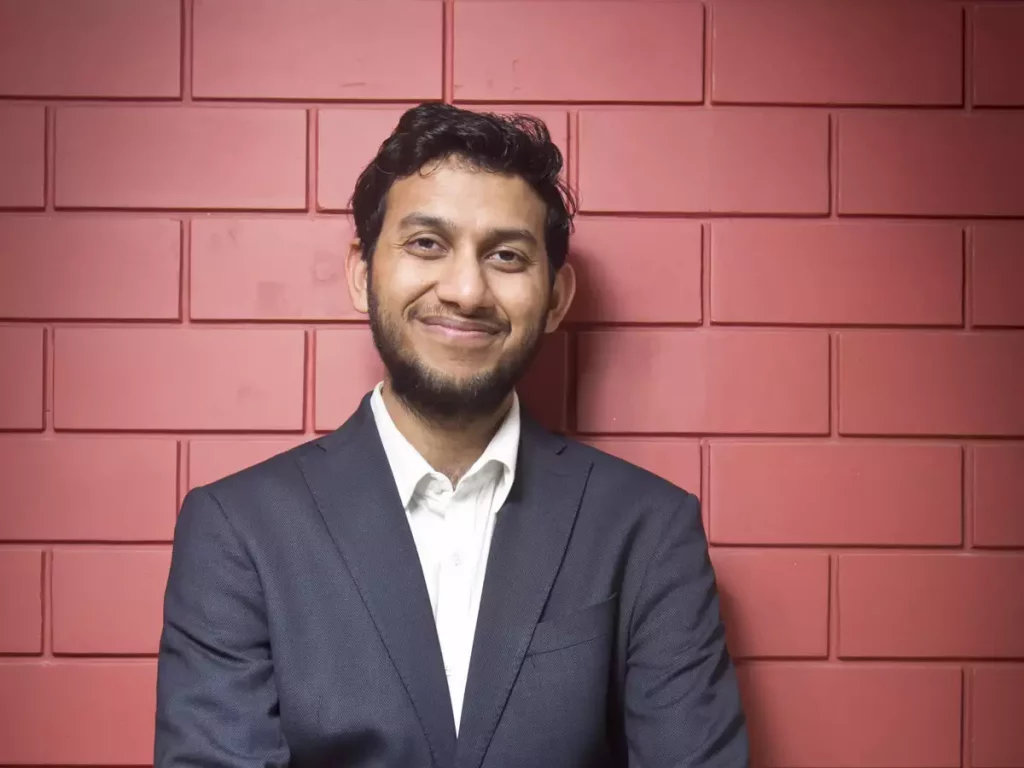
At Mumbai Tech Week 2025, OYO founder Ritesh Agarwal emphasized hands-on leadership, revealing he still cleans hotel washrooms to role-model humility. He advocated leaving ego, fear, and pride outside the room for success, and reported OYO’s $4.6 billion valuation as of December 2024, with plans to scale audits to over 6,000.
Key Takeaways from Ritesh Agarwal at Mumbai Tech Week 2025:
Hands-on Leadership & Humility: Agarwal stated that despite OYO’s massive growth, he continues to clean hotel washrooms to set a standard for his team and ensure high quality. He emphasized that “true success requires shedding pride and arrogance”.
Overcoming Entrepreneurial Fear: He noted that fear, embarrassment, pride, and arrogance are the biggest enemies of startup success, urging entrepreneurs to abandon these on day one.
OYO’s Growth & Valuation: As of December 2024, OYO was valued at $4.6 billion following a ₹100 crore share acquisition, and the company is strengthening its hotel quality control with plans to expand audits to 6,000+ by October 2025.
Focus on Service Quality: His routine includes focusing on the smallest details of the guest experience, reflecting a commitment to operational excellence rather than just high-level management.
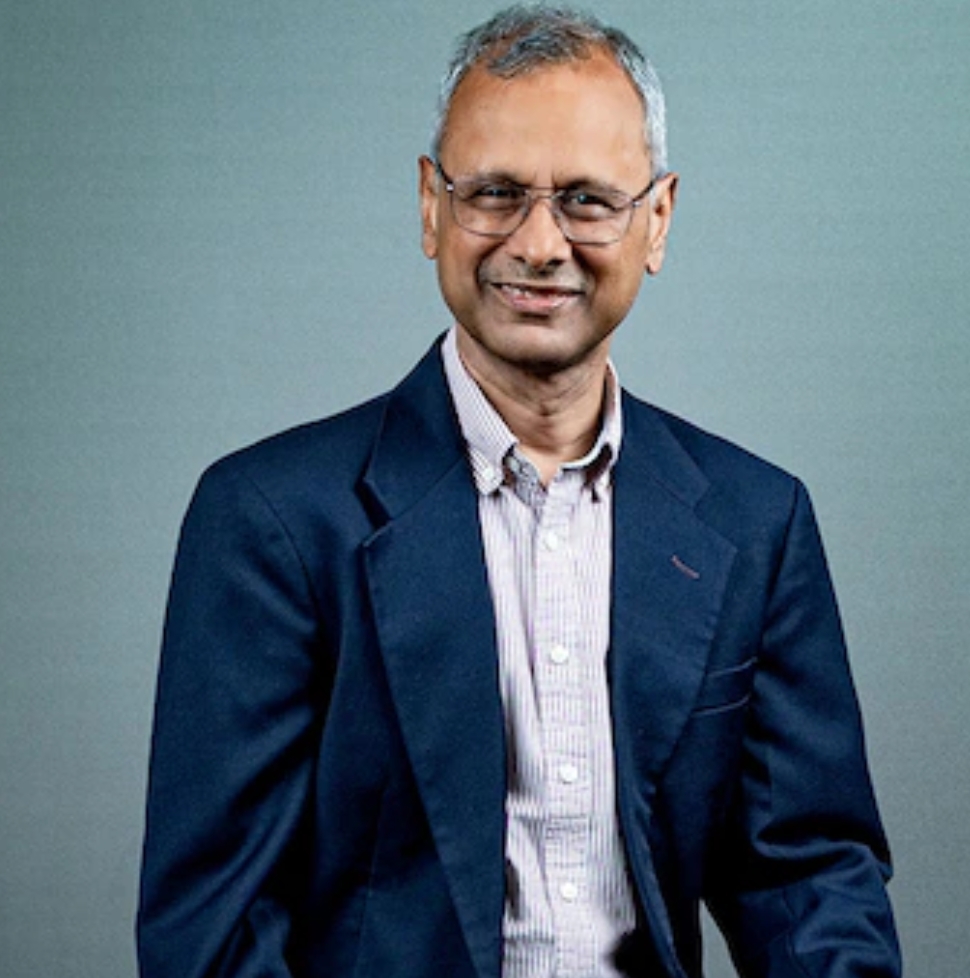
Dr. Manish Gupta (Google DeepMind) at Mumbai Tech Week 2025/associated 2025 forums emphasized that India is poised to lead in AI innovation by focusing on efficient, domain-specific models, such as tailored Gemma models. Key takeaways included advancing multilingual AI for inclusivity, utilizing AI for “root node” scientific problems, and accelerating AI adoption for societal impact.
Key Takeaways and Insights:
Efficient AI Development: Highlighted the need for elastic AI models, such as integrating smaller, specialized models within larger frameworks (e.g., 16B Gemma) to reduce computational costs and energy consumption.
India-Centric AI Focus: Argued that India should focus on building its own foundational AI models, rather than relying solely on Western technology.
AI for Societal Transformation: Advocated for AI as a “root node” problem solver, aiming to revolutionize areas like agriculture, healthcare, and education.
Inclusive AI (Multilingualism): Emphasized making AI inclusive of India’s linguistic diversity to democratize access to information.
Responsible AI: Stressed the importance of ethical, unbiased AI development that acts as a catalyst for growth rather than a replacement for human potential.
Balanced Regulation: Praised India’s approach to regulating AI, which balances safety and compliance with fostering innovation.
Dr. Gupta, leading research teams across India and Japan, reiterated that AI has the potential to transform industries, marking a significant leap in India’s technological journey similar to the rapid adoption of mobile technology.
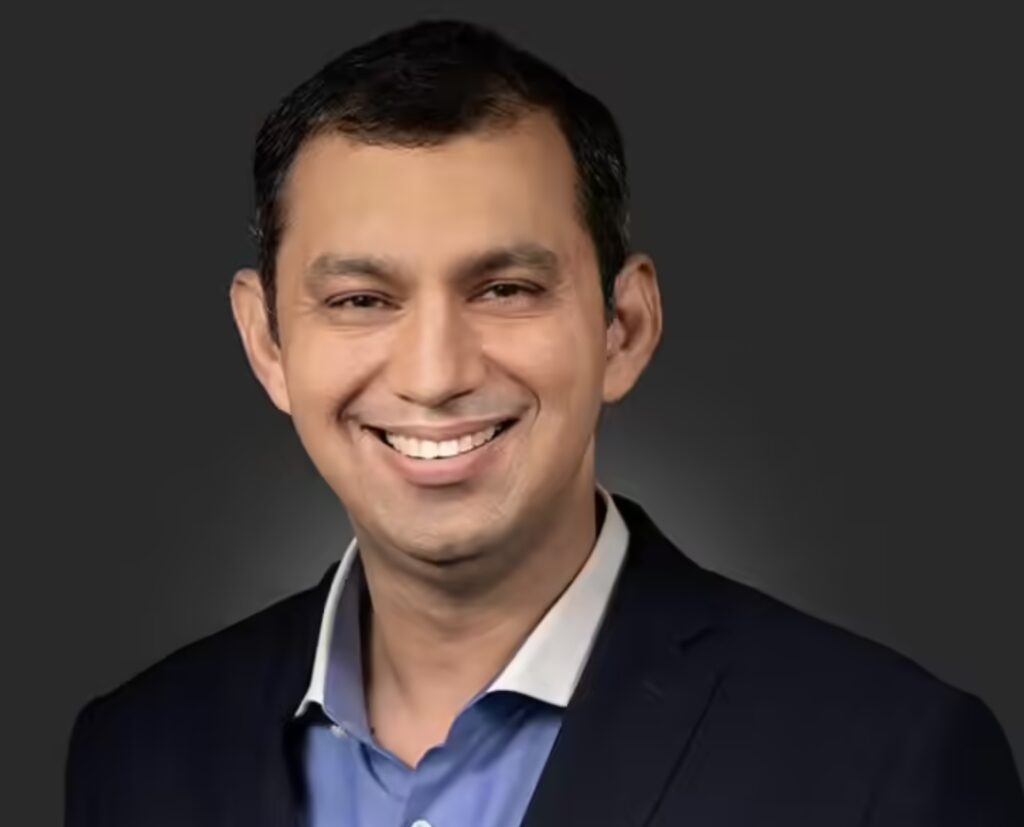
At Mumbai Tech Week 2025, Puneet Chandok, President of Microsoft India and South Asia, highlighted India’s rapid AI adoption, driven by a monumental $17.5 billion AI investment. He emphasized that AI is re-engineering the workforce—not replacing it—by automating routine tasks, necessitating urgent upskilling in AI literacy.
Key takeaways from his insights include:
Massive AI Investment: Microsoft is investing $17.5 billion over four years into AI-related projects in India, marking its largest commitment in Asia to establish advanced data center infrastructure.
AI as a Job Transformer: AI will not eliminate jobs but “unbundle” them, automating repetitive tasks and creating new roles, such as agent bosses.
The New Literacy (Upskilling): Microsoft is committed to training 20 million Indians in AI skills by 2030, with 5.5 million already trained, to keep up with accelerating adoption.
Data Sovereignty & Security: Microsoft is focusing on sovereign public cloud options and in-country data processing to meet India’s security needs.
Shift from Hype to Value: 90% of Indian companies are reevaluating core strategies to integrate AI for real economic productivity, not just buzz.
Human-AI Collaboration: Future work will blend human ingenuity with artificial intelligence, with HR and IT potentially merging into a single “intelligent resource” function.
Chandok highlighted that India is becoming a “build in India, build for the world” hub.
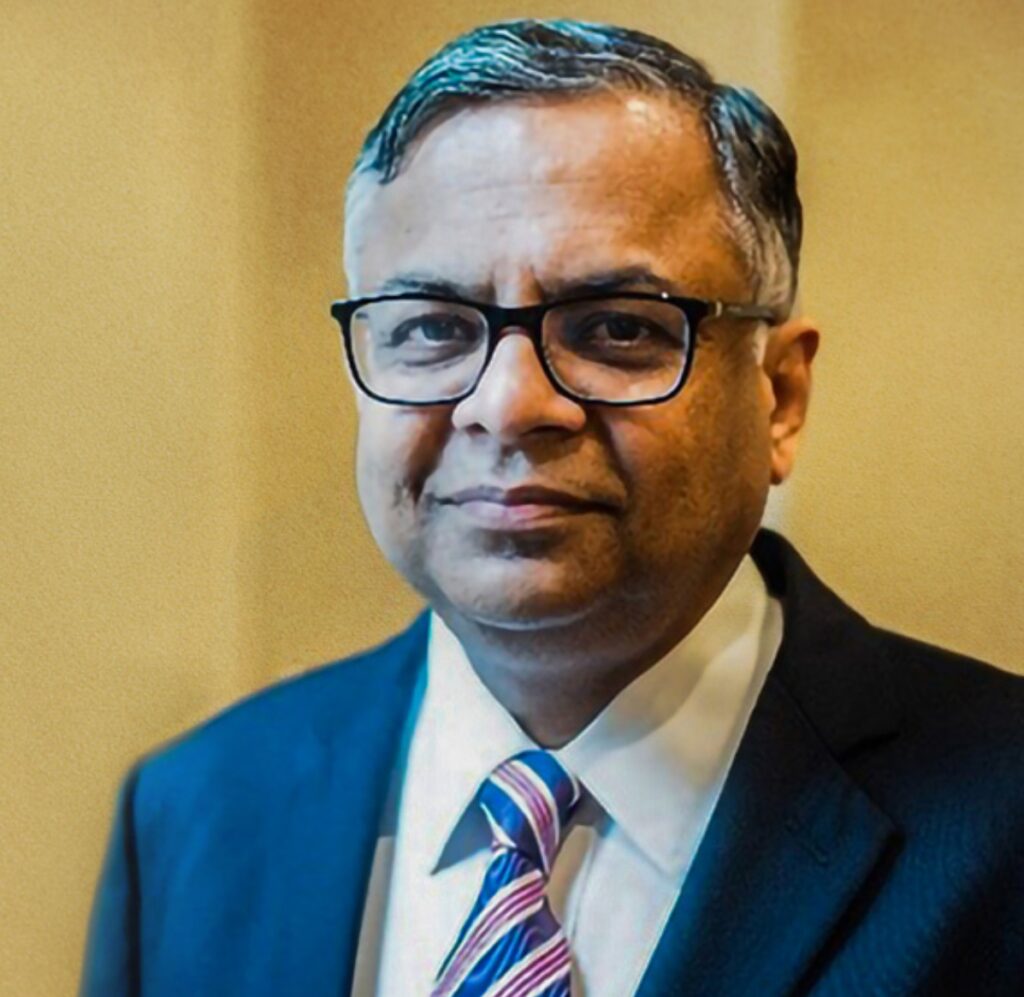
At Mumbai Tech Week 2025, Tata Sons Chairman N Chandrasekaran emphasized the urgent need for India to develop Sovereign AI capabilities to avoid “digital colonialism,” warning against relying on foreign AI engines that do not understand Indian contexts. He highlighted that the Tata Group is building a massive AI-optimized data center (up to 1 gigawatt) and focusing on “India AI stack” pillars: data, research, and infrastructure.
Key Takeaways from N Chandrasekaran at MTW 2025:Sovereign AI & Data Sovereignty:
India must be a “creator” of AI, not just a consumer, building systems on local data to protect national interests.
India AI Stack: A four-layer approach is necessary: foundational infrastructure, basic research, capability development (tools), and governance aligned with Indian values.
AI as a Job Creator: Contrary to fears, AI will be a net job creator in India, provided the workforce is equipped with necessary skills.
Massive AI Infrastructure: Tata Group is partnering with companies like AMD to build high-density AI data centers and working on domain-centric AI-optimized chips, starting with the automotive sector.
Industrial AI Transformation: AI is being integrated into workflows at scale, citing Tata Steel’s deployment of over 300 AI agents to automate processes.
Focus on Local Languages: Developing AI agents that can interact in 11 Indian languages is crucial for inclusive growth.
Chandrasekaran stressed that the current era is one of “abundant intelligence,” requiring trusted stewardship and investment in local infrastructure to ensure India becomes the AI capital of the world.

Nazara Technologies participated as a prominent member of the Tech Entrepreneurs Association of Mumbai (TEAM) during Mumbai Tech Week 2025 (MTW’25), which took place from February 24 to March 1, 2025.
Nitish Mittersain, the Founder and CEO of Nazara Technologies, actively engaged with the local tech ecosystem as part of TEAM’s efforts to establish Mumbai as the “AI Sandbox of Asia”.
Coinciding with the event’s core focus as Asia’s Largest AI Festival, Nazara highlighted its aggressive move toward deploying capital into building AI-led gaming platforms like BlueTile and BestPlay.

upGrad participated as a Gold Partner at Mumbai Tech Week, which took place from May 29–30 at the Jio World Convention Centre, Mumbai. The event featured a strong focus on “AI in Action”, bringing together industry leaders like Mayank Kumar (Co-founder) and Deepesh Dhakad (CPTO) from upGrad to discuss the future of AI-driven education.
A major education partner, upGrad showcased how professionals can upskill and stay relevant in a rapidly changing AI-driven economy.

At Mumbai Tech Week 2025 (which took place as part of the broader MTW ecosystem), Pine Labs showcased cutting-edge AI technologies and participated in key industry discussions.
Pine Labs presented live demonstrations of its emerging tech stack, focusing on AI-powered solutions to improve agentic commerce, merchant operations, and digital payment infrastructures.
Quantiphi maintained a highly prominent, leading presence at Mumbai Tech Week 2025 (MTW 2025) as a key member of the Tech Entrepreneurs Association of Mumbai (TEAM). As a homegrown technology leader, the company actively drove foundational panels and executive showcases during the landmark event, establishing Mumbai as a core epicentre for enterprise artificial intelligence.