INDIA FOCUS: TRADE FINANCE & SUPPLY CHAIN LOGISTICS

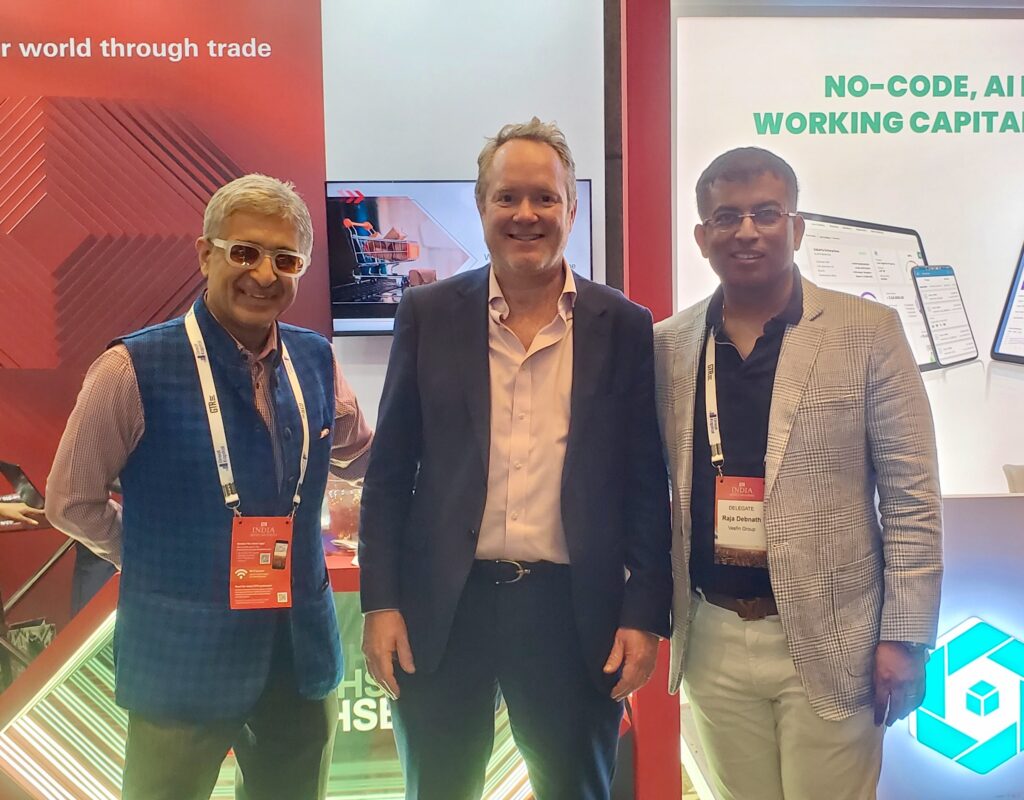
GTR India 2025 brought together over 45 trade and trade finance experts to explore key trends, challenges, and opportunities shaping India’s global trade future. The event spotlighted six critical themes — from export strategies and GIFT City’s evolution to digitization and cashflow innovation — fostering high-impact networking among industry leaders, regulators, and financial institutions.
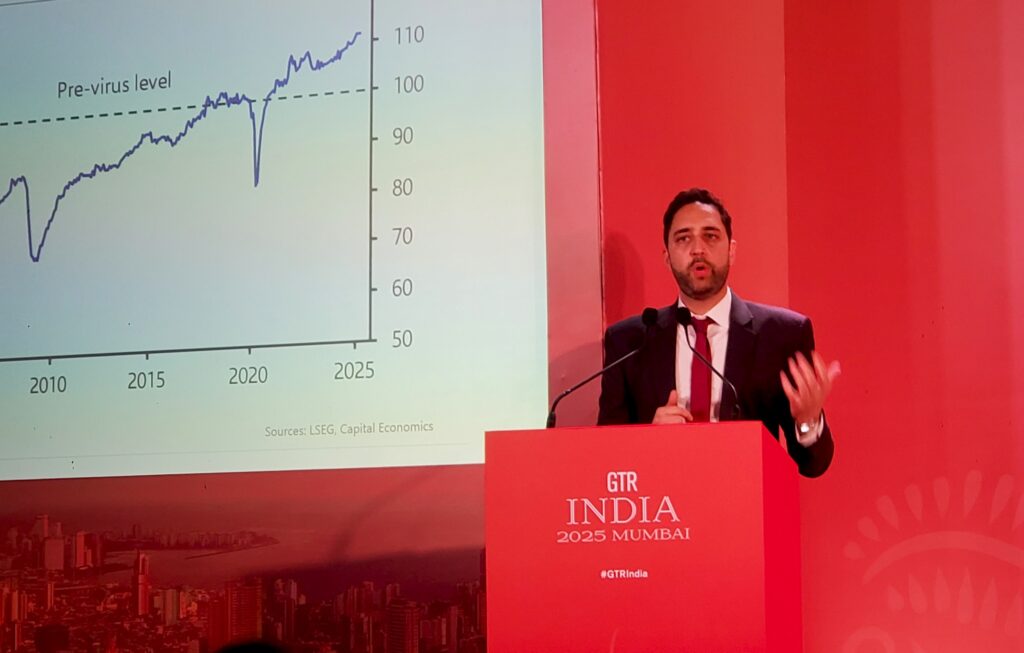
Shilan Shah, Deputy Chief Emerging Market Economist, Capital Economics presented on the Ringfencing trade and seeking opportunities.
Shilan Shah of Capital Economics projects that potential US tariffs could significantly impact India’s manufacturing ambitions and reduce GDP growth to 6% in 2026, though India will likely remain a top global economic performer. Despite global fragmentation, India is positioned to gain from “friend-shoring” by aligning with Western supply chains, while infrastructure improvements continue to boost export logistics. For
As of early 2026, India’s export landscape remains robust despite geopolitical volatility, driven by a projected status as a top-growth economy, targeting US$2tn in merchandise/services by 2030. Key focus areas include navigating a potential second Trump presidency, diversifying supply chains away from China, reducing logistical costs, and leveraging new trade agreements.
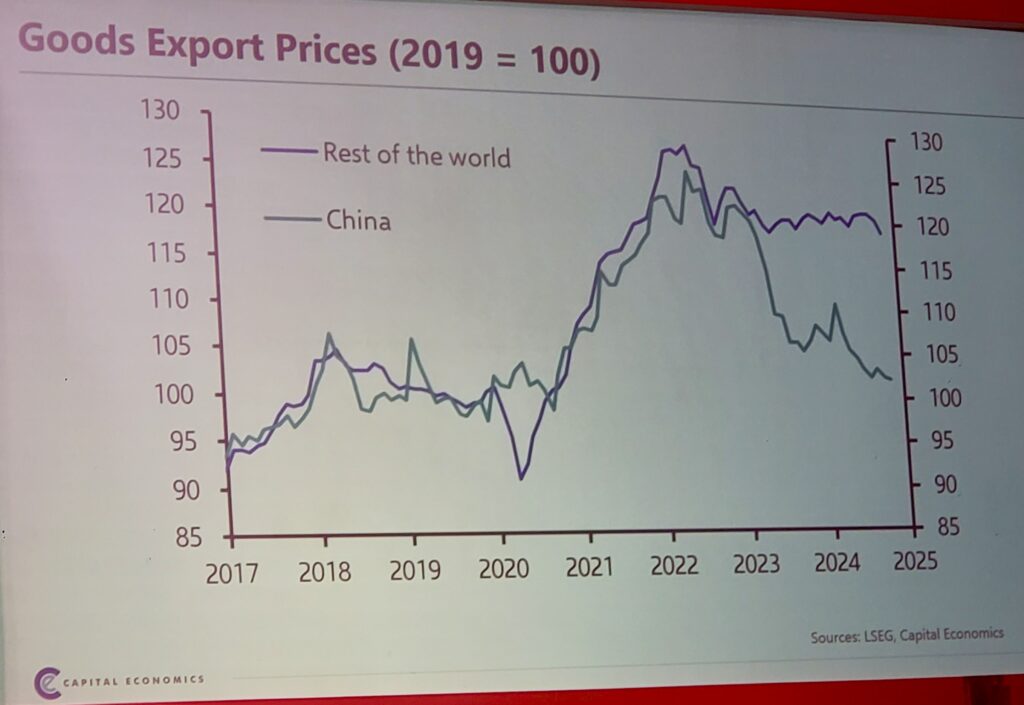
At GTR India 2025 in Mumbai, Shilan Shah, Deputy Chief Emerging Market Economist at Capital Economics, delivered a keynote address focusing on India’s resilience and positioning in a volatile global trade environment.
Despite global fragmentation, India is positioned to gain from “friend-shoring” by aligning with Western supply chains, while infrastructure improvements continue to boost export logistics.
Key Observations for 2025-2026
Global Outperformance: India is projected to remain one of the fastest-growing major economies, with growth expected to reach approximately 7.5% in 2025.
Trade Resilience: Despite increasing geopolitical “flashpoints” and financial volatility, India’s long-term trade trajectory remains buoyant.
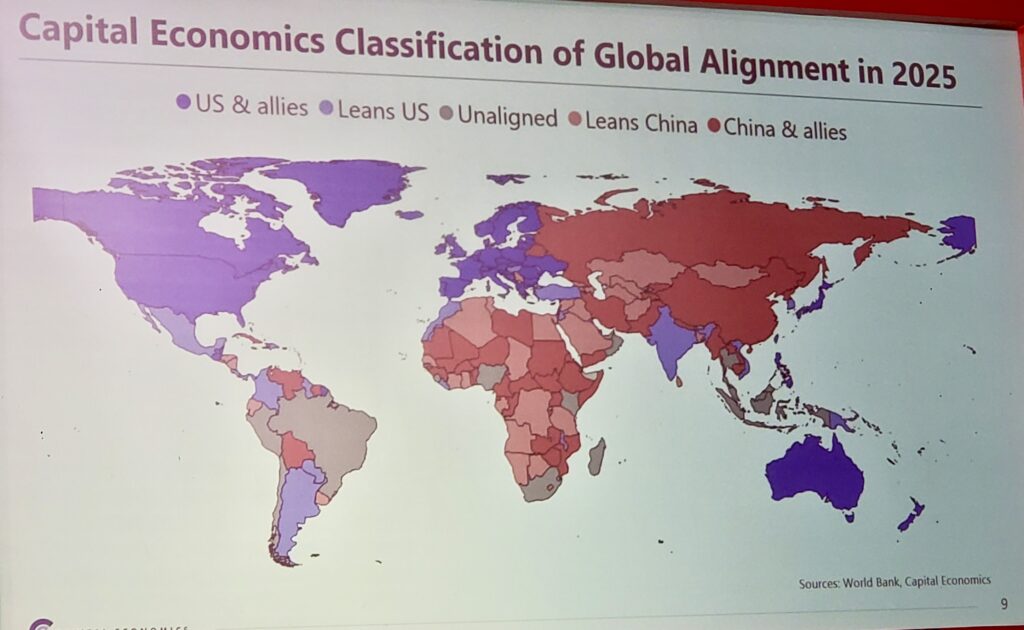
Geopolitical Strategy: India is increasingly adopting an “unaligned” status, balancing hard power multipolarity while navigating shifts away from the US towards a more independent economic role.
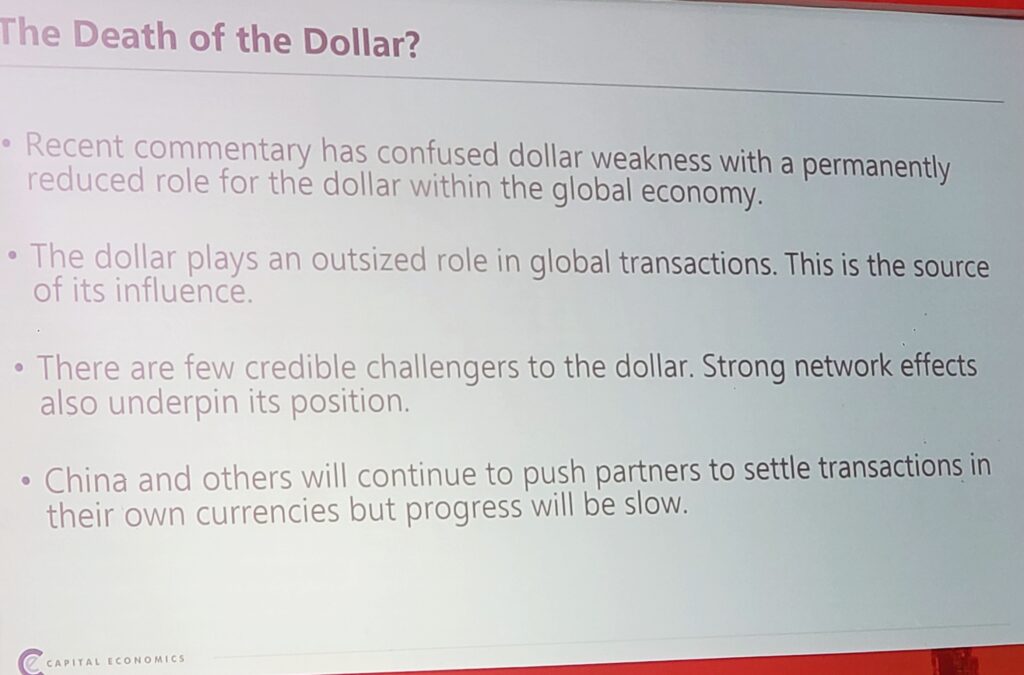
Export Targets: Achieving the national target of US$2tn in exports by 2030 will require addressing a widening gap between thriving service exports and more challenged merchandise volumes.
Monetary Outlook: Inflation is expected to rise gradually toward the RBI’s 4% target, potentially allowing for a final 25bp repo rate cut (to 5.00%) in early 2026 before entering a more accommodative hold.
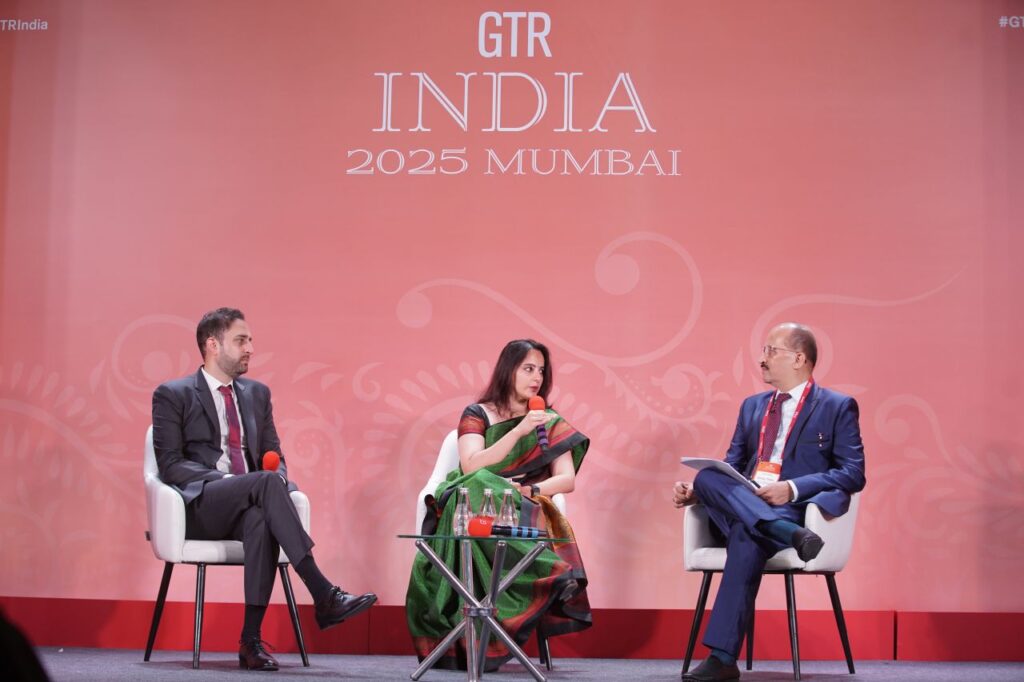
Key observations from Sanjay Desai (Independent), Shilan Shah (Capital Economics), and Dr. Rumki Majumdar (Deloitte) at GTR India 2025 in Mumbai highlighted a buoyant, yet cautious, outlook for India amidst global volatility.
Their key insights focused on “ringfencing” trade, navigating protectionism, and leveraging domestic strengths:
1. The Macro Outlook:
“Resilient Growth”Buoyant Trajectory: Despite rising political and financial volatility, India was projected to remain one of the fastest-growing major economies.
Growth Drivers: Robust domestic demand, services activity, and a sustained infrastructure push were identified as key drivers for FY2025-26.
2026 Outlook: Capital Economics anticipated an “exceptionally strong” 2025, with growth likely to ease in 2026 due to potential punitive US tariffs, while still maintaining global outperformance.

2. Strategies for Stakeholders
For Corporates:
Diversification: Shifting away from reliance on a single market to mitigate trade war risks.
ESG Integration: Designing long-term Environmental, Social, and Governance (ESG) strategies for supply chains to meet global transparency requirements.
For Banks & Financial Institutions:Digital Adoption: Accelerating digital trade finance to improve efficiency.
Credit Insurance: Expanding the use of credit insurance solutions to manage risks in a volatile environment.

For Policymakers:
Strategic Globalization: Moving from free trade to “strategic globalization,” emphasizing supply-chain resilience and sector-specific self-reliance.
Trade Diplomacy: Using trade agreements to “ringfence” exports from global geopolitical shocks.

3. Key Risks and Flashpoints
Trade Protectionism: A second Trump presidency (2025-2029 perspective) and a general global trend toward protectionism were highlighted as major risks to trade.
Volatility Drivers: The experts pointed to rising sovereign yields, energy/finance weaponisation, and potential capital outflows.

The overall consensus was that while India’s long-term trade trajectory remains strong, the immediate future demands vigilance and proactive risk management in trade finance and supply chains.
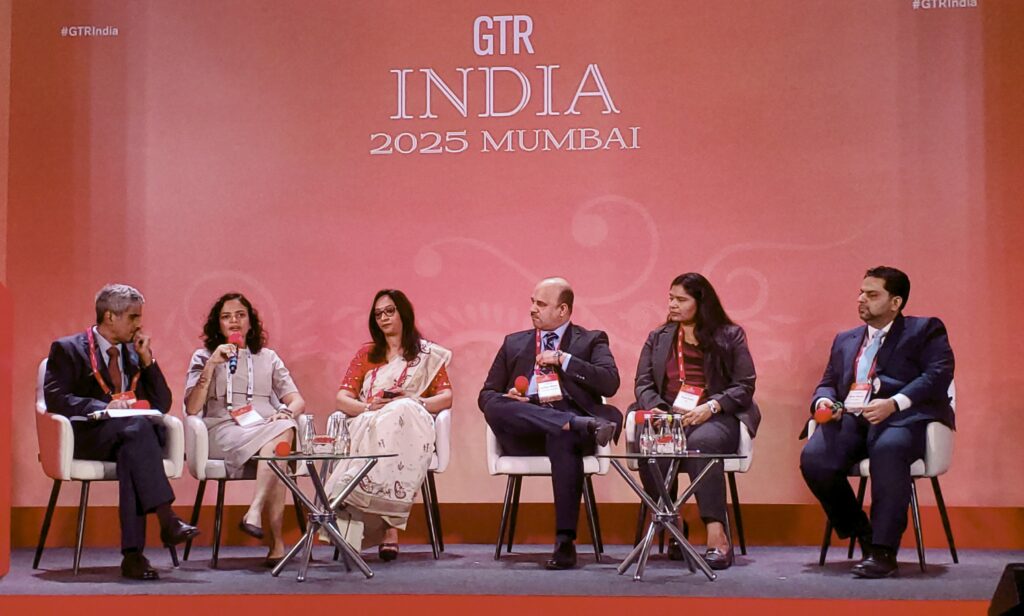
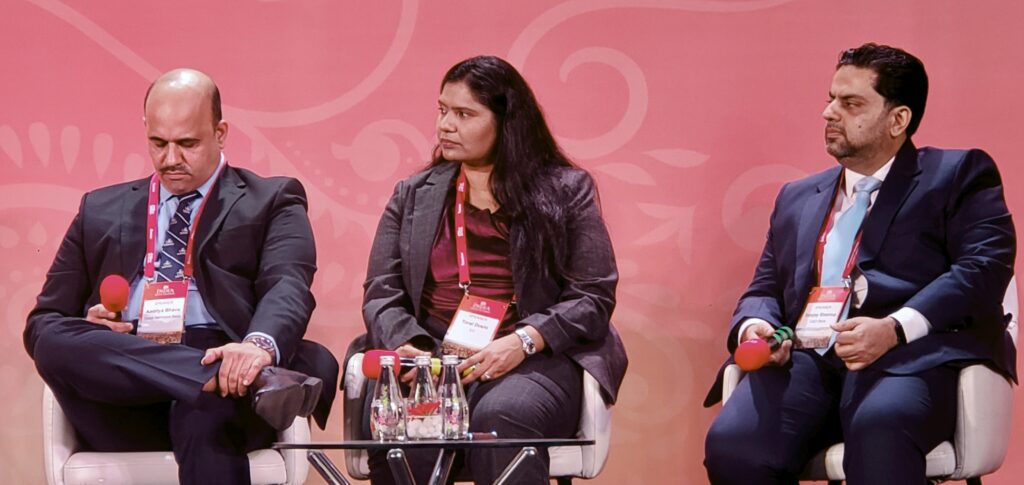
The panel discussion, Keeping up with the regulators: Bank priorities for delivering trade innovation, Moderator: Shankar T S, Asia Representative, BAFT (Bankers Association for Finance & Trade)Sanjay Sharma, Product Head, Digital Trade Platforms, ICICI Bank Aaditya Bhave, Executive Vice-President – Head Trade Product, Transaction Banking, Kotak Mahindra Group Amisha Shah, Assistant Vice-President, Reliance Jio Infocomm Ltd, Toral Doshi, Partner, EYl Annapoorna Venkataramanan, Head Treasury, Risk & Insurance, ArcelorMittal Nippon Steel India, concluded the Indian trade finance market is undergoing rapid digital transformation, with the RBI and banks prioritizing modernisation through TReDS platforms, rupee settlement mechanisms, and digital infrastructure. Key goals include enhancing liquidity, improving interoperability between banks and customs, and reducing reliance on manual processes. Key challenges remain in managing regulatory compliance for cross-border data and streamlining local currency costs.
Key Observations on Trade Finance Innovation:
Digital Infrastructure & Interoperability: A major focus is integrating banking systems with government platforms like ICEGATE, e-invoice, and the GSTN network to create a seamless trade environment, reducing manual processes which currently account for 50-60% of exports.
Rupee Trade & Cross-Border Payments: Continued effort is being placed on widening the usage of the INR for international trade to reduce currency risk and cost, alongside strengthening bilateral banking mechanisms.

Regulatory & Data Privacy Needs: The implementation of the Digital Personal Data Protection (DPDP) Act 2023 and 2025 Rules necessitates that financial institutions strictly manage cross-border data transfers, with the RBI mandating that all payment system data be stored exclusively within India.
Corporate & Bank Priorities: There is a strong call for regulators to mandate a common platform for standardized documentation to reduce inefficiencies caused by banks working with fragmented, varied fintech platforms.
MSME Digitization: The expansion of the TReDS platform is central to increasing liquidity for micro, small, and medium enterprises (MSMEs) through real-time online bill discounting.
Barriers and Future Focus:
Structural Opacity: Increased reliance on fintechs for lending creates complex, multi-layered credit structures, making liability and enforcement challenging.
Regional Disparities: Initiatives like the Payments Infrastructure Development Fund (PIDF) are being used to boost digital adoption in tier-3 to tier-6 cities.
Currency Constraints: Streamlining the cost and operational efficiency of local currency settlements remains a primary concern for market participants.
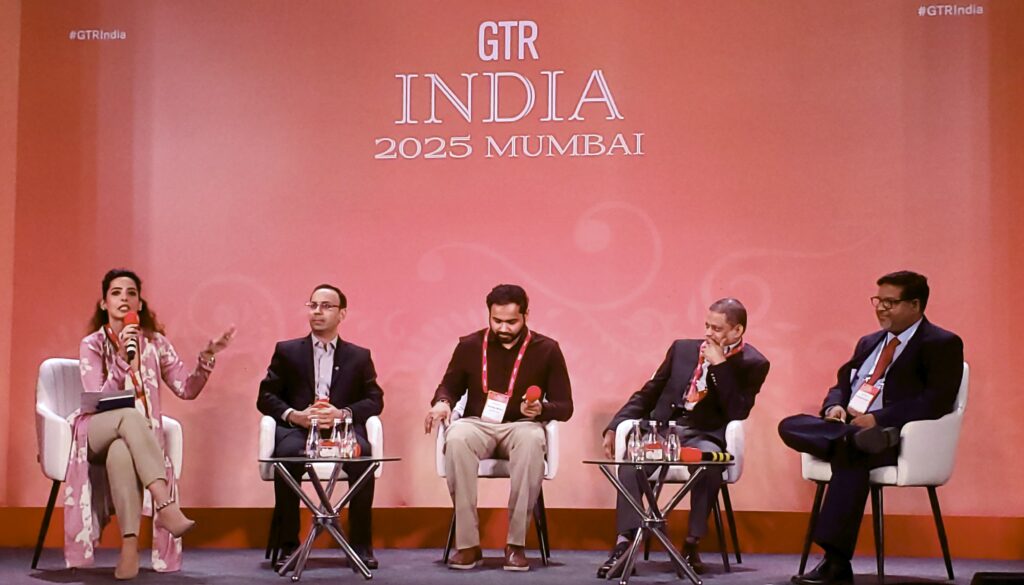
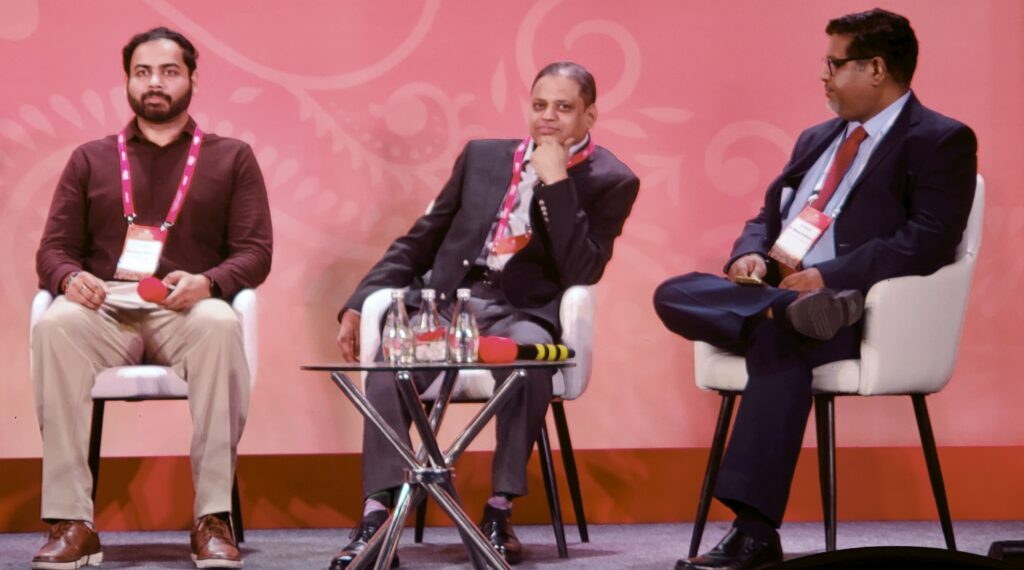
Panel discussion – Five years to US$2tn: Policy and finance solutions for doubling export trade, India’s 2024 exports (goods & services) exceeded US$800bn, growing 5.6% but trailing the $2tn by 2030 target. A major challenge is the widening gap between merchandise and services, with services growing roughly 8% faster. Key discussions focus on boosting merchandise through MSME support, credit access, and easing compliance costs.
🗣️ Moderator – Aastha Arora (The London Institute of Banking & Finance)
🗣️ Shivank Goel (FirstRand)
🗣️ Sankalp Mathur (Reserve Bank of India (RBI) Bank of India)
🗣️ Srinivasan R (AIRA Consulting Pvt. Ltd.)
🗣️ Bharat Kulkarni, PhD (Confederation of Indian Micro, Small and Medium Enterprises (CIMSME))

Key Observations for Doubling Export Trade:
Export Disparity: Service exports are outperforming merchandise, creating a critical need for policy support to help goods exporters, notes the GTR India 2025 Mumbai Guide.
Target vs. Reality: With five years remaining, 2024’s ~US$800bn performance leaves a large gap to achieve the US$2tn goal by 2030.
Financing Constraints: A critical barrier is access to credit and working capital for Indian firms, alongside significant documentary finance challenges.
Market Access & Compliance: Discussions focus on overcoming rising cost pressures and simplifying compliance to boost competitiveness.
Strategic Focus: Key areas include fostering MSME financial literacy and leveraging bilateral agreements over the next five years.
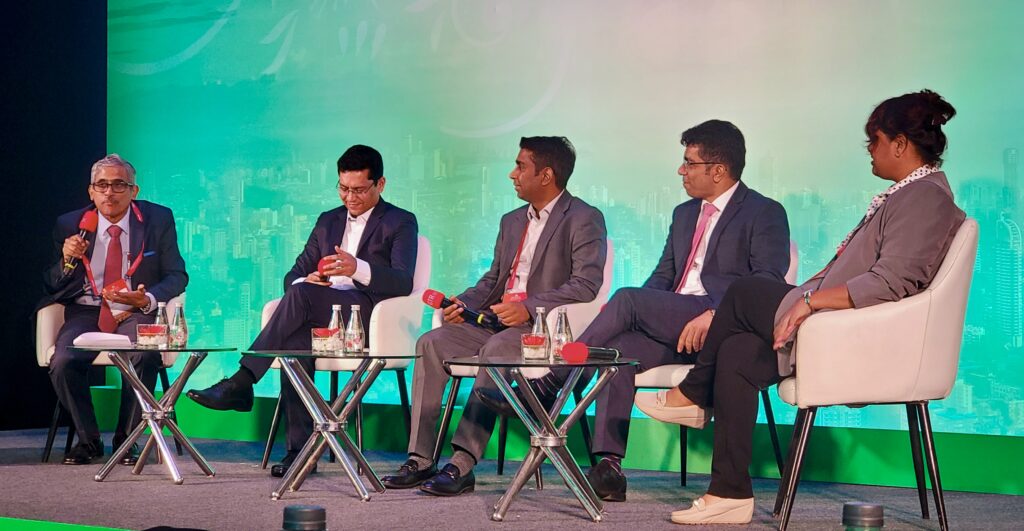
Panel discussion – Trade disruption and emerging solutions for cashflow and inventory optimisation, 📣 Shankar T S (BAFT (Bankers Association for Finance and Trade)
📣 Jeetesh Bhatia (Mizuho)
📣 Varun Wadhwa (HSBC)
📣 Naveen Kumar (Olam Agri)
📣 Megha Kaushik CSCF (Patanjali Foods),
Indian exporters are navigating complex challenges due to global trade bottlenecks and logistical disruptions. To maintain competitiveness, companies are shifting towards optimized working capital management, strategic inventory holding, and adopting advanced digital financing solutions to manage unpredictable payment cycles.
Key Observations on Trade Disruptions & Solutions:
Logistical Bottlenecks: Disruption in shipping routes is creating significant working capital pressure, with sectors like agriculture (e.g., grapes) facing challenges in the Middle East, demanding increased terminal and logistical efficiency.
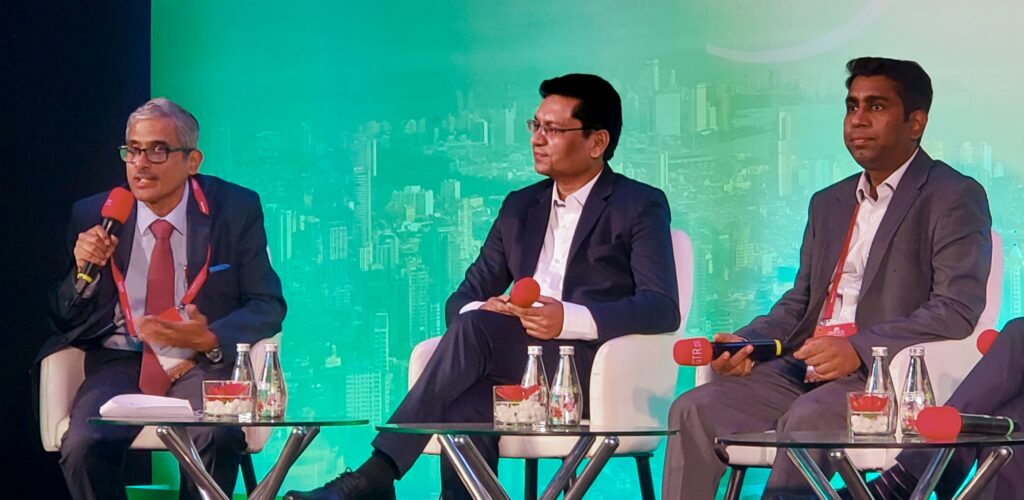
Inventory & Working Capital Optimization: Corporates are shifting from “Just-in-Time” to “Just-in-Case” inventory strategies to handle supply unpredictability, raising working capital needs.
Fintech & Digital Adoption: Fintech is increasingly bridging the financing gap for SMEs, facilitating growth despite global instability.
Diversification & Strategy: To tackle unpredictable payment schedules, exporters are diversifying trade partners and leveraging Digital India initiatives.
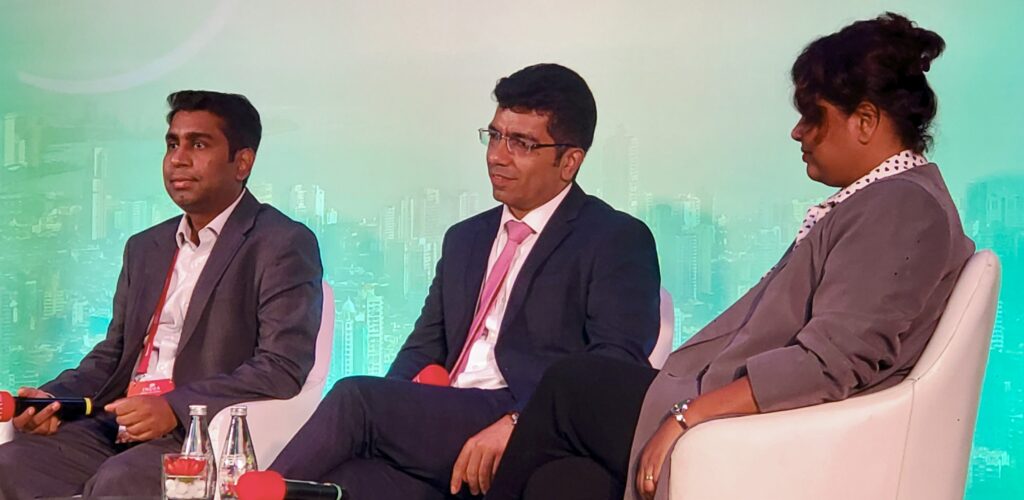
Regulatory Focus: Ensuring compliance with Foreign Trade Policy (FTP) rules, including timely documentation and utilizing government schemes (RoDTEP/RoSCTL), is critical for reducing cost hurdles.
These findings indicate that while India offers a stable production base, navigating the current global volatility requires, according to experts, a focus on digitizing trade finance and building robust supply chain logistics.
Veefin powers the backbone of modern financial ecosystems, providing enterprise-grade software for banks, NBFCs, and regulated institutions.
Their platforms streamline complex workflows across working capital, lending, and transaction banking — from onboarding and underwriting to execution and lifecycle management.
Built for scale, compliance, and auditability, Veefin enables secure, efficient operations in multi-party financial networks.