

TED Is Alive: Inside the Rooms Where Humanity Still Speaks
The Ultimate Ted Talk

From AI to human connection, from courtroom strategy to public shame—inside a week where ideas collided and humanity showed up.
TED didn’t whisper this year. It grabbed you.
Twelve minutes. That’s the new thing. Talks used to be eighteen. Now they’re shorter. Faster. You have to get in, say something real, and get out.
And honestly… it works.
At one point early on, Chris Anderson, the visionary of TED for the past twenty-five years said something that stuck with me the whole week.
He said, stop saying you’re passionate… say you’re fascinated.
I didn’t think much of it at first.
But it stayed.
The talks were quick. Like little bursts of truth. One after another. And I kept crossing things out in my notebook thinking, okay… that idea’s better than mine… that one too…
So I just let go.
And then things got interesting.
There was a moment where one speaker suggested that robots might have consciousness.
And then—this is the part—you can’t make this up…
Two guys come out, these tech entrepreneurs, and they bring robots on stage.
And the robots… did not want to be there.
Like, truly.
They were resisting. Each step looked forced. The guys were kind of pulling them along, and the robots were hesitating, almost fighting it. They even joked that the robots were “reading the room” and basically saying, yeah… not our audience.
The whole audience kind of laughed, but also… it was weird.
Then they finally get them on stage, and you can feel the tension. The robots are stiff, awkward, off. Nothing smooth about it.
And then—this was the best part—they were so proud that they had trained these robots to dance.
So they put on music.
And the robots tried… but it was not happening.
I mean… they will never be Michael Jackson.
Not even close.
And in that moment, I felt something in my body.
I just… disagreed.
Completely.
Then right after that, two tech guys come out—full energy, super excited—and they’ve built these crime-scene drones.
Like, machines that can follow people, track movement, catch criminals. Eyes in the sky. Fast. Precise.
And part of me is like, okay, great for crime…
And part of me is like… wait a second.
You’re basically asking us to agree to being watched all the time. Followed without knowing it. That’s a lot.
And then—perfect timing—a woman walks on stage whose entire life is about building coalitions of peace.
Everything slowed down.
You could feel it.
She talked about bringing people together, creating conversations, building comunitiess instead of control.
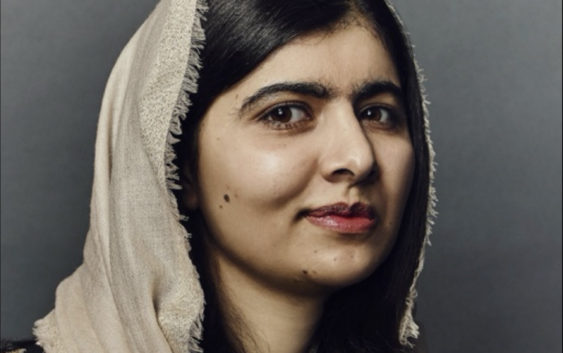
And then Malala Yousafzai spoke.
And she said something that just… dropped into the room.
Her message was “peace without hope.”
And we all kind of looked at each other like… wait.
If Malala doesn’t feel hope… what are we doing?
The room didn’t know what to do with that.
The people I was sitting with—some were quiet, some emotional, some a little shaken. There was this feeling of… okay, we have all these brilliant people here, over 1700 of us… how do we actually create peace?
The women wanted connection and the men felt more activated. Like, okay, what’s the solution, what do we build, how do we fix this?
It wasn’t right or wrong.
It just showed something.
Even in the talks—you could feel it. Many of the men were presenting solutions. Systems. Technology. Here’s how we solve it.
And many of the women were saying… let’s connect. Let’s talk. Let’s come back to each other.
And then Neal Katyal came out.
And shifted everything.
He’s argued 54 cases before the U.S. Supreme Court.
He was talking about this big case on presidential tariffs. Everyone told him he couldn’t win. The odds were stacked.
So instead of just preparing the argument… he prepared himself.
He brought in a mental performance coach—someone who trains Olympic athletes for that one moment.
He got a meditation teacher so he could stay calm and in the moment so he wouldn’t get thrown off.
An improv coach to help him listen, stay present with Improv’s rule: Yes, and … And then—he used AI.
He fed it all the past Supreme Court cases, studied the judges, what they tend to ask, how they think… so he could walk in ready.
But here’s the thing.
AI didn’t win the case.
He did.
Because he could feel the room. Adjust. Connect.
That was the theme the whole week.
There’s AI everywhere. Art, schools, tools, everything.
It’s powerful.
But the moments that actually land?
They’re human.
Messy. Real. Unpredictable.
That’s what stays with you.
There was also humor. Some of it intentional, some not. A very famous marriage therapist Harville Hendrix, Ph.D., (he usually speaks with his wife, Helen but she couldn’t make it). He was shared about all the times they wanted to divorce bit couldn’t as top marriage therapists and then decided to read their own books and do the work and they ae still together for decades.
Another therapist was using Beatles lyrics to explain love… which sounded great… until you thought about it a little more.
That’s TED. It gives you something, then lets you sit with it.
It’s not really a conference.
It’s more like… everything colliding at once.
And then came Monica Lewinsky. She did a live podcast for a hundred of us.
You know her story. Everyone does, at least on the surface. 1998. The scandal. The media storm.
But she didn’t talk about that. She talked about what it felt like.
The humiliation that still stays with her but how she copes daily and is on a mission to help others not go through what she did.
Before social media even existed, she lived what it’s like to be publicly judged by the entire world. Overnight.
She called herself “patient zero” of public shaming.
And the room got very quiet.
Because suddenly it wasn’t about the past. It was about now.
How we treat people. How fast we judge. How easy it is to forget there’s a real person underneath.
I got to sit with her after.
She was kind. Open. Smart. Just… real.
She talked about how hard it’s been to build a normal life. Relationships, trust, just being seen as a human again. She shared how hard it was for her family and close friends. Her brother was in junior high and was harassed endlessly.
She moved to London for ten years to breathe and study outside of America’s spotlight.
And even now, she’s still creating what her life looks like. When asked why she keeps putting herself out in the spotlight. She said her family is upper middle class but she still needs to make money.
There was no bitterness. She was honest and seemed to have a strong inner core. She has a therapist that helps and she uses other spiritual modalities.
She said giving her TED talk years ago changed everything. It gave her the opportunity to change her narrative. She got her voice back.
Now she’s helping others. Speaking about cyberbullying, public shaming.
And you can feel it when someone’s lived it.
What stayed with me wasn’t her story.
It was her humanity.
TED does that when it’s good.
It brings you back to people.
I met so many incredible ones. From all over the world. People I’ll stay in touch with. Conversations that actually matter.
That’s the part you can’t watch online.
Being there and feeling the energy and people pushing goodness.
There’s this idea floating around that TED is over. That it’s not what it used to be.
People said that to me before I went.
“Is that still a thing?”
And I kind of laughed.
Because no.
It’s very much a thing.
TED is alive.
It’s changing. It’s messy. It’s real.
You don’t go for perfection.
You go to see something new.
To feel something.
To be around people who care.
And by the end of the week, that line came back to me.
Not passion.
Fascination.
A room full of people curious about life, about each other, about what’s possible.
Listening. Learning. Staying open.
That’s what I felt.
That’s what stayed.
And honestly…
that alone is worth the trip.
The rest is fire.