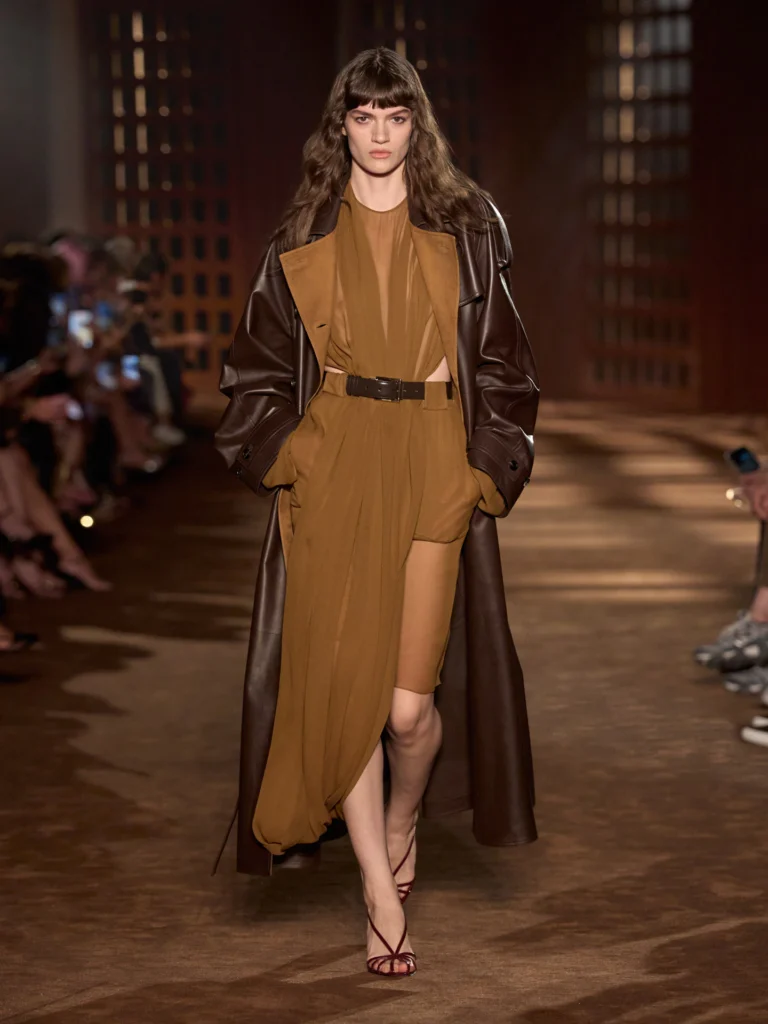
EMPOWERMENT OF WOMEN
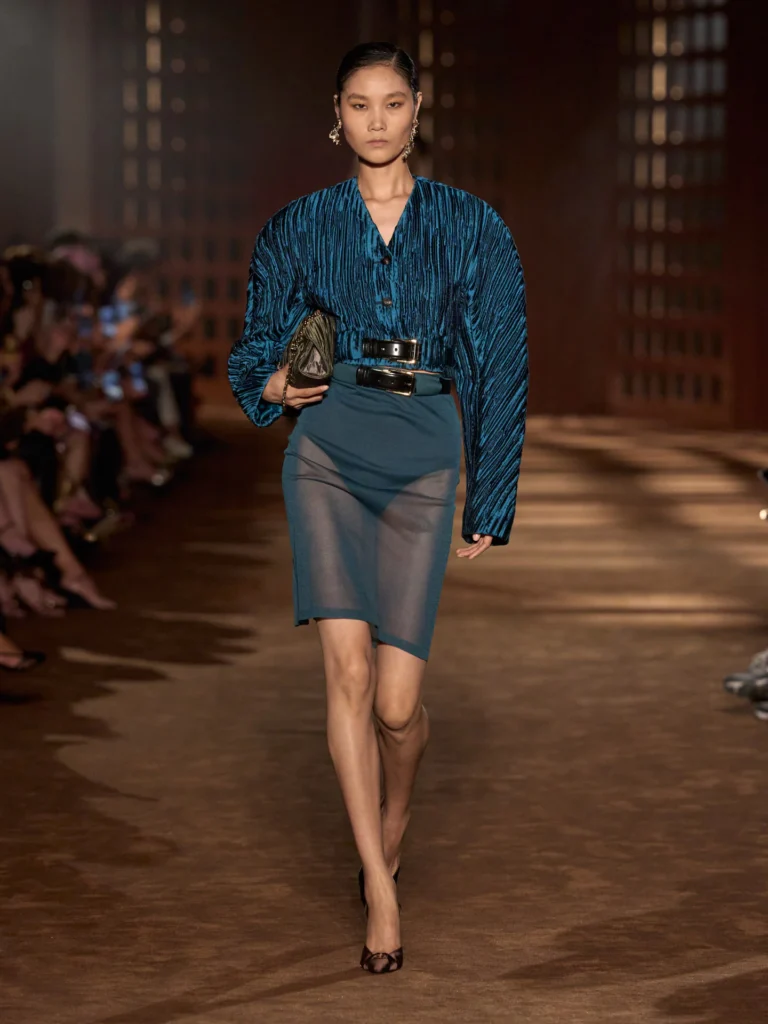
Maximilian Davis has a way of turning fashion into narrative — and his take on the 1940s feels especially resonant. There’s something powerful in how he reinterprets that era’s workwear: not as costume, but as a quiet act of reclamation. The uniforms, the structured silhouettes, the precision — they weren’t just practical then, they were proof of presence, of women stepping into roles that demanded to be taken seriously.
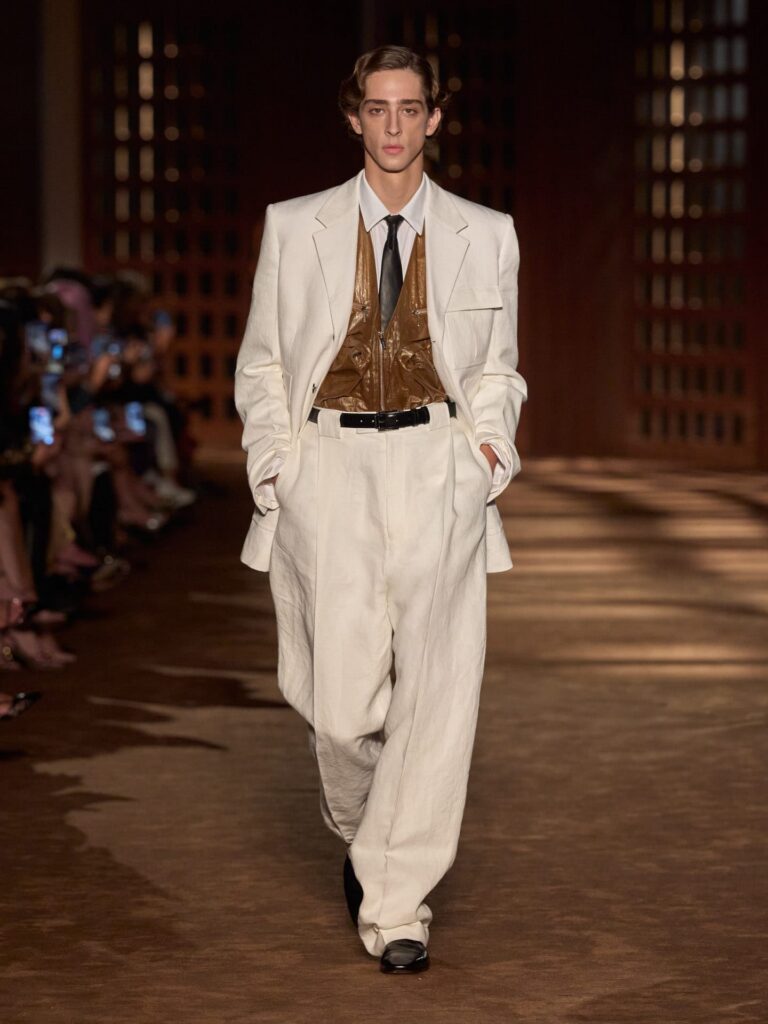
Now, Davis distills that language into something modern — not nostalgic, but alive. He’s not copying the past; he’s asking what it still has to say. And at Ferragamo, where craft meets legacy, it feels like the right place for that conversation to unfold.
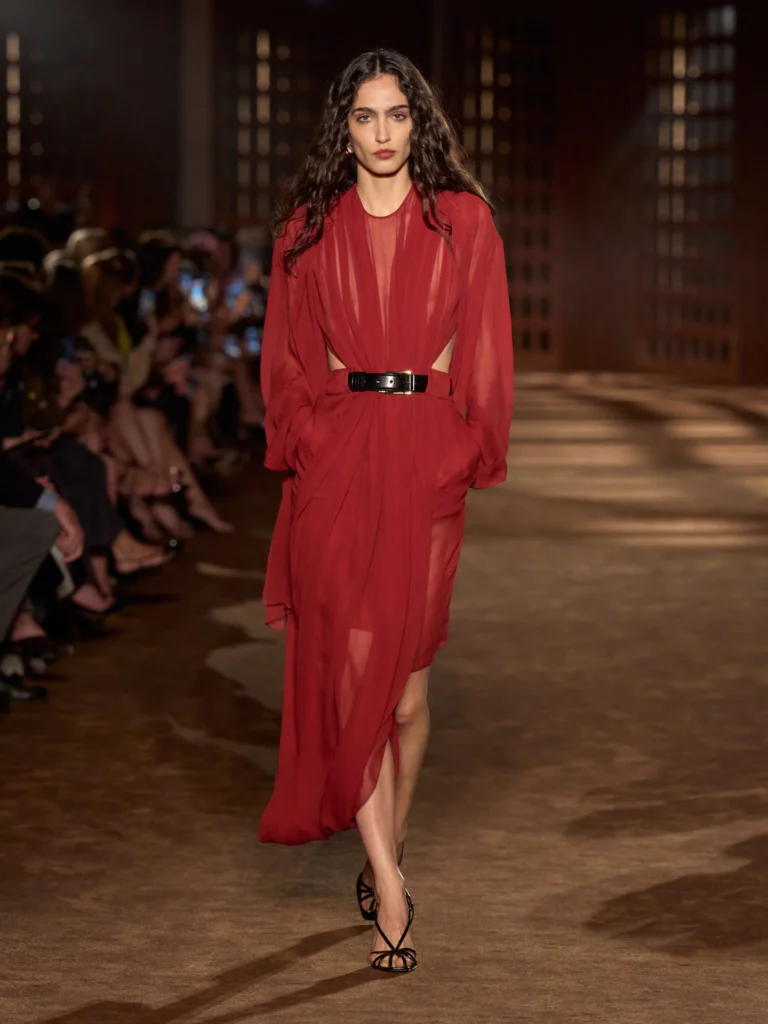
“It was a period where clothing, and its structure, created a certain posture and propriety: when the placement of pocket would dictate how you would both stand and behave,” explains Davis. “I wanted to take elements of that silhouette and modernise it for today.” Maximilian Davis
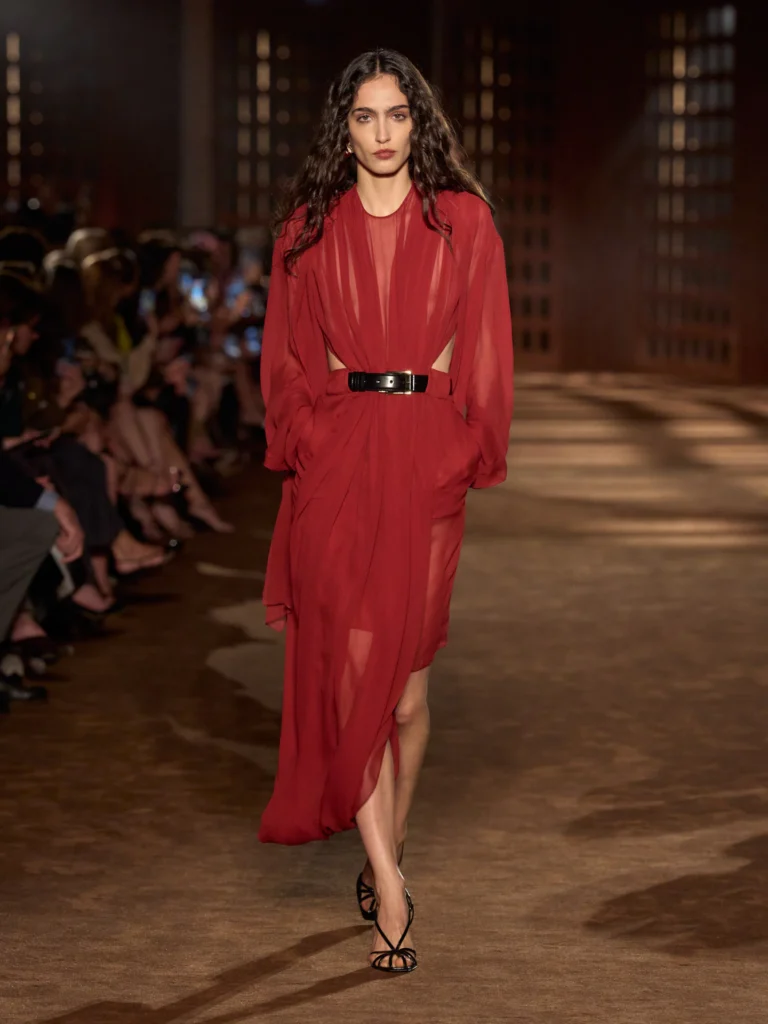
Davis zeroes in on a pivotal shift — when women’s clothing wasn’t just about style, but about stepping into new roles that demanded both function and presence. The 1940s workwear he’s revisiting wasn’t passive; it was designed to shape movement, posture, even behavior — with a rigour that bordered on the military.
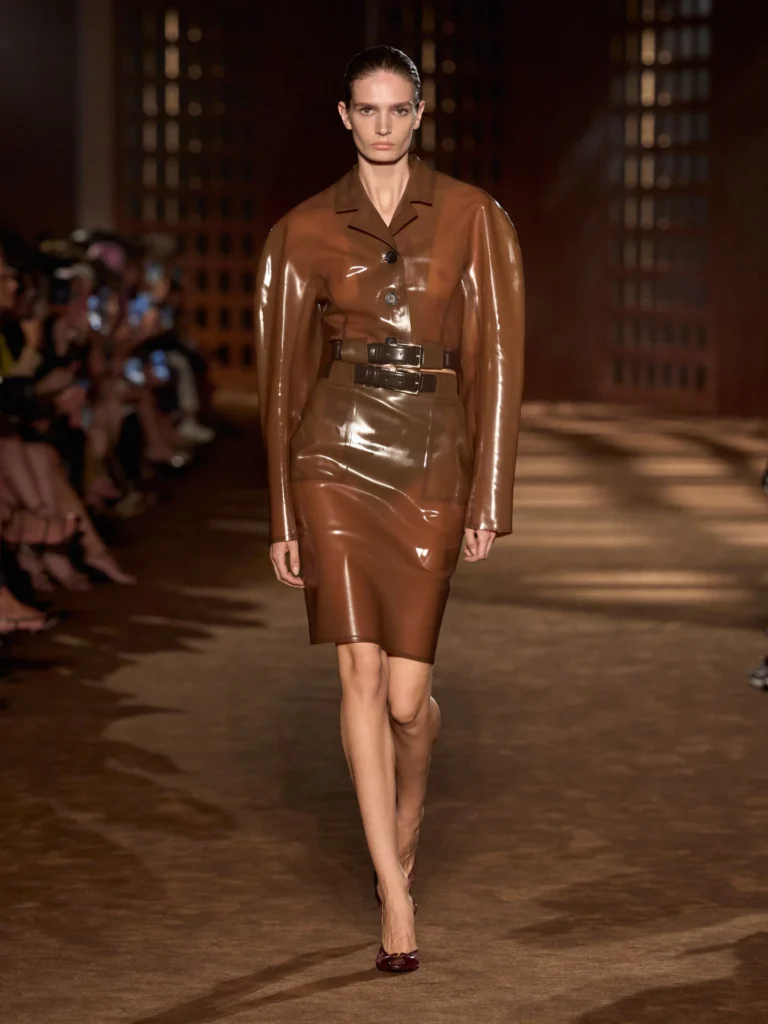
At Ferragamo, he’s not replicating that look, but reinterpreting its strength, stripping it down to its core and rebuilding it with today’s ease. It’s not nostalgia — it’s a second look at how clothing can carry meaning, and how that meaning can evolve.
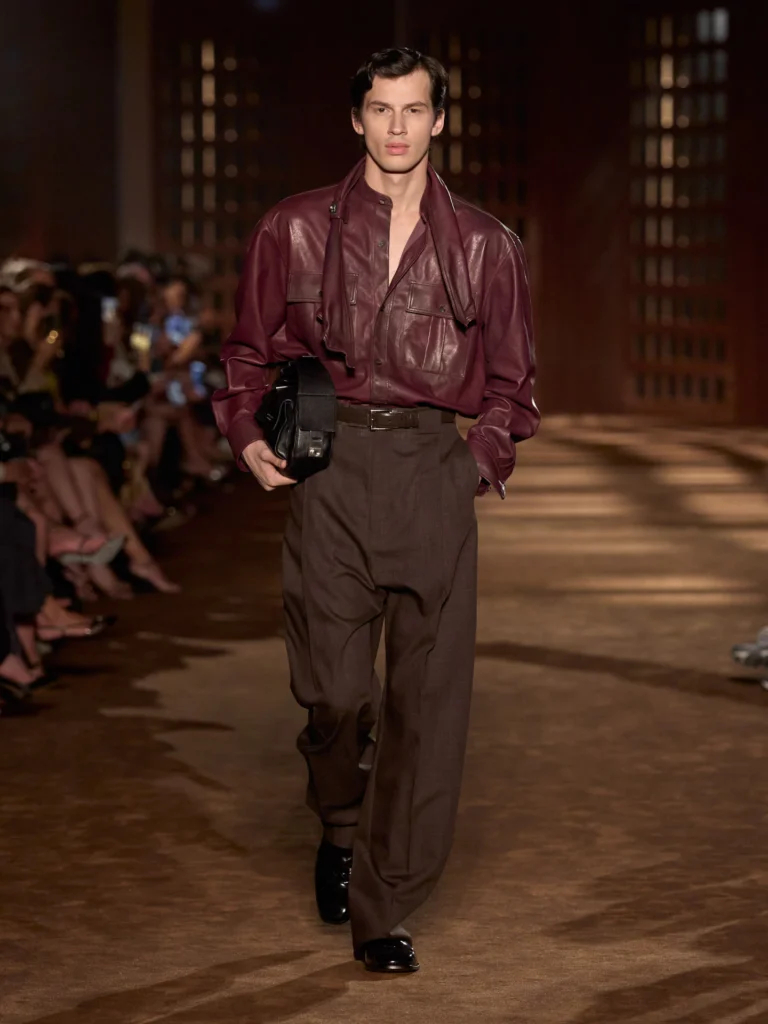
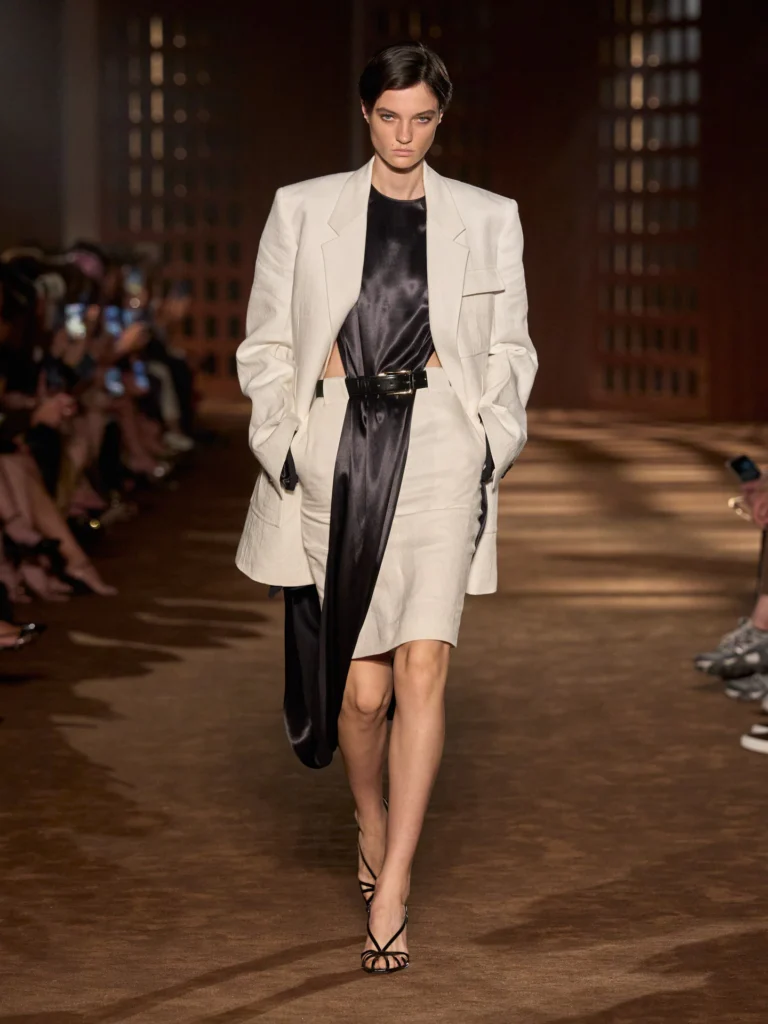
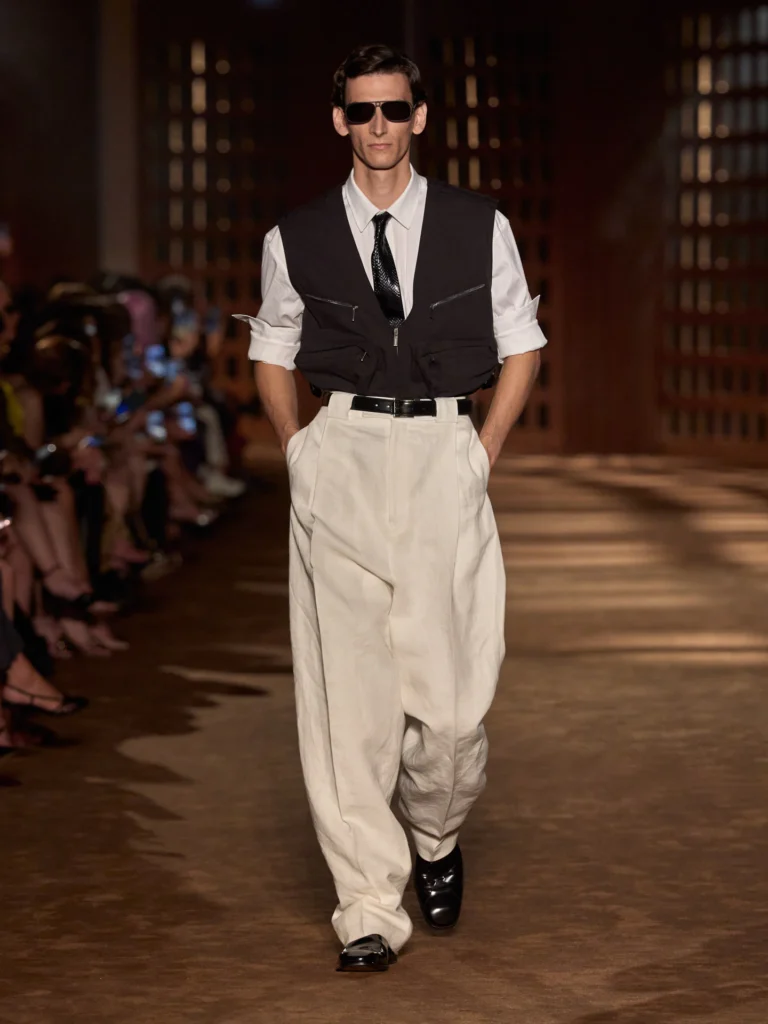
Davis isn’t just revisiting 1940s workwear — he’s refining it. The high waists, double belts, and military-style pockets aren’t replicas; they’re rethought, pulled into sharper focus. On pencil skirts and tailored silhouettes, that era’s formal discipline becomes something leaner, more deliberate. He keeps the strength of the original shapes but adjusts their rhythm — tighter here, eased there — so they don’t imitate the past but live in the present. It’s not about dressing like 1945. It’s about carrying its confidence forward, in a language we wear now.
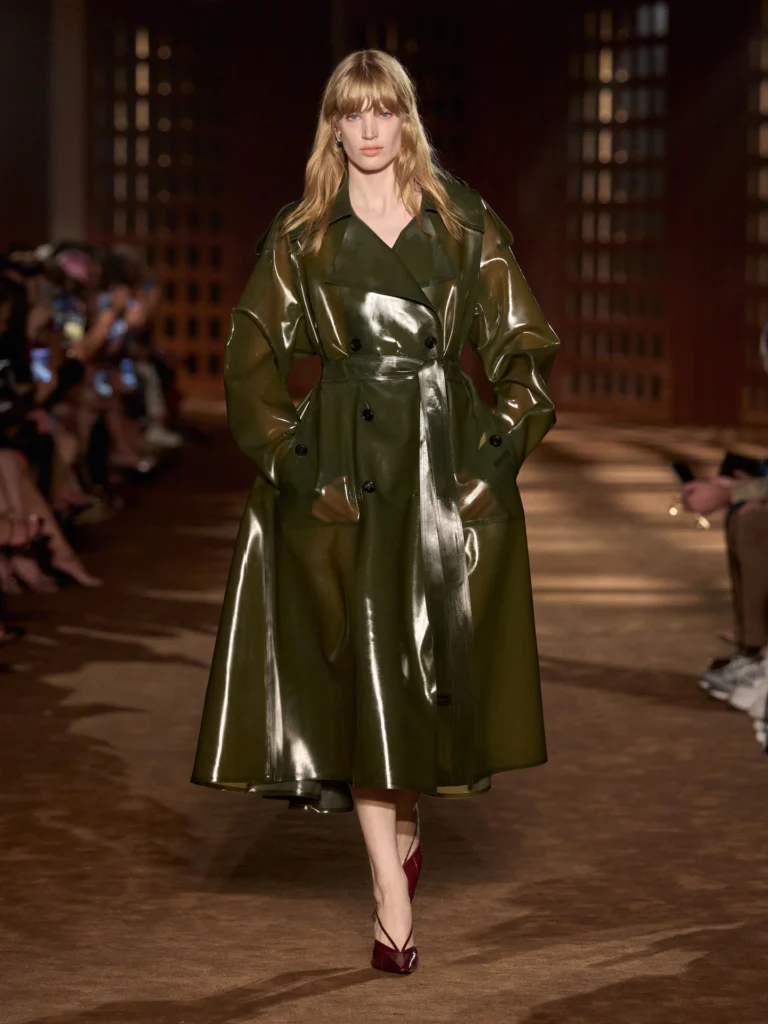
The collection gains depth through contrast — discipline pulled against desire, control meeting its quiet undoing. Translucent latex in muted, clinical shades, leather shirts with a second-skin feel, and slick python ties introduce a subtle charge, not loud but undeniable, threading a fetish-like tension through the otherwise composed workwear frame.
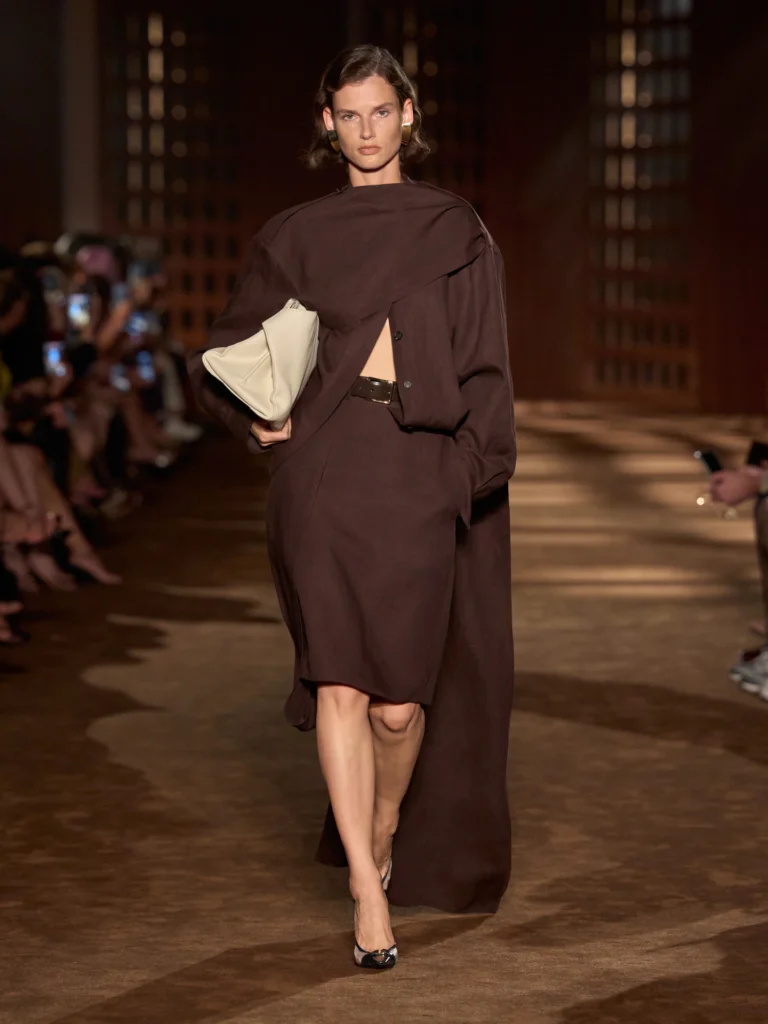
Then, just as it tightens, it softens: Davis brings in scarf dressing — his signature — with knotted silks and sequins that drape like whispers. It’s not just a visual shift; it’s a release. The rigour of the silhouette holds, but now it breathes. That balance — between what’s held in and what’s let go — is where the clothes feel most alive.
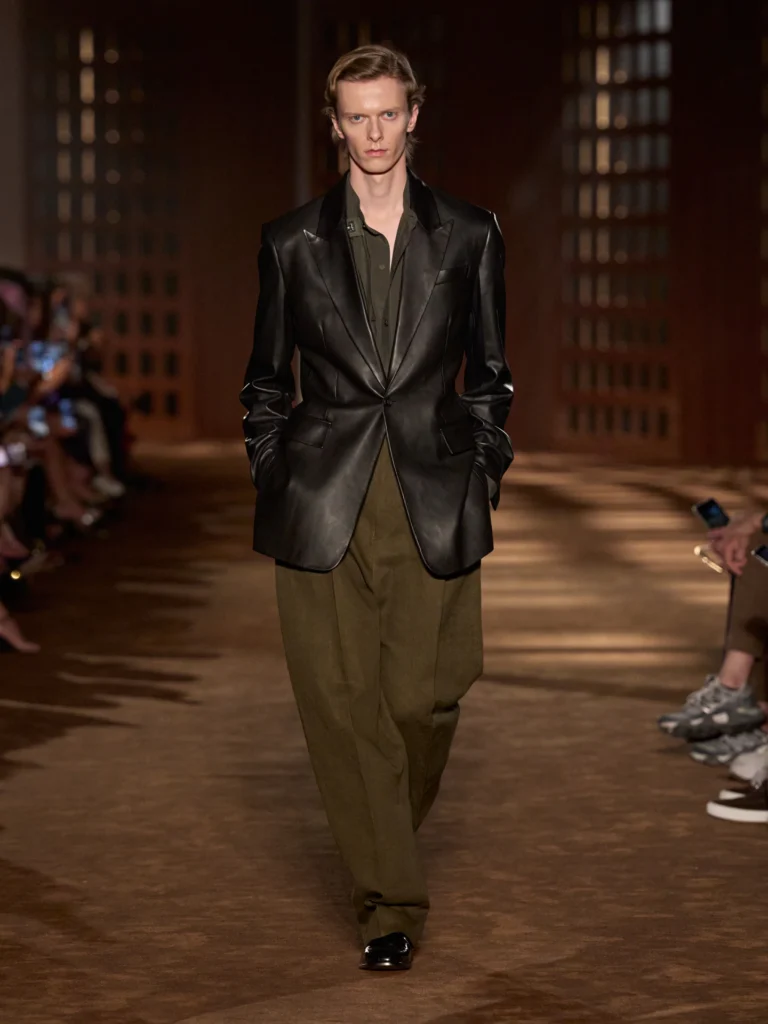
“It was an era when clothing and its structure defined posture and decorum: the position of a pocket could influence both the way one stood and the way one behaved. I wanted to take some elements of that silhouette and update them,” Davis highlighted.
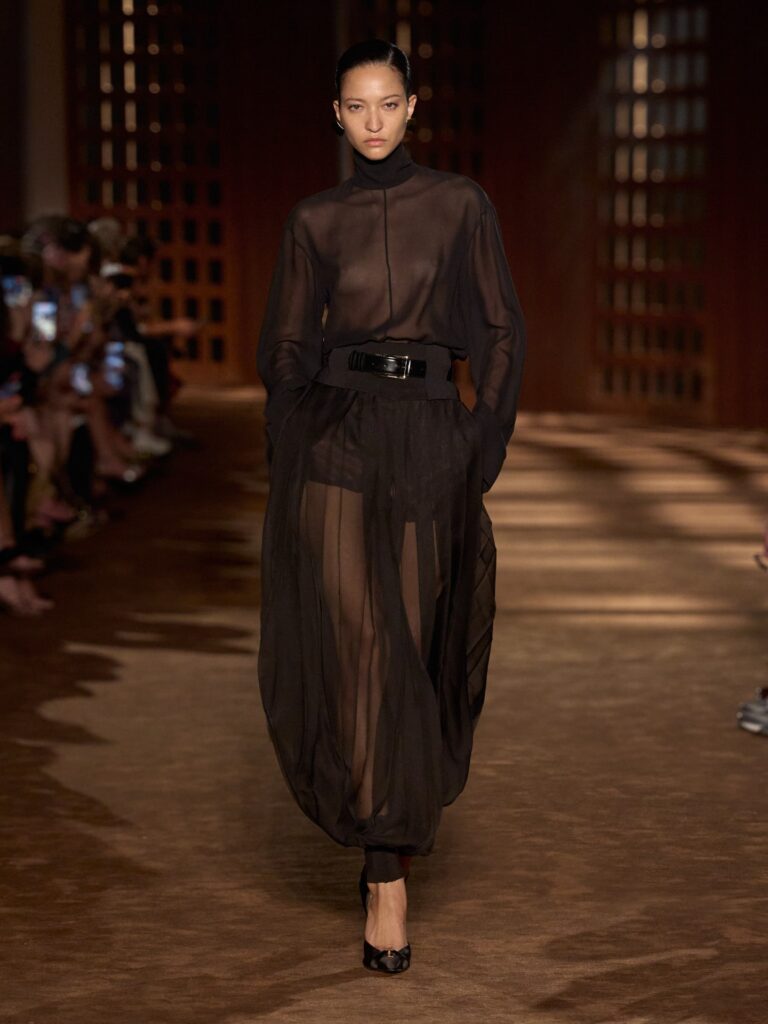
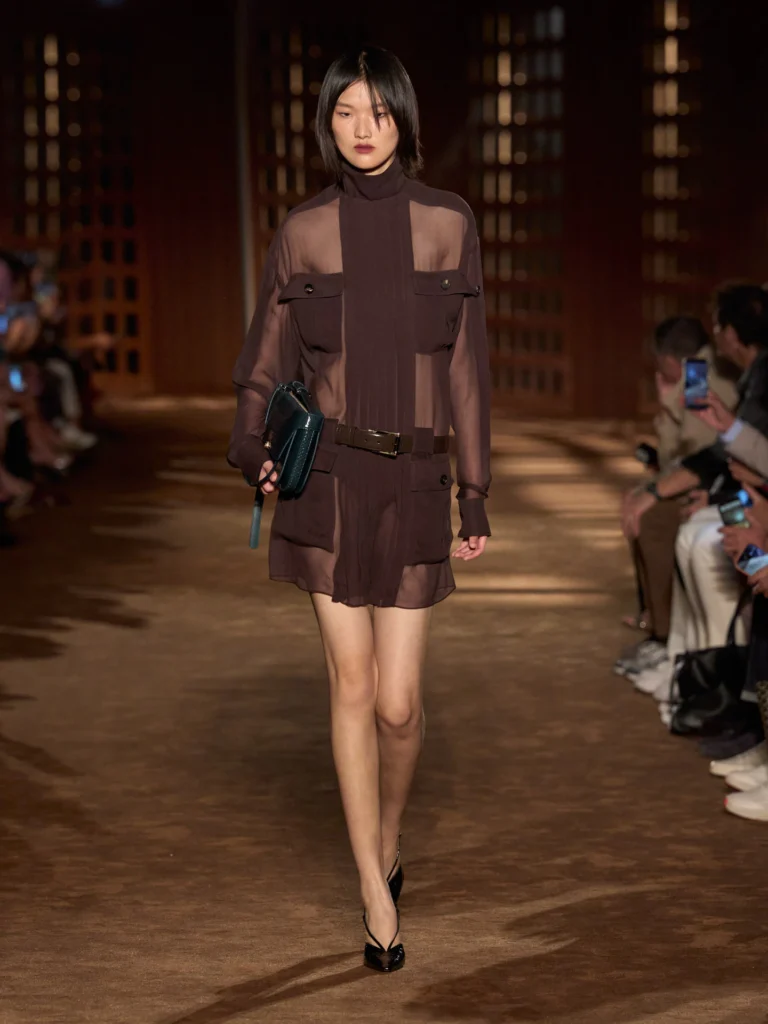
The collection moves beyond Surrealism’s dreamlike imagery. Davis connects the movement to a broader idea of female self-determination, drawing inspiration from women of the period who were taking greater ownership of their own narratives.
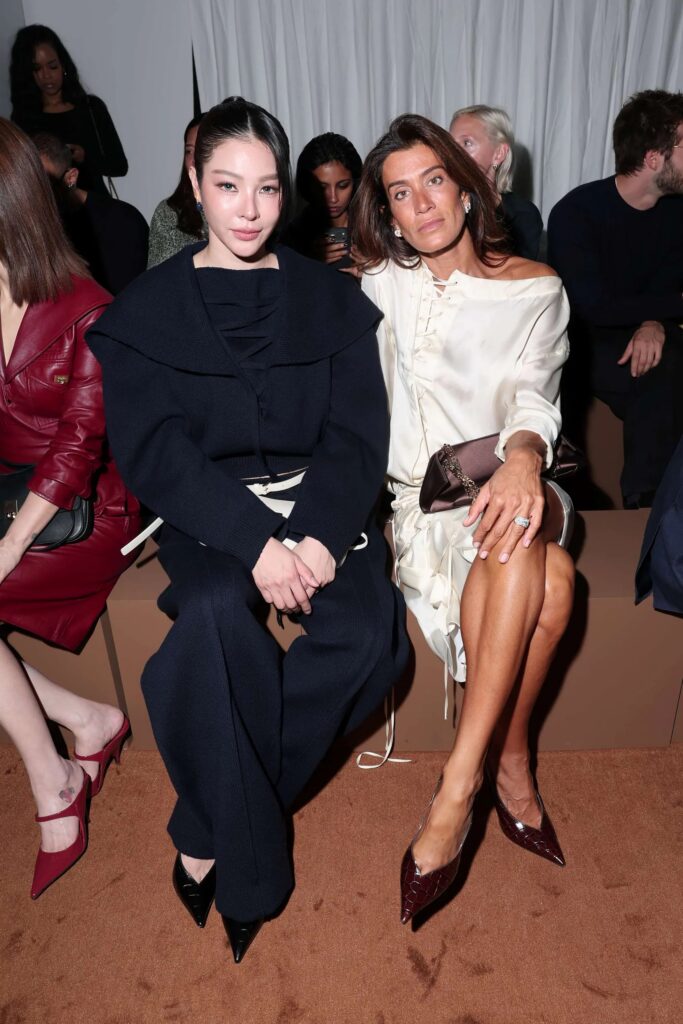
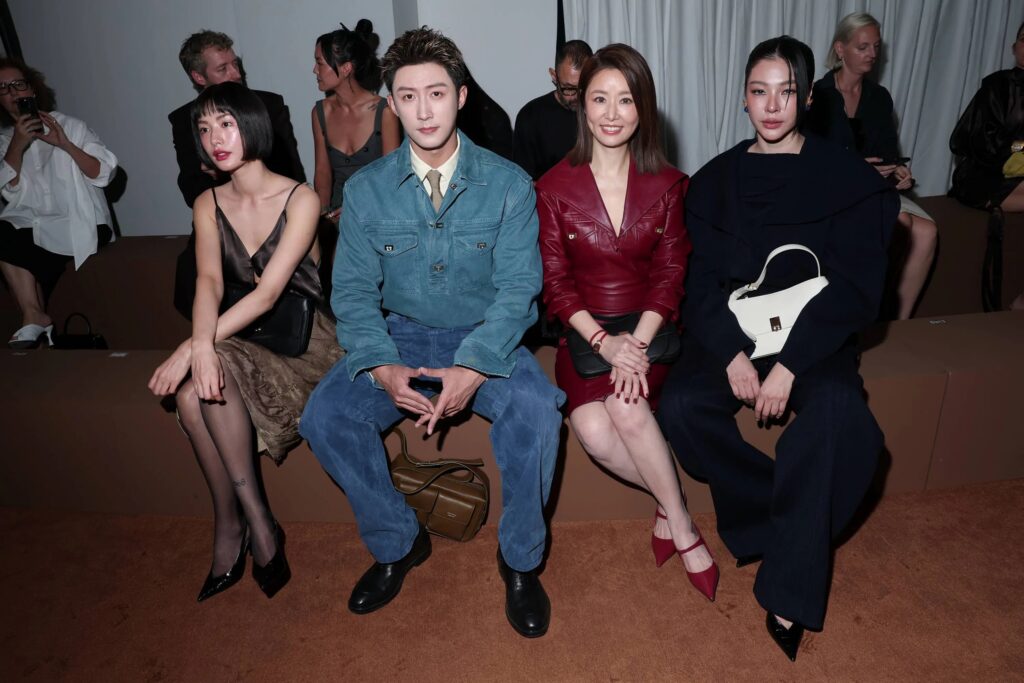
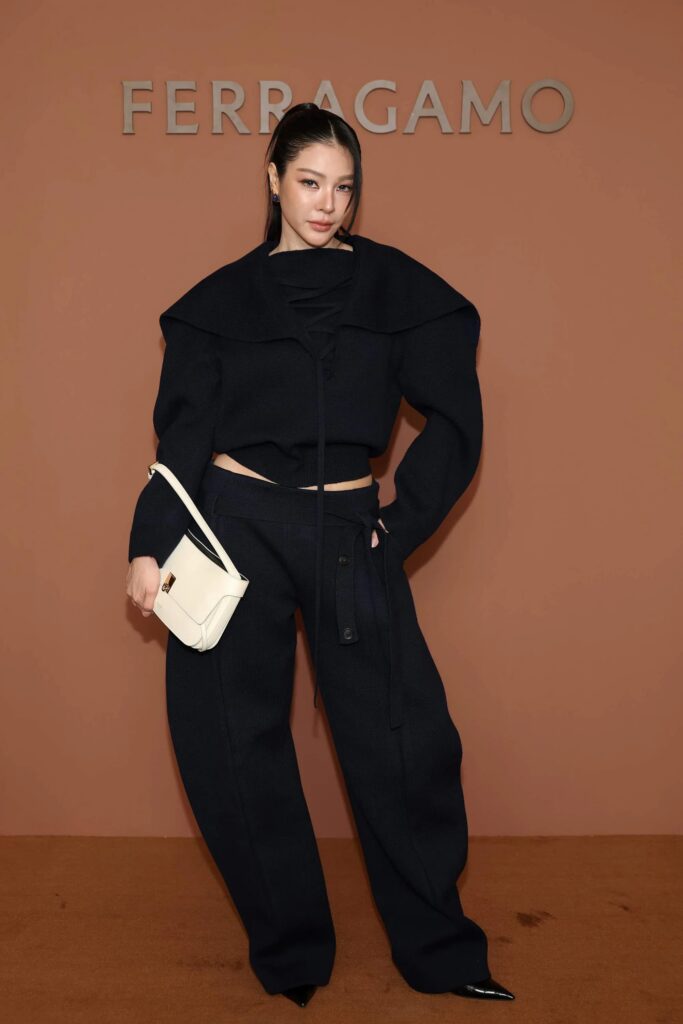
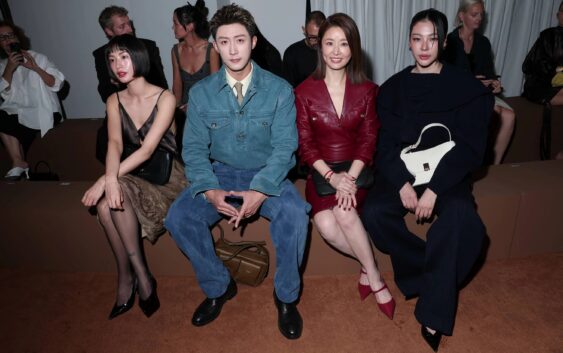
The presence of guests like Igby Rigney, Graham Campbell, Naomi Osaka, Tina Kunakey, and Nana added a distinct energy to the event — each bringing their own story, yet all connected by a shared space where fashion, culture, and personal expression meet. Naomi Osaka, in particular, stood out not just as an athlete but as someone who’s redefined what presence means in high-pressure environments — her ease in the room mirrored the way she moves between tennis, fashion, and advocacy with quiet intention.
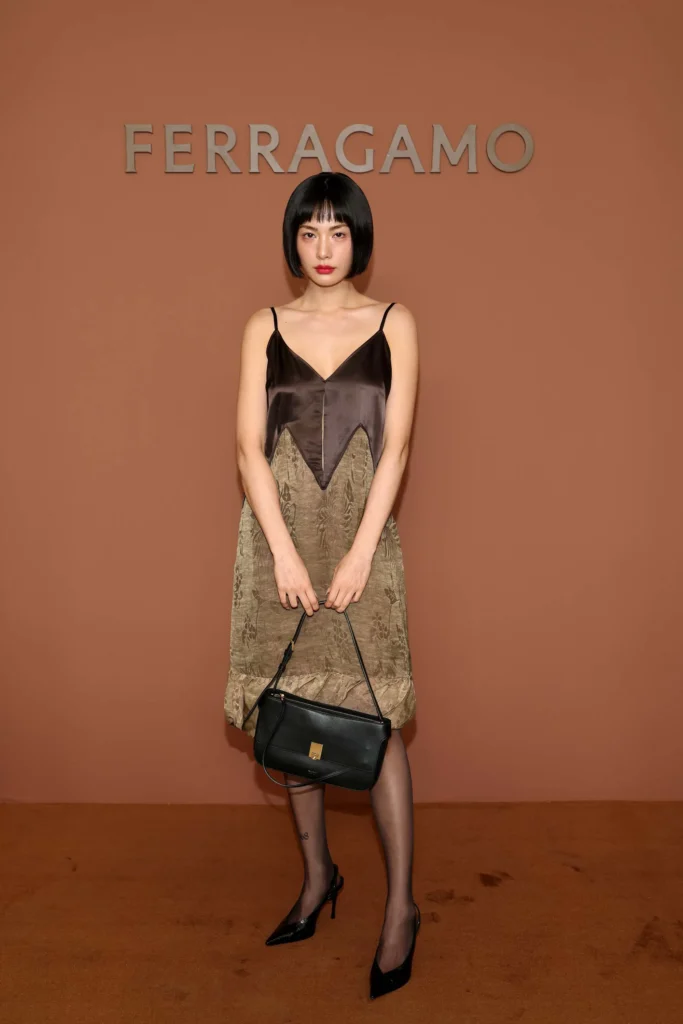
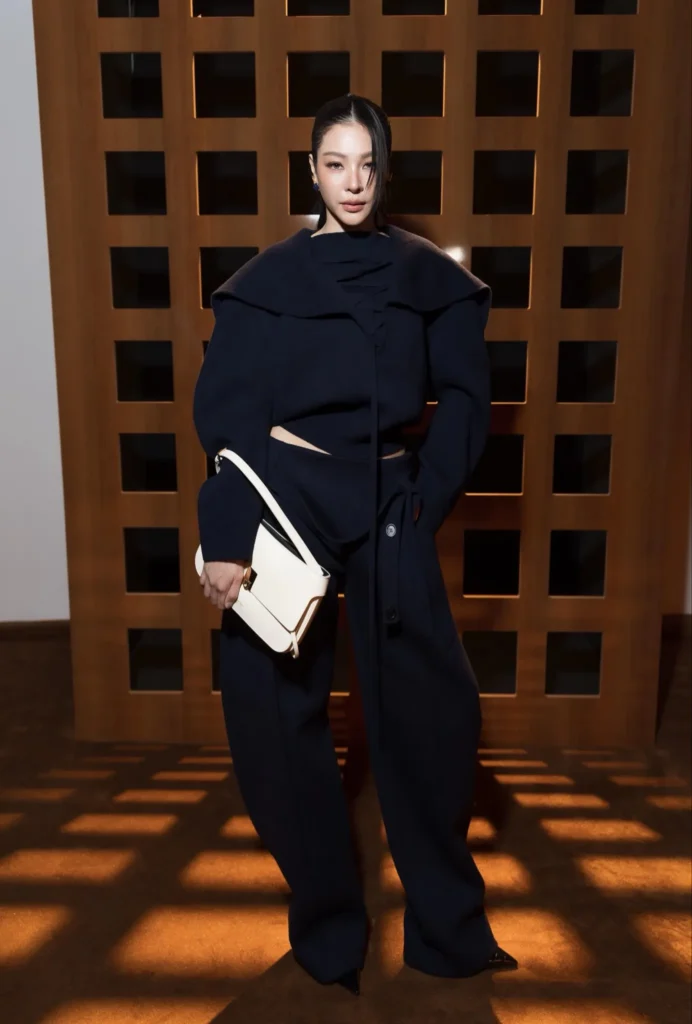
Igby Rigney and Graham Campbell brought a grounded creative force — both deeply rooted in craft, whether through music or design — while Tina Kunakey carried a cinematic elegance, the kind that feels both natural and precisely felt. And Nana — whose work spans performance and cultural commentary — added a layer of depth, a reminder that style is never just surface when it’s tied to identity.
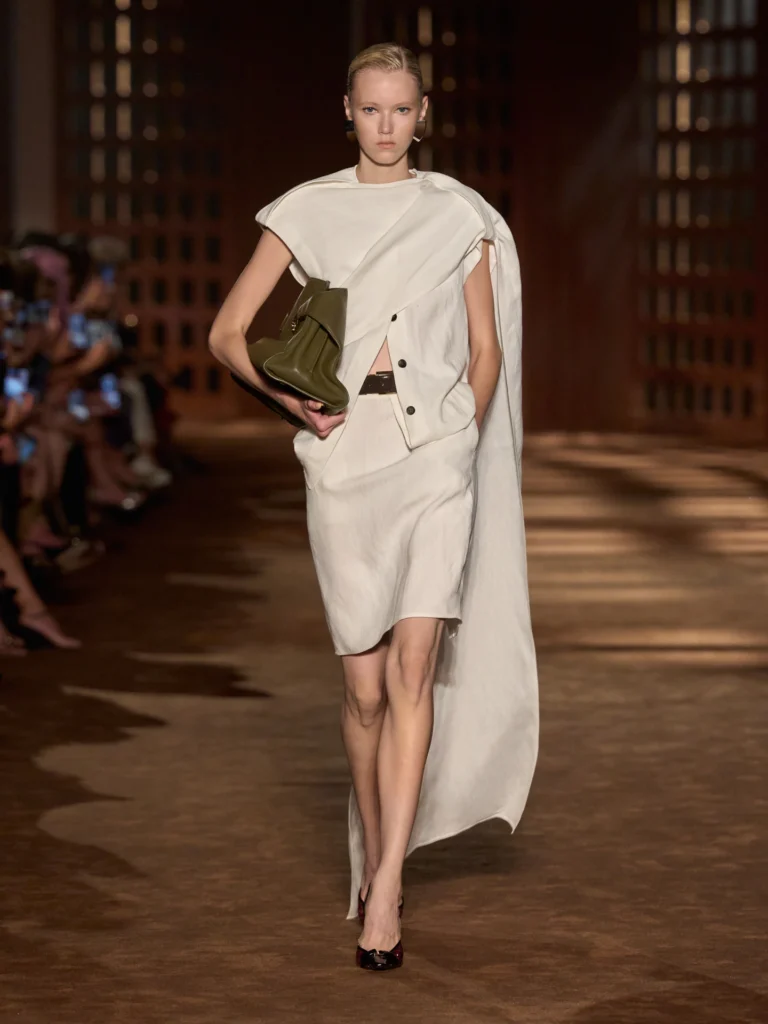
Together, they didn’t just attend — they shaped the tone. It wasn’t about celebrity, but about who these people are when they’re not performing. That’s what made it feel different.
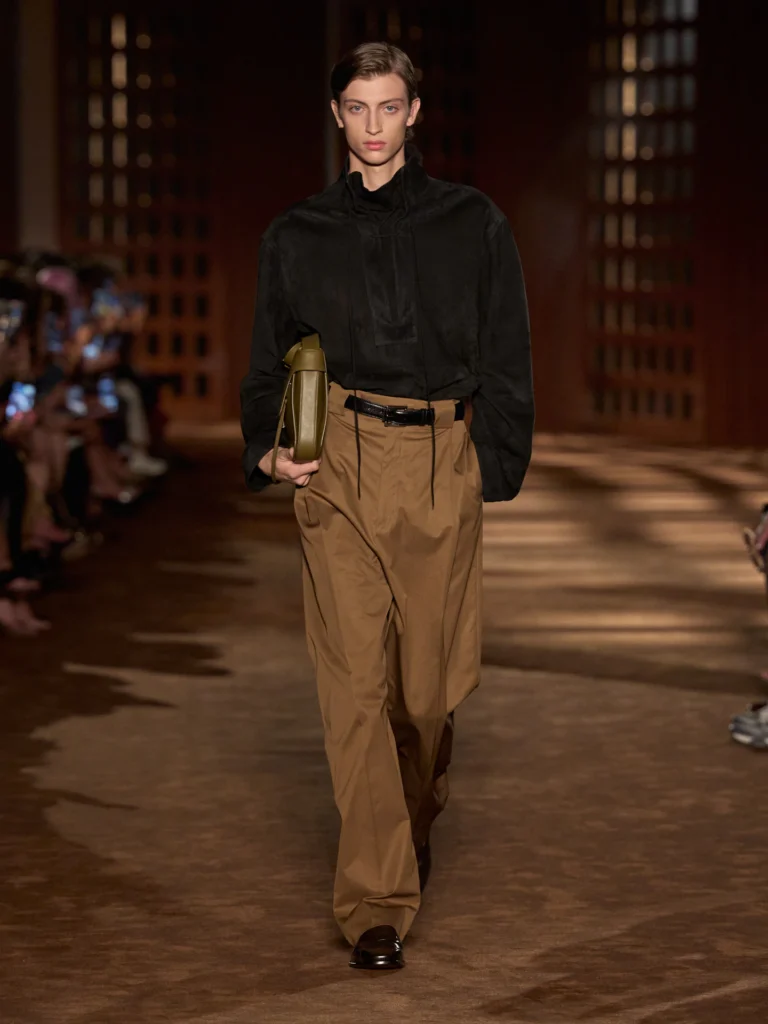
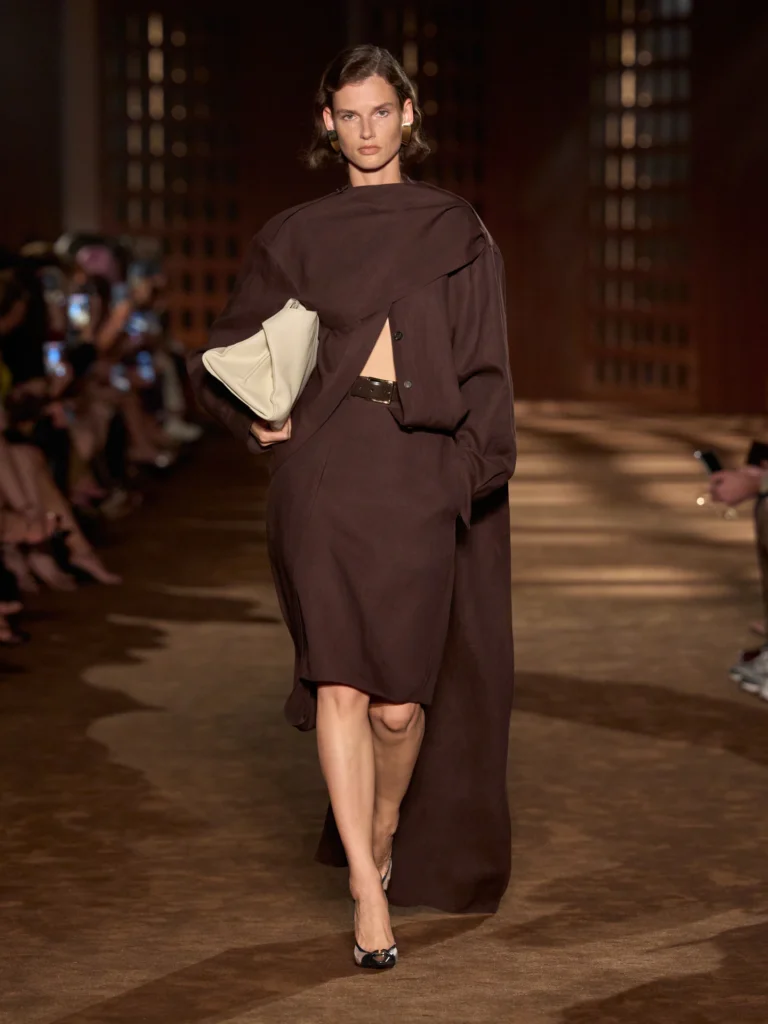
Davis hasn’t just stepped into Ferragamo — he’s redefined what it means to carry a legacy forward. He’s not treating the house’s history as something to preserve behind glass, but as raw material — rich, textured, and full of unspoken stories. From that, he’s built a language that feels both rooted and urgent: sleek leatherwork that nods to Salvatore’s shoemaking roots, but cut with a rhythm that belongs to now.
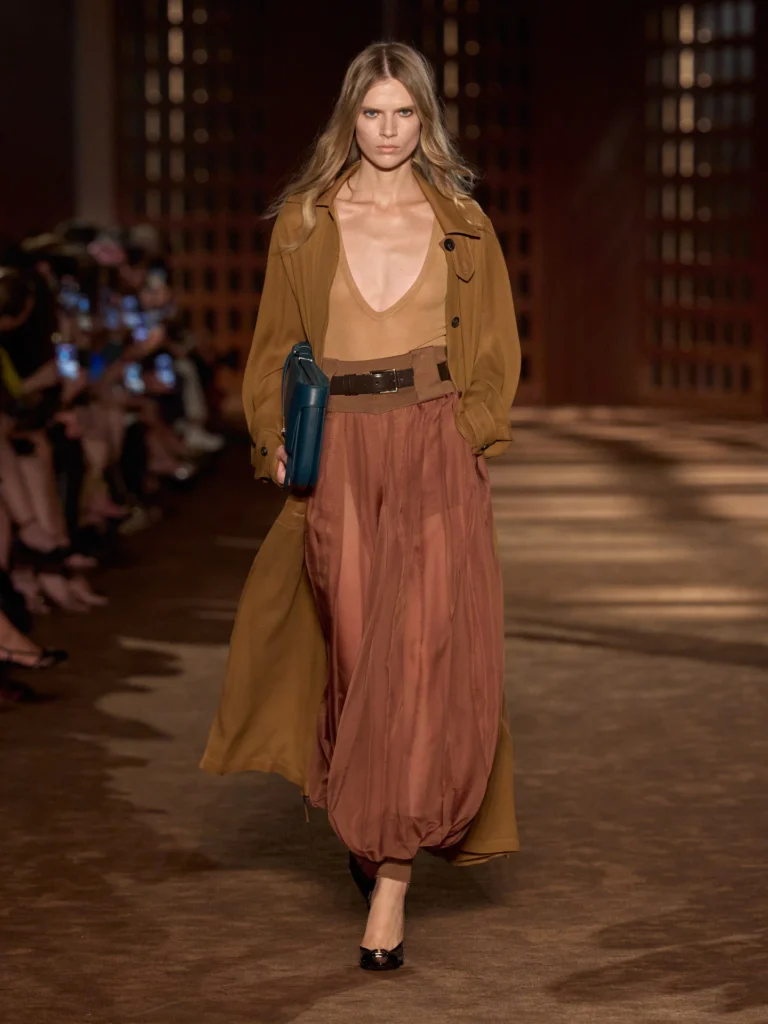
And that’s what’s made his work resonate with a new generation — not because it’s loud or trend-driven, but because it’s intentional. He’s not chasing relevance; he’s earning it, by making Ferragamo feel like a place where craft and culture aren’t just surviving, but evolving. It’s not about who the house was — it’s about who it can be, and Davis is proving that the most faithful way to honor a legacy is to keep it moving.
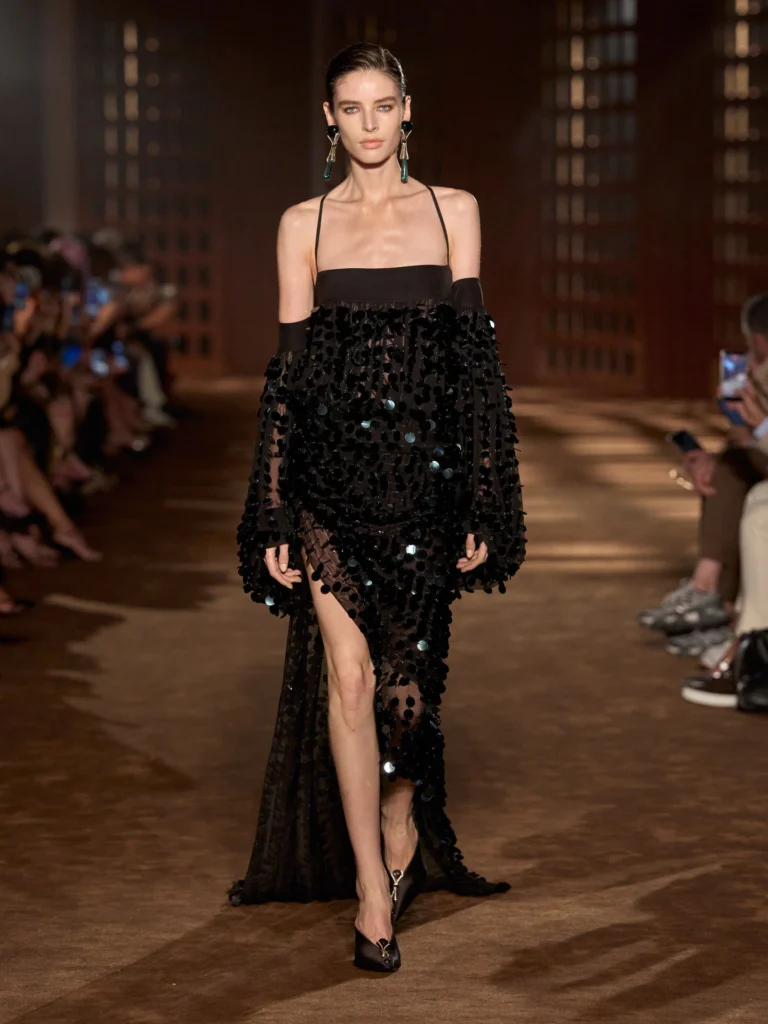
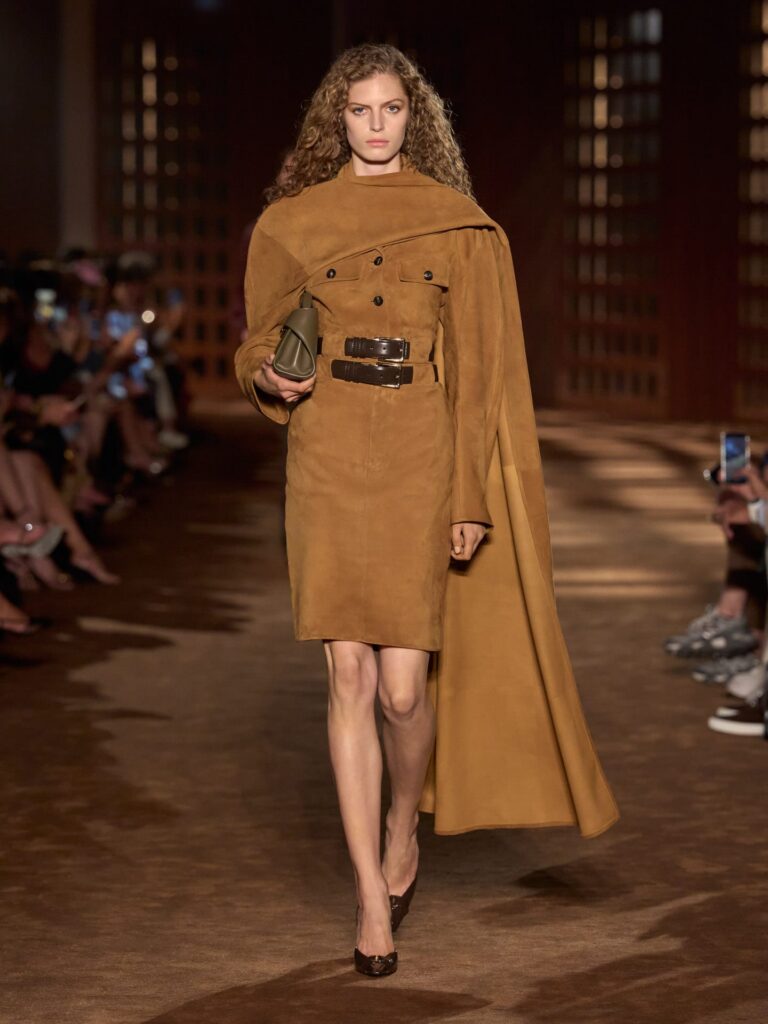
GB Bajaj says, its “The Quiet Reinvention of Ferragamo” — Davis isn’t rewriting the house’s story, he’s refining it. He’s kept the craftsmanship, the ease, the quiet confidence, but reshaped them to speak to a new moment. No loud statements, no forced trends — just a steady, focused evolution that feels authentic, not performative. And in doing so, he’s made Ferragamo feel not like a legacy brand trying to catch up, but like one that’s quietly setting the pace.