SHAPE OF SPACE & FLUIDITY
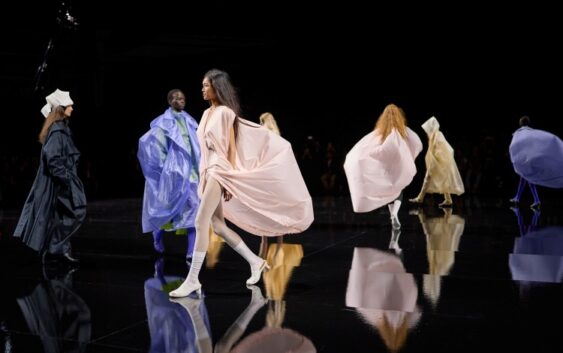
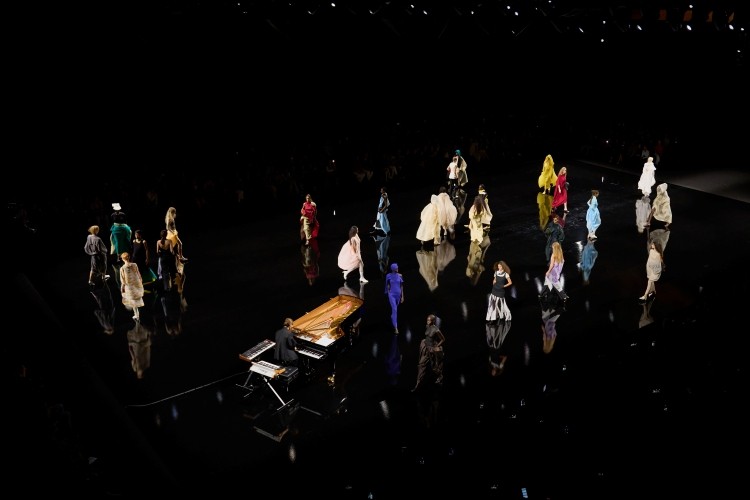
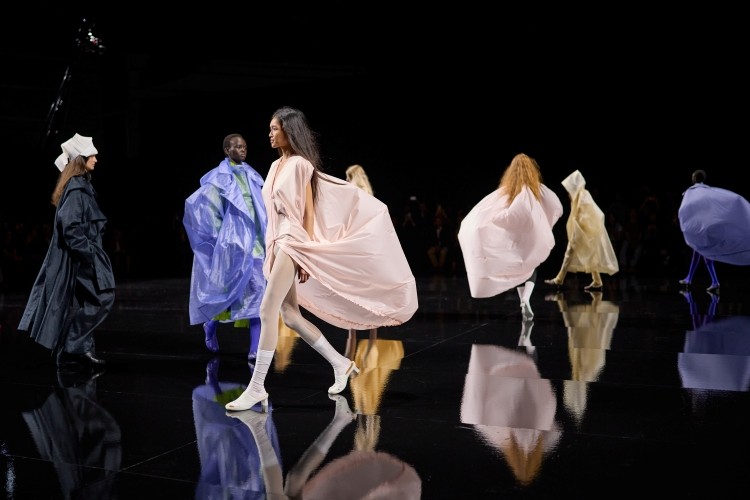
For spring 2027, Satoshi Kondo didn’t just design clothes — he reimagined how fabric moves, breathes, and lives on the body. The Issey Miyake team called the collection “Figure of Ma”, a nod to the Japanese concept of negative space — not emptiness, but the quiet tension between form and freedom. Before a single garment was cut, they took a 10-by-10-meter sheet of ultra-light fabric and let it float, watching how it caught air, how it settled on skin, how it shaped itself without force.
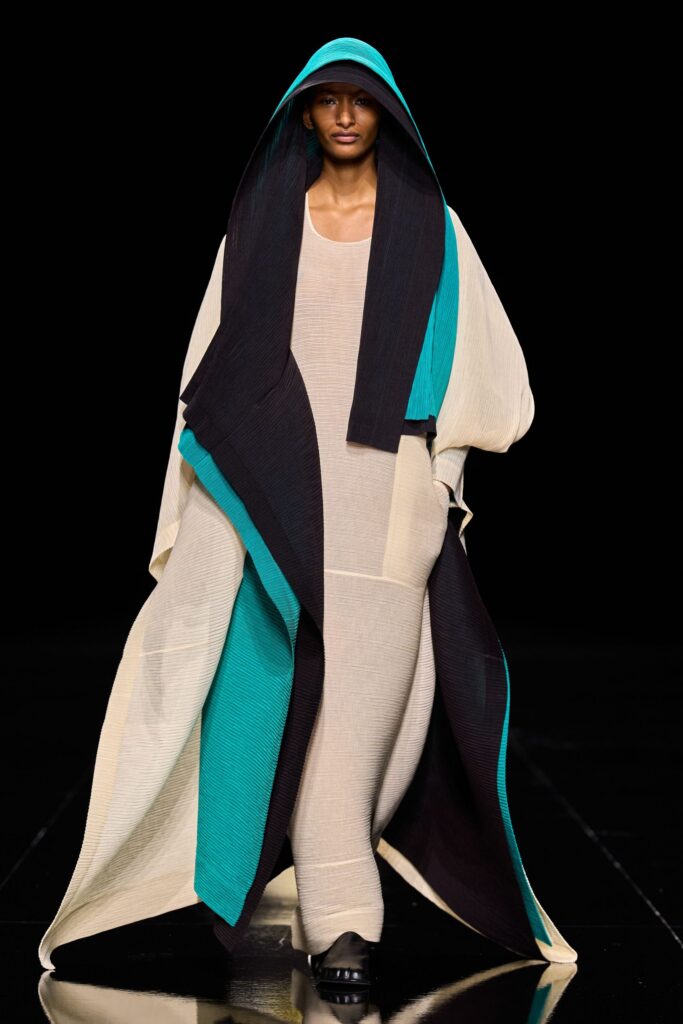
That moment of release — the fabric doing its own thing — became the foundation. From there, Kondo built a wardrobe that feels both sculptural and effortless: volumes that expand and collapse, colors that feel deep and alive, shapes that don’t follow the body so much as respond to it. It’s not fashion as armor. It’s fashion as motion.
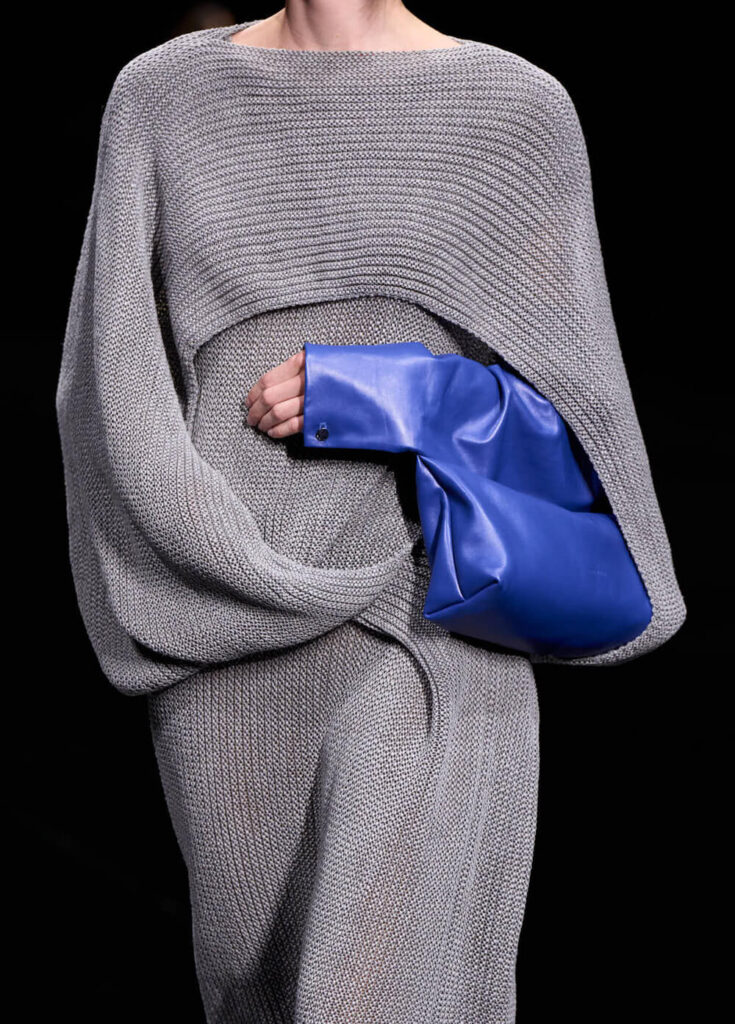
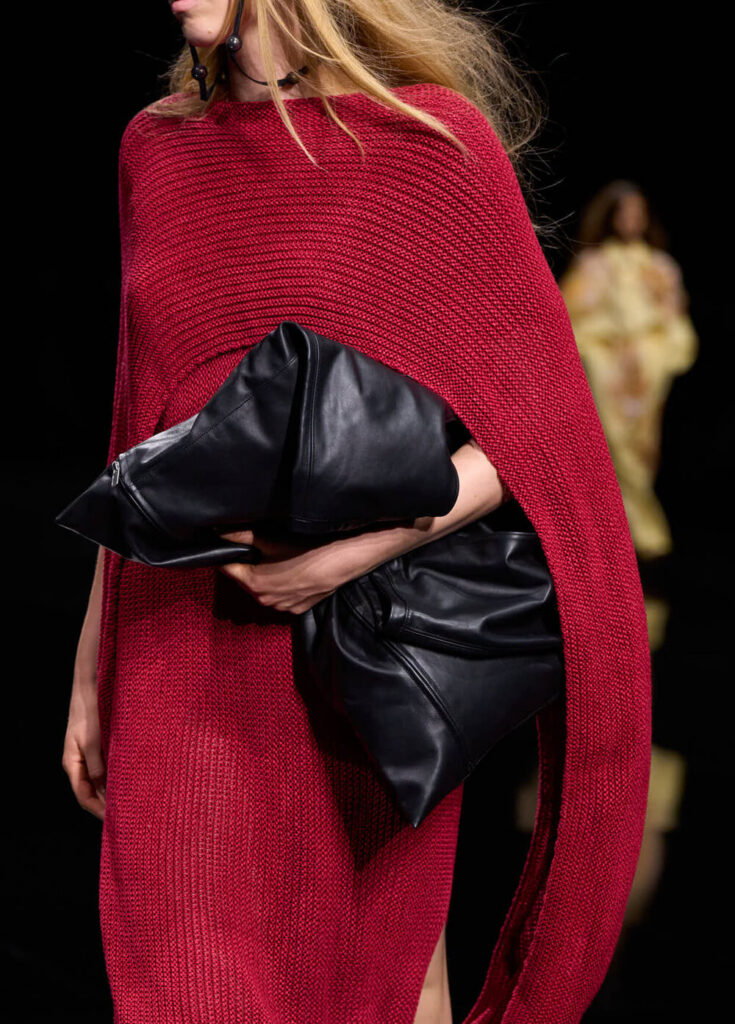
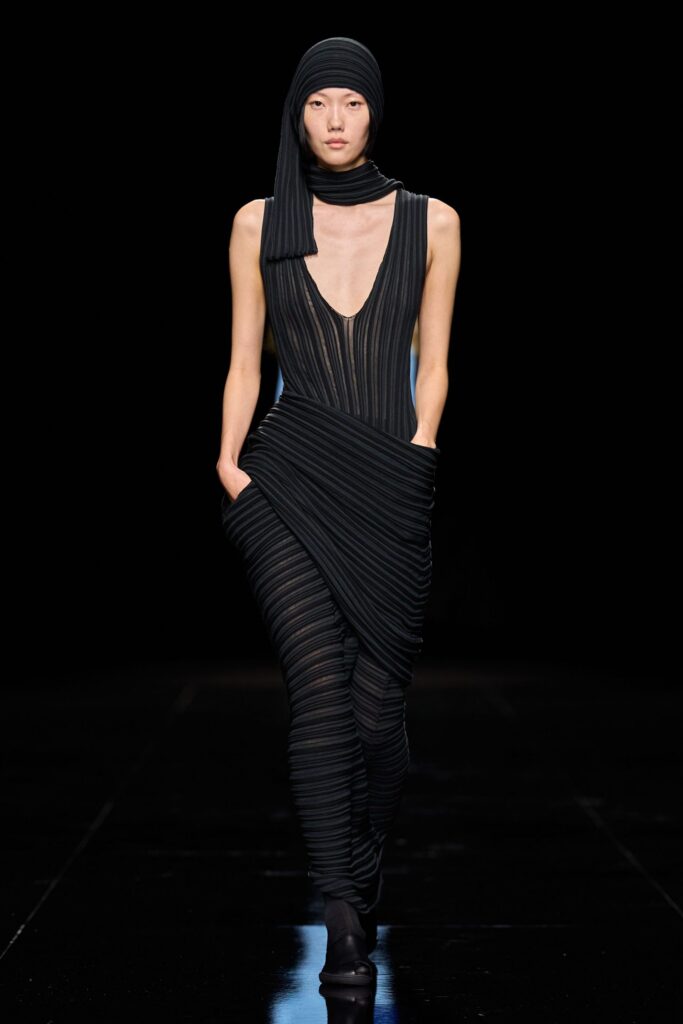
FLUIGLYPH is such a fascinating evolution — it’s not just knitwear, it’s almost like wearable motion. The way it’s built — with uneven garter stitches, ridges that catch the light, and yarns of different thicknesses — means it doesn’t hold a shape so much as borrow one from the body beneath it. It stretches, shifts, and settles differently with every move, like water finding its level.
“Ma is this Japanese idea of the space in between,” Kondo explained. “We are further exploring again the concept of ma. I’ve always been interested in the aesthetic, the joy or the beauty that you can find in ma. “It’s the ma in its purest form,” Kondo said, adding the fabric was almost alive and breathing, with its own identity. “That play really serves as the source of this collection.”
It’s not about structure or silhouette in the traditional sense. It’s about how something can feel solid to the touch but still look fluid, like it’s always in the middle of becoming. Kondo’s not just designing clothes — he’s designing how they behave.
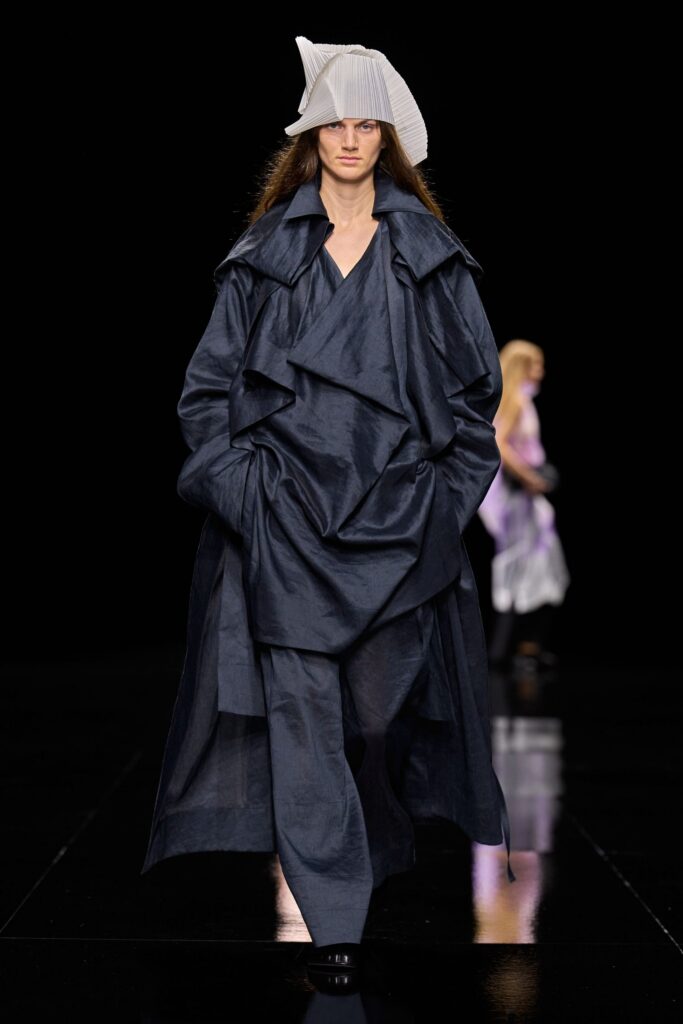
“It’s the ma in its purest form,” Kondo said, adding the fabric was almost alive and breathing, with its own identity. “That play really serves as the source of this collection.”
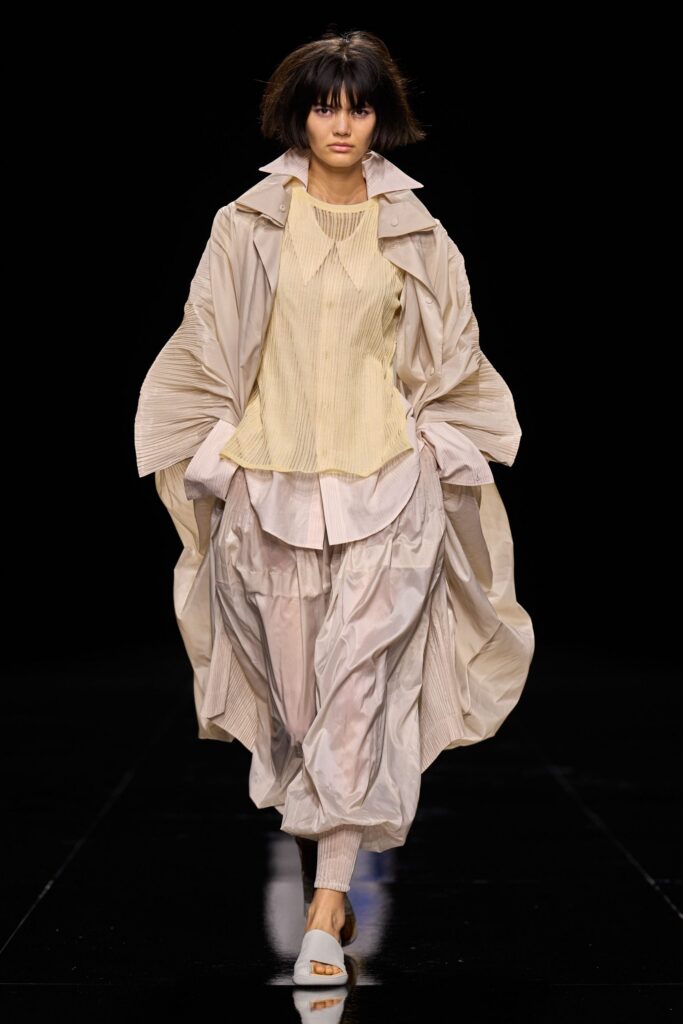
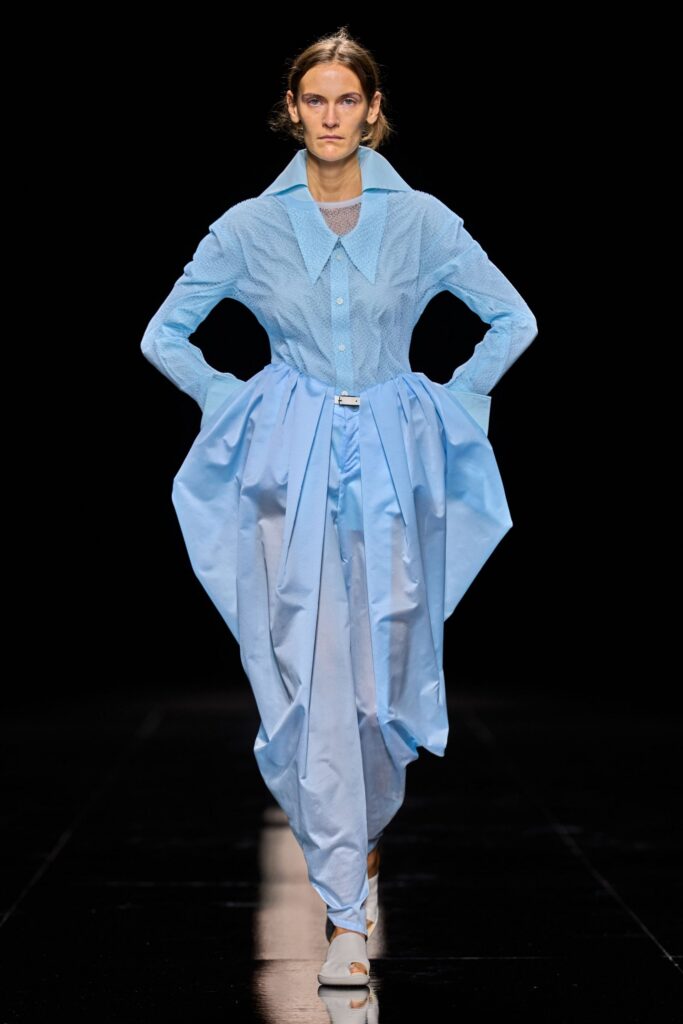
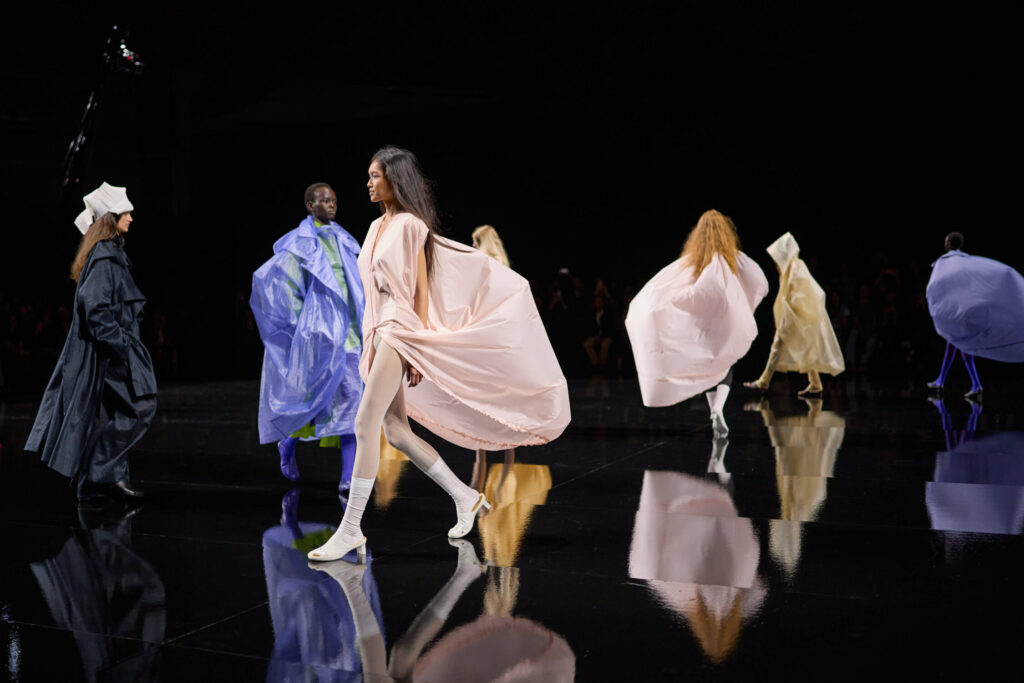
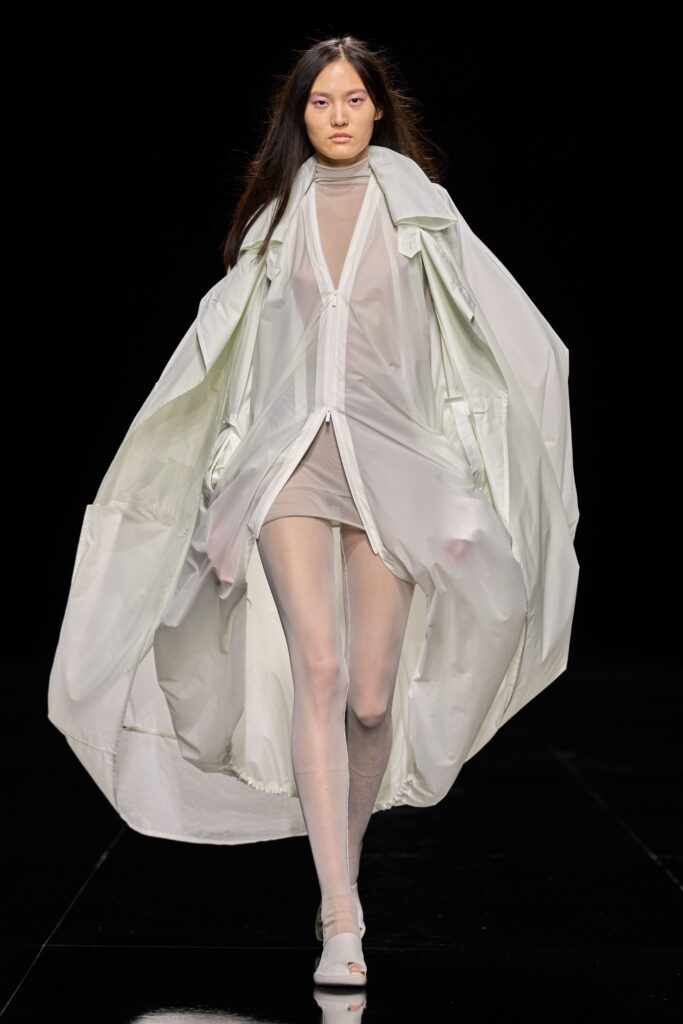
There was a kind of quiet breath in the collection — like the clothes were designed to inhale. Everything felt lifted, almost floating: sleeves like soft sails, skirts that billowed without weight, and those fine, open-knit yarns that let light — and sometimes skin — show through. It wasn’t about being seen as much as being felt — a presence that doesn’t need to be solid to be real.
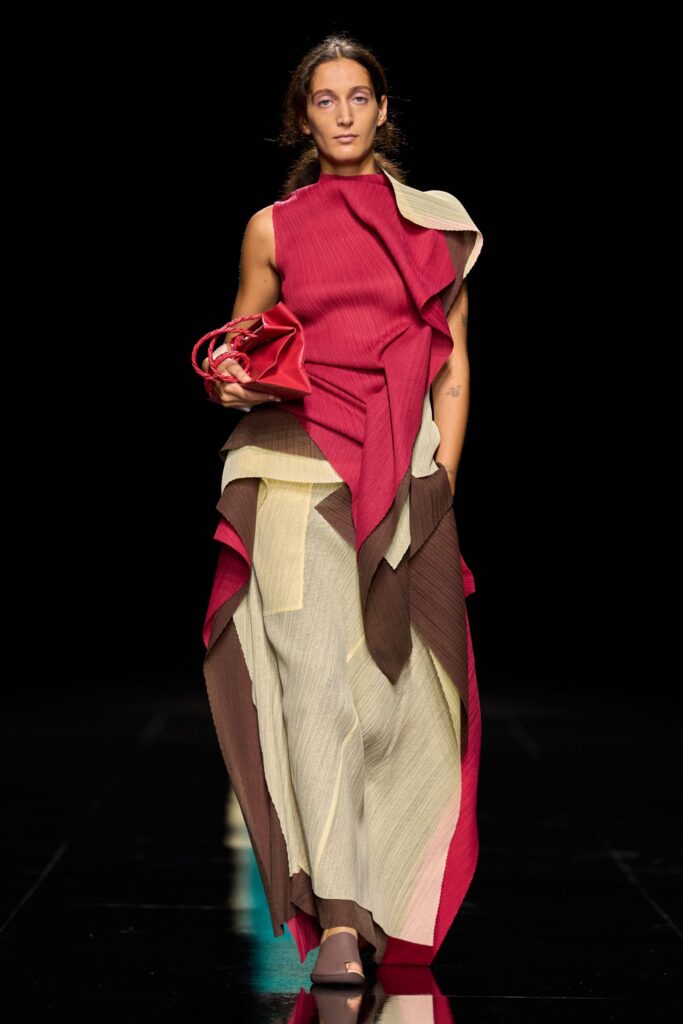
Kondo’s work has always been about movement, but here, it’s like he’s found a way to make air part of the design. The translucency wasn’t delicate — it was deliberate. Like the body isn’t hidden, just framed differently.
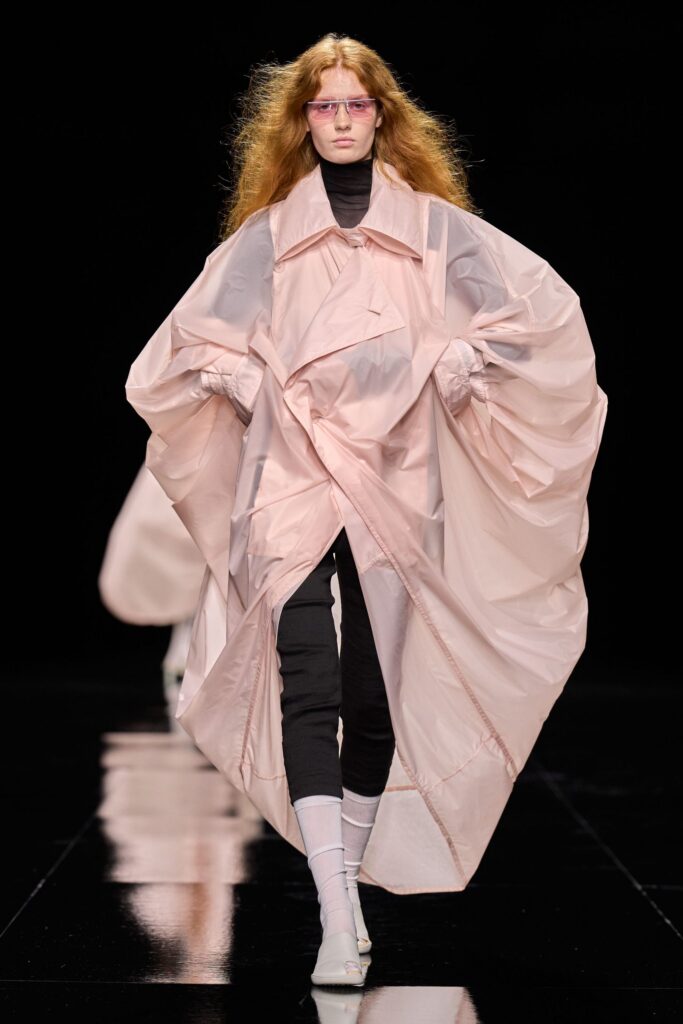
The DRAPED ENSEMBLE feels like sculpture you can wear — not shaped by seams or structure, but by how the fabric falls when it’s wrapped, twisted, and gathered around the body. It’s bold, but never stiff. The fabric, woven with washi paper, has this quiet texture — a soft crinkle, like paper gently crushed in your hand — but it’s so light you forget it’s there.
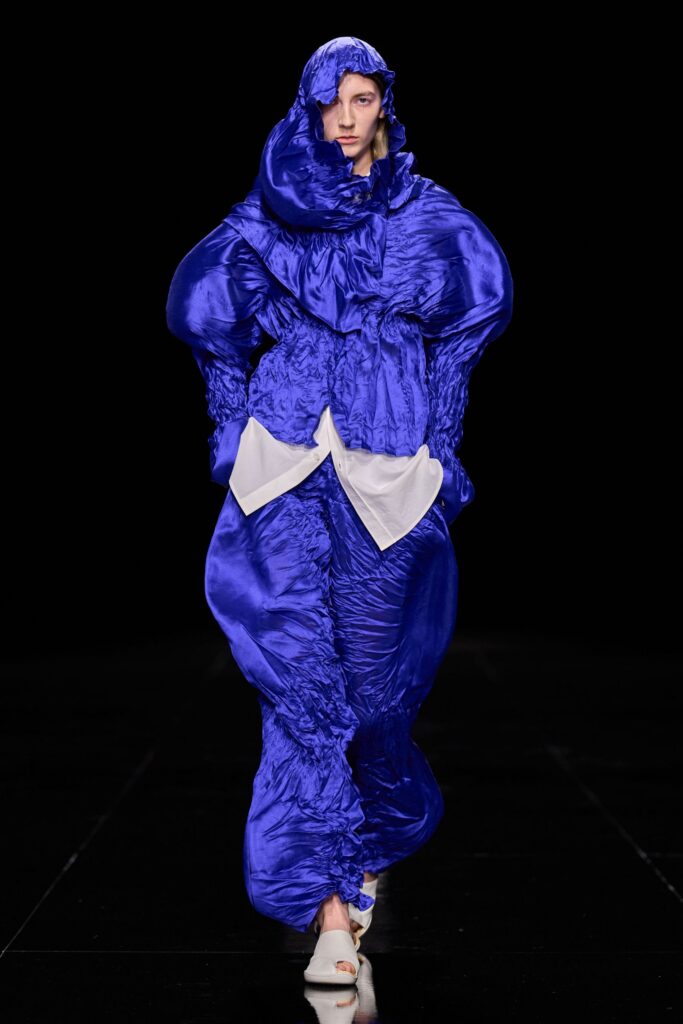
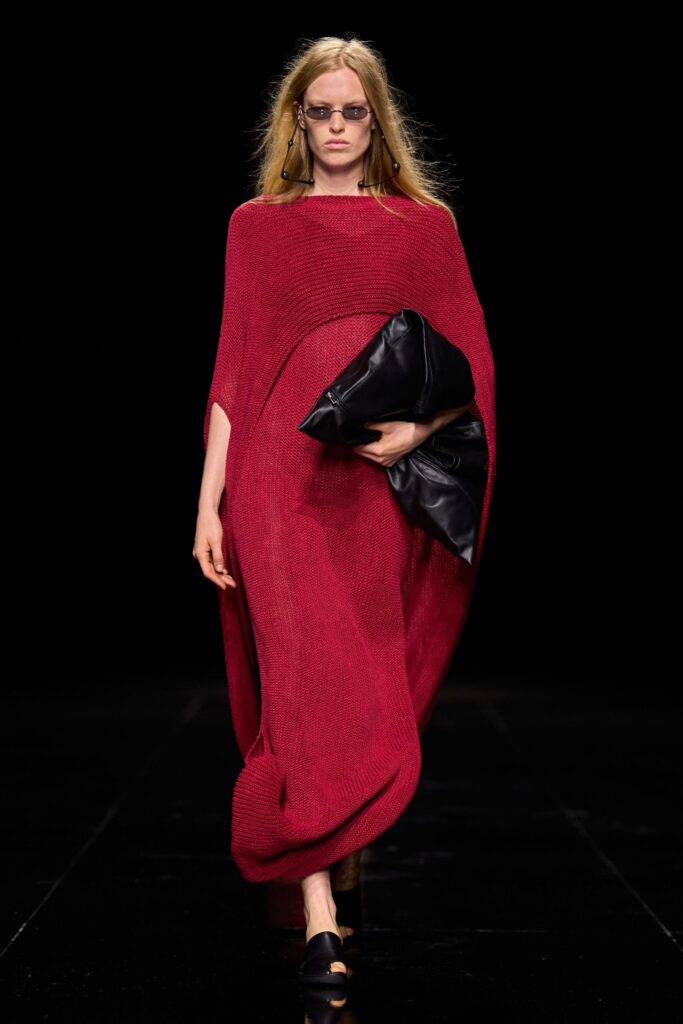
The colors didn’t just pop — they flowed into each other like dyes in water. Azure melting into raspberry, lemon yellow cutting through soft pink, sheer panels layered so the hues deepened where they overlapped. It wasn’t just a palette; it felt like a mood in motion. And because some pieces were sheer, others fully opaque, the way the colors landed changed with every step — sometimes bright and direct, sometimes softened, like light through fabric. Kondo’s always been about how clothes live in the world, and here, even the color feels alive — not fixed, but shifting, lush, and full of air.
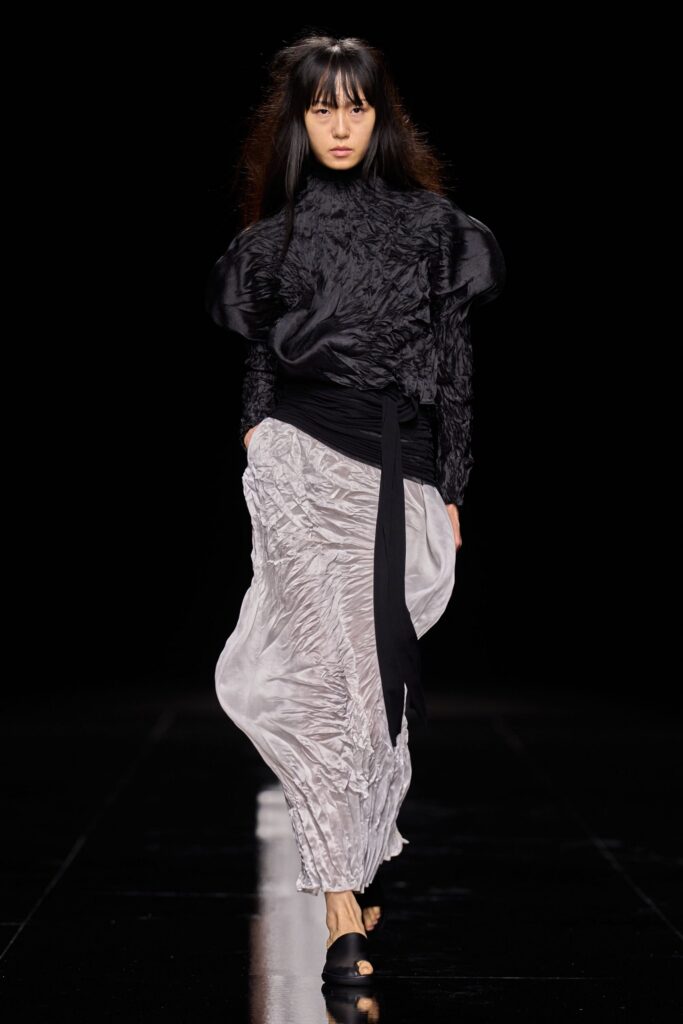
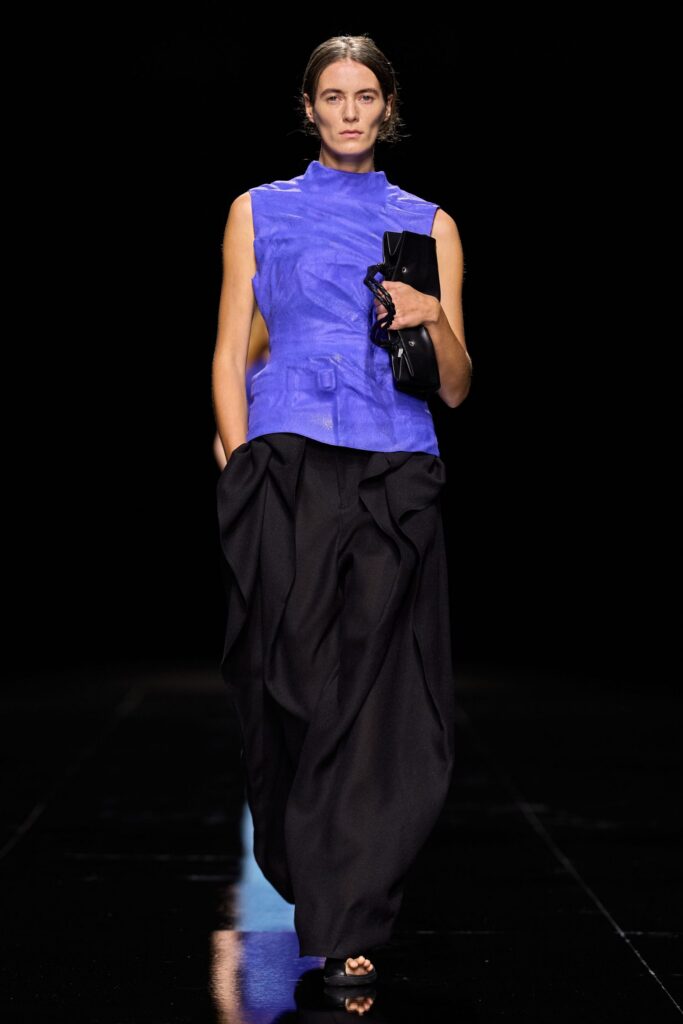
“We are really challenging ourselves to make a new aesthetic and new clothing,” Kondo said.
COCOON BODY feels like a quiet revolution — not loud, but deeply intentional. It’s where Issey Miyake’s curiosity about the body and form meets Wacoal’s precision in intimate wear, using their “Melooop” tech — originally for shaping bras — and reimagining it for clothing. By mounting a torso mold on a robotic arm, they’ve turned a process built for support into one that sculpts wearable forms, layer by layer.It’s not about stitching fabric together.
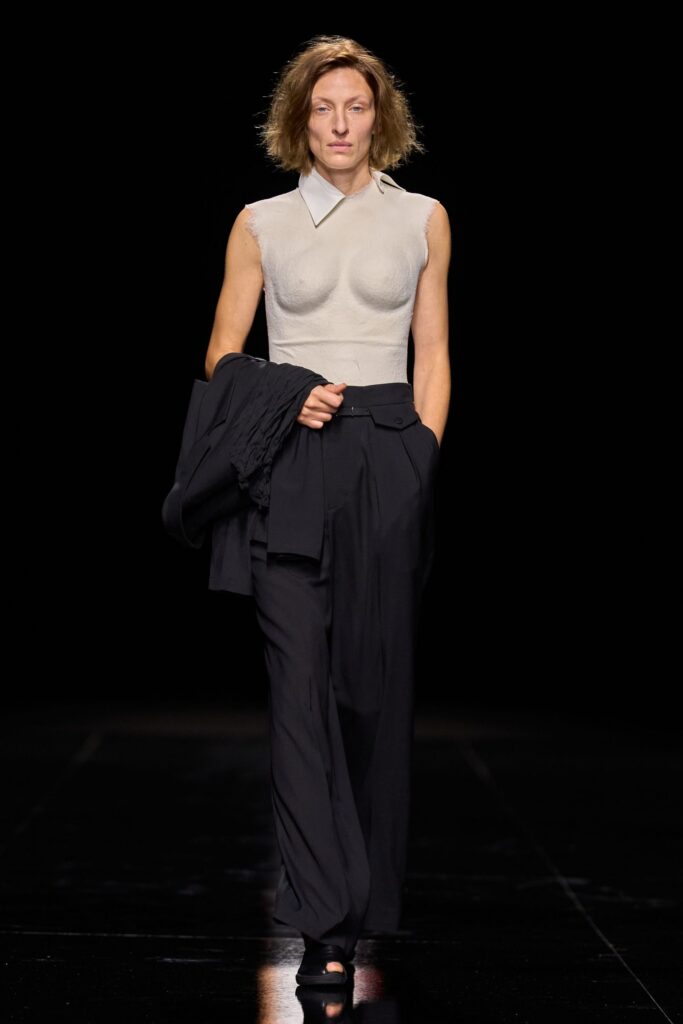
It’s about molding something that fits like it grew there. And that changes everything — not just how clothes are made, but how they feel: structured, yet soft; close to the body, but not tight. This isn’t just innovation for novelty. It’s a new way of thinking about what clothing can be — not something you put on, but something that holds you.