INNOVATION DRIVING A PROSPEROUS INDIA
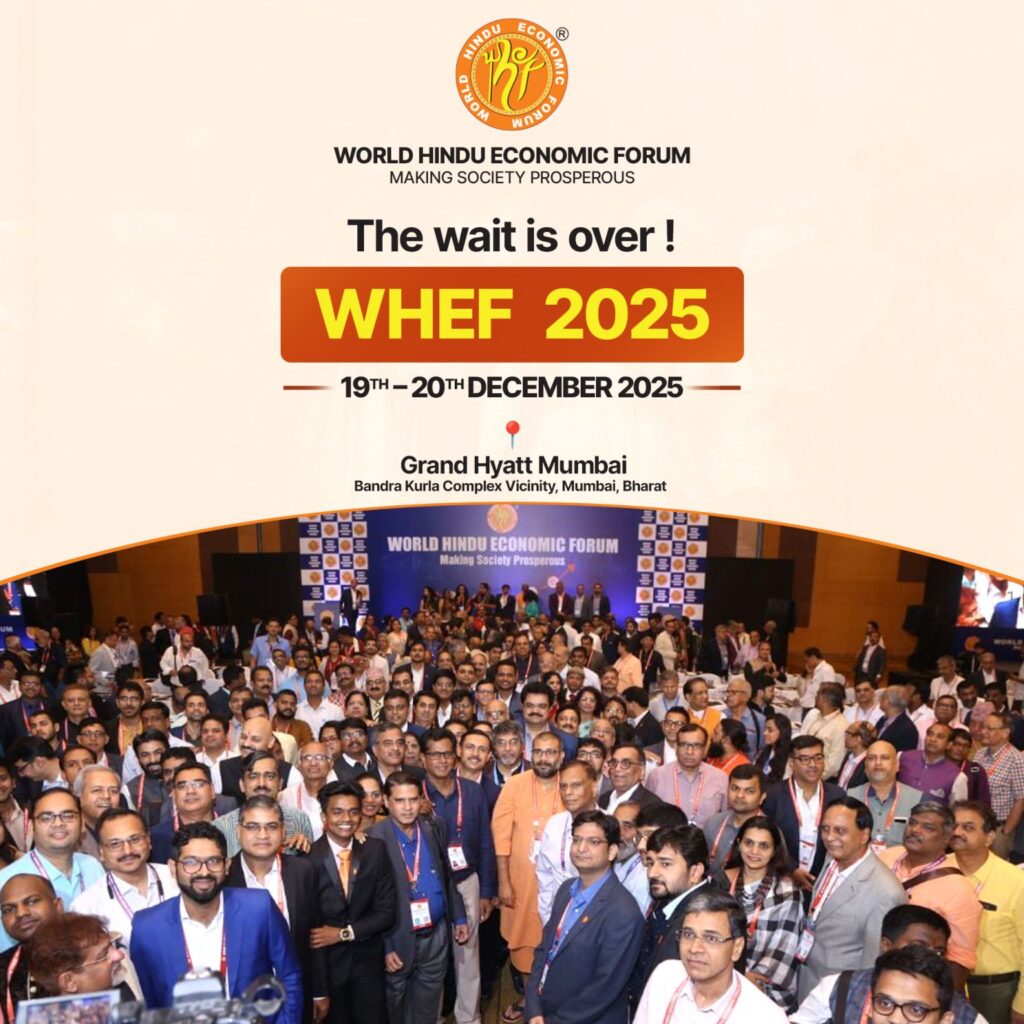
The World Hindu Economic Forum 2025 (WHEF 2025) took place on December 19–20, 2025, at the Grand Hyatt in Mumbai, India, under the theme “Innovation, Self-Reliance, and Prosperity.” Organized by the World Hindu Economic Forum, the conference brought together entrepreneurs, corporate leaders, policymakers, and MSMEs.
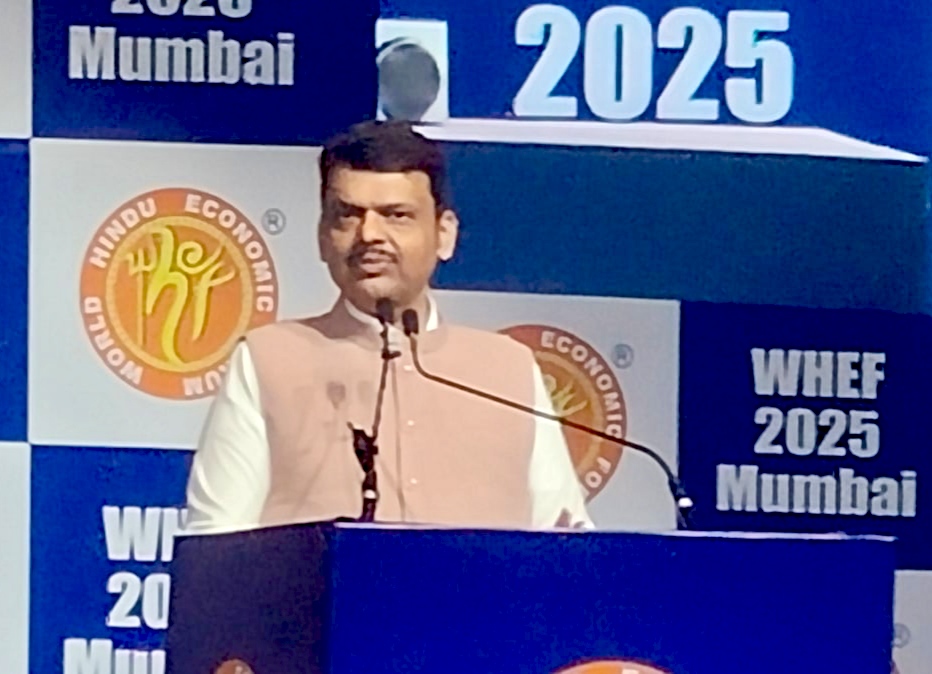
At the World Hindu Economic Forum (WHEF) 2025 in Mumbai on December 19, 2025, Maharashtra Chief Minister Devendra Fadnavis inaugurated the summit under the theme “Innovation, Self-Reliance and Prosperity,” emphasizing values-driven wealth creation and India’s growing leadership in the Global South. A major highlight of his address was the announcement of a dedicated 54-storey African Centre in Navi Mumbai—featuring individual floors for African nations’ representative offices—to serve as a permanent hub for bilateral trade, technology, and institutional cooperation. Additionally, the event saw significant economic momentum for Maharashtra with the handover of a ₹2,000 crore Letter of Intent from Shree Cement for new manufacturing and green energy infrastructure, reinforcing Fadnavis’s message that domestic innovation, self-reliance, and ethical enterprise are key to India’s global economic rise.
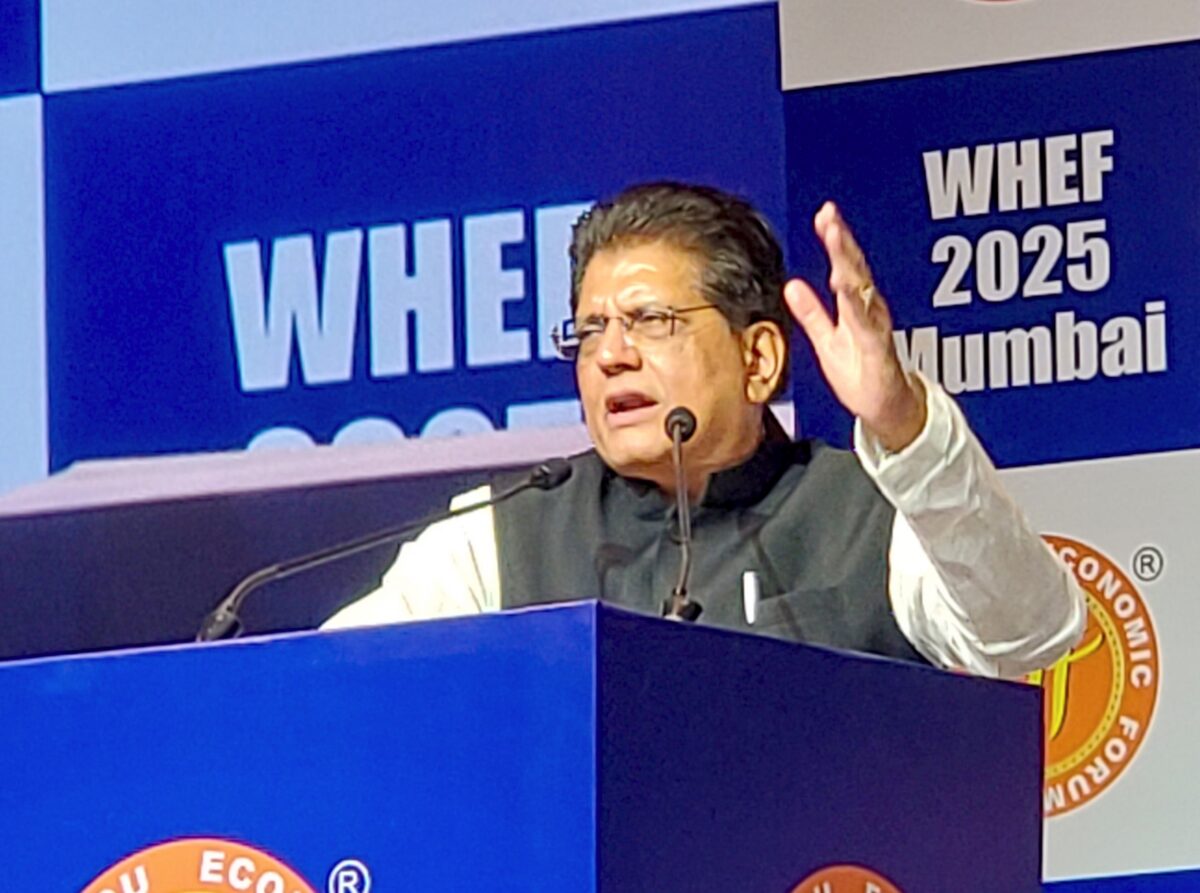
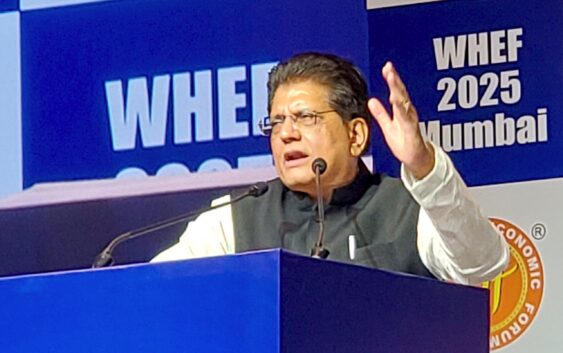
Speaking at the World Hindu Economic Forum 2025 in Mumbai during the session Establishing Brand Bharat: Competitiveness in Global Trade, Union Commerce and Industry Minister Piyush Goyal emphasized that India’s economic rise reflects a fundamental shift in mindset, values, and civilizational ethos rooted in Vasudhaiva Kutumbakam. Contrasting the country’s current trajectory with the past era of low economic expectations, he highlighted how structural policy reforms, new labour codes, digital innovation, and rising exports have positioned India as a trusted global trading partner. Goyal concluded that aligning ethical governance and innovation-driven enterprise with these core cultural principles lays a strong foundation for India’s journey toward becoming a developed nation.
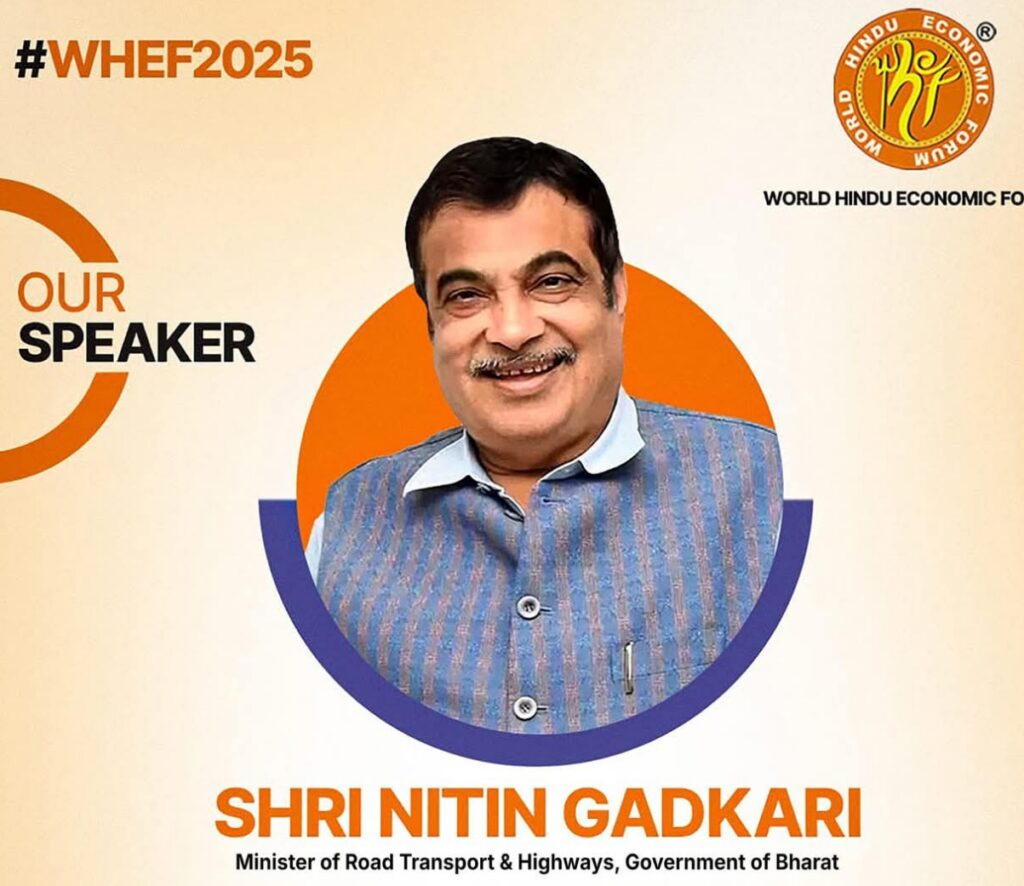
At the World Hindu Economic Forum (WHEF) 2025 held on December 19–20, 2025, at the Grand Hyatt in Mumbai, Union Minister for Road Transport and Highways Nitin Gadkari emphasized that world-class infrastructure is the primary backbone of India’s economic growth. He expressed strong confidence that India’s road network would match—and in several areas surpass—American standards within the next two years. Gadkari noted that the core objective of this rapid infrastructure expansion is to significantly reduce logistics costs, thereby making Indian goods more competitive in global markets. Ultimately, he stressed that modernizing transport connectivity is essential to attracting capital investment, driving industrial expansion, generating employment, and realizing the national vision of a USD 5 trillion economy.
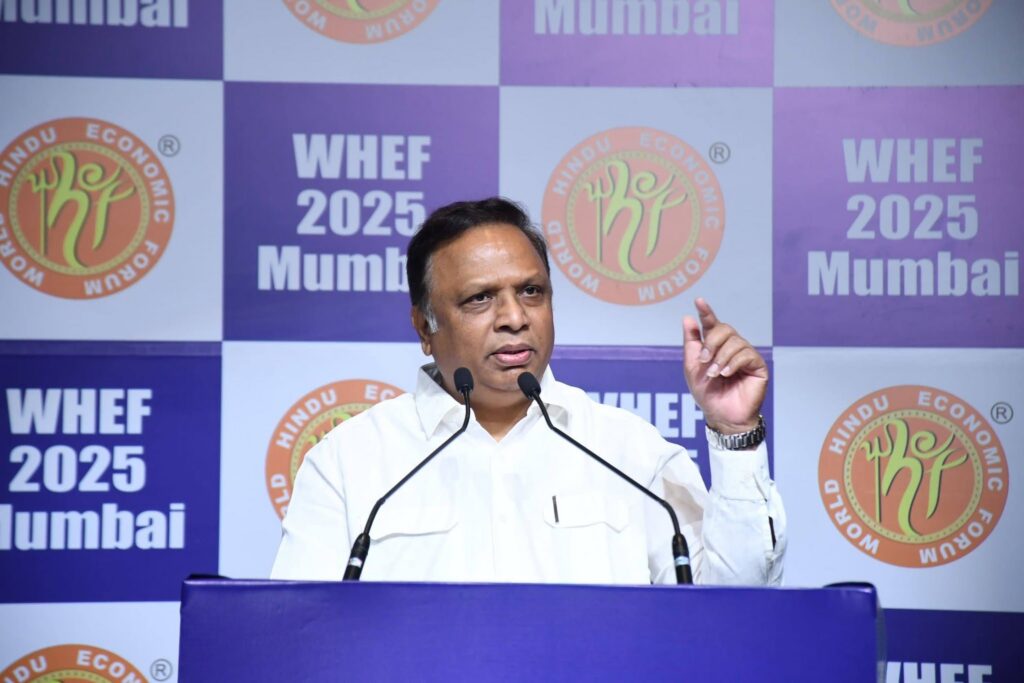
At the World Hindu Economic Forum 2025 in Mumbai, Maharashtra IT and Cultural Affairs Minister Ashish Shelar unveiled the state’s roadmap to become a global technological hub. He announced plans to establish India’s first dedicated Artificial Intelligence University, with the Bhoomi Poojan scheduled within six months, alongside a 300-acre greenfield AI City in Navi Mumbai near the new airport. Under the state’s IT and innovation blueprint, Maharashtra is targeting ₹50,600 crore in investments and aims to generate four lakh skilled jobs. To attract AI-enabled businesses and Global Capability Centers, the government is offering tax relief such as stamp duty exemptions, local body tax waivers, and customized enterprise concessions.
Beyond infrastructure, Shelar framed these initiatives as a major transition from e-governance to AI-driven governance to modernize public service delivery and administrative efficiency. Aligned with the “Vikasit Maharashtra 2047” vision, his three-pillar AI strategy focuses on integrating AI across sectors like agriculture and manufacturing, establishing clear subsidies and standard operating procedures for entrepreneurs, and upskilling the local workforce. To support this technological shift, the state has also formed a specialized task force of administrators and industry leaders dedicated to Machine Learning and Quantum Computing.
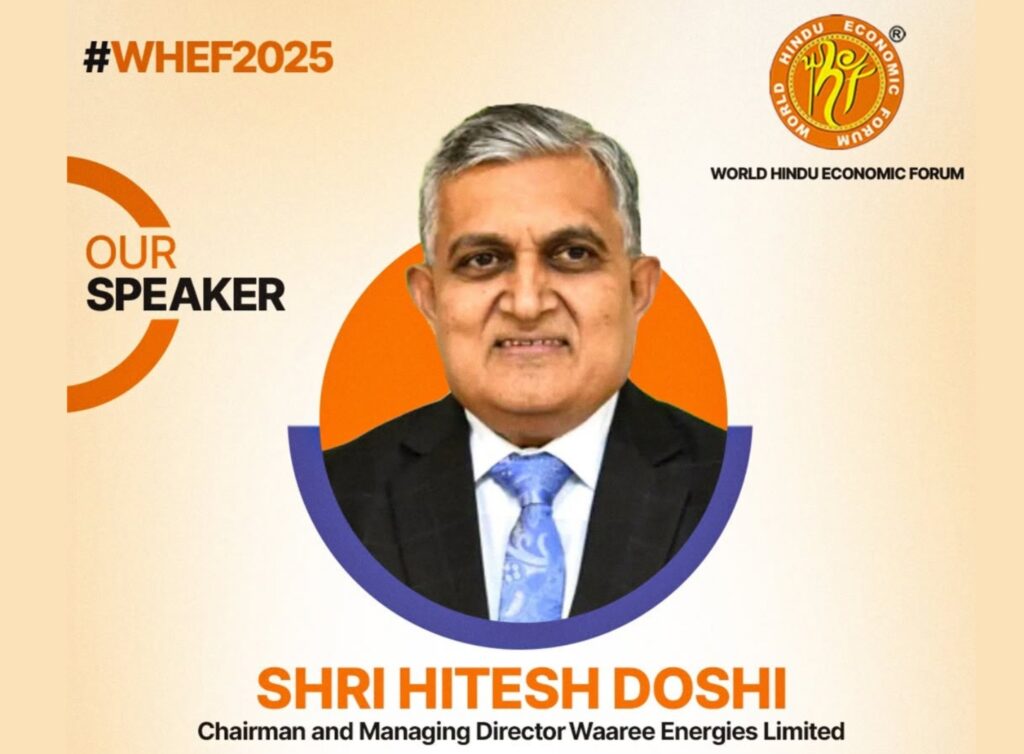
At the World Hindu Economic Forum (WHEF) 2025, held on December 19–20 at the Grand Hyatt in Mumbai, Waaree Energies Chairman and Managing Director Hitesh Doshi shared insights from scaling an Indian manufacturing startup into a global clean energy leader. Speaking alongside prominent business figures and policymakers under the forum’s theme of “Innovation, Self-Reliance, and Prosperity,” Doshi highlighted how domestic enterprises can build resilient, world-class operations that reduce import dependency.
A central takeaway from his address was the strategic importance of backward integration and early technological adoption to sustain long-term growth. Drawing on Waaree’s evolution across solar cells, modules, and emerging fields like battery storage and green hydrogen, Doshi emphasized that Indian entrepreneurs and MSMEs must pair ethical wealth creation with global expansion to meet rising energy demands from AI, data centers, and industrial automation.
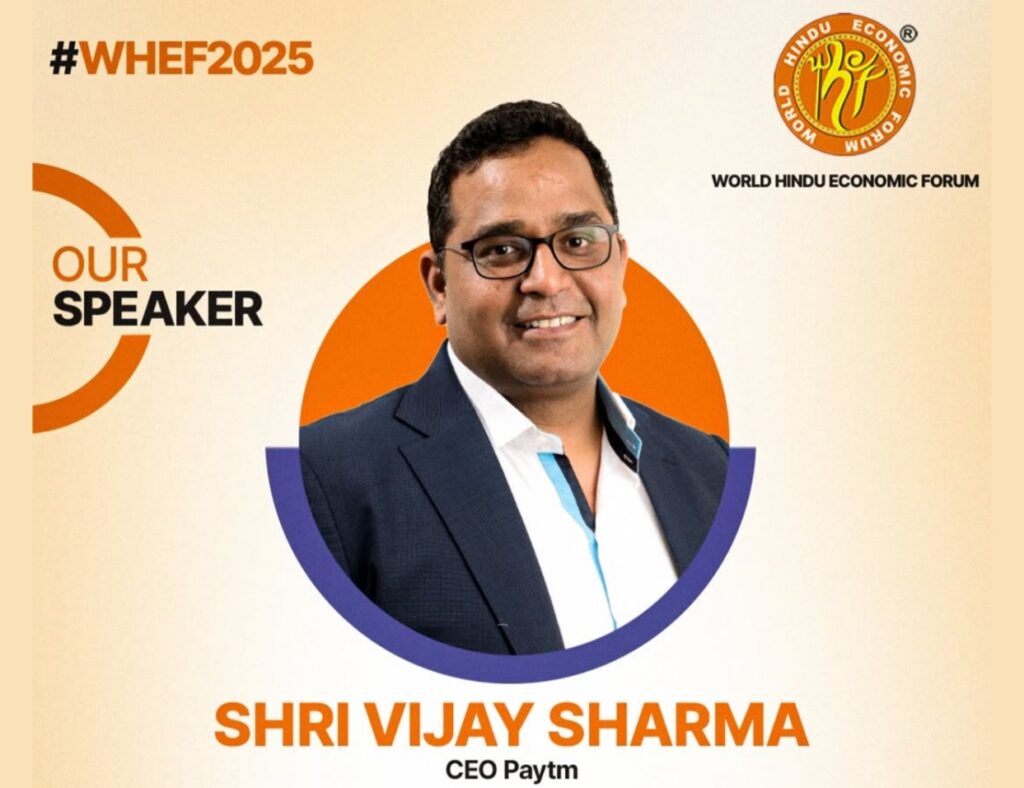
At the World Hindu Economic Forum (WHEF) 2025, held on December 19–20 at the Grand Hyatt in Mumbai under the overarching theme of “Innovation, Self-Reliance, and Prosperity,” Paytm Founder and CEO Vijay Shekhar Sharma joined prominent policymakers and industrialists to highlight the central role of technology, entrepreneurship, and inclusive digital infrastructure in shaping India’s economic future. While his specific remarks took place during invitation-only corporate sessions without a verbatim public transcript, official forum announcements and his broader 2025 advocacy emphasized accelerating the digital transformation of Bharat by equipping Micro, Small, and Medium Enterprises (MSMEs) and grassroots merchants with mobile-first financial tools to scale sustainably. Aligned with the forum’s mission to bridge traditional business networks with modern innovation—including initiatives like the WHEF LaunchPad for emerging enterprises—Sharma’s participation underscored the importance of building enduring, self-reliant, and globally competitive Indian technology institutions whose long-term value is measured by how effectively they empower millions of everyday entrepreneurs and drive broad-based prosperity.
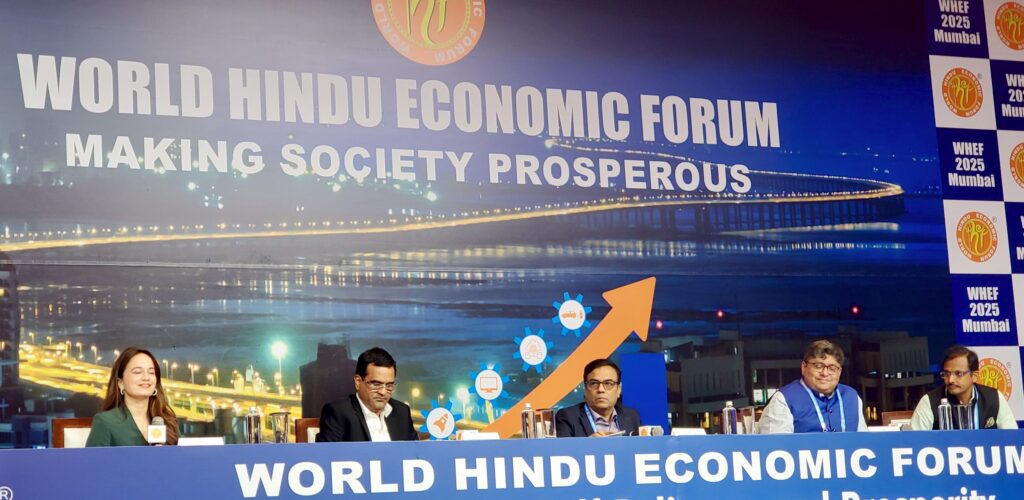
The panel discussion at the World Hindu Economic Forum (WHEF) 2025 in Mumbai brought together top Indian investors—Madhusudan Kela, Manish Kejriwal, Sandeep Tandon, and Vikas Khemani—moderated by Sonia Shenoy, to address how domestic capital can drive innovation and self-reliance (Atmanirbhar Bharat). The primary achievement highlighted was the rapid maturation of India’s financial ecosystem, where rising domestic savings and deeper private equity and public market pools are steadily reducing the country’s dependence on foreign institutional inflows. Panelists emphasized that unlocking risk capital requires shifting away from short-term speculation toward patient, high-conviction investing, backed by disciplined risk management and data-driven analytics to support disruptive, homegrown enterprises.
Despite this strong momentum, the speakers noted key roadblocks that still hold back large-scale innovation. Bridging the funding gap for Micro, Small, and Medium Enterprises (MSMEs) and early-stage deep-tech ventures remains challenging due to a traditionally conservative lending mindset and lingering regulatory hurdles. To achieve true economic self-reliance, the panel underscored the need to further institutionalize domestic risk appetite, simplify compliance frameworks, and pair institutional capital with strategic mentorship so local innovators can scale into globally competitive businesses.
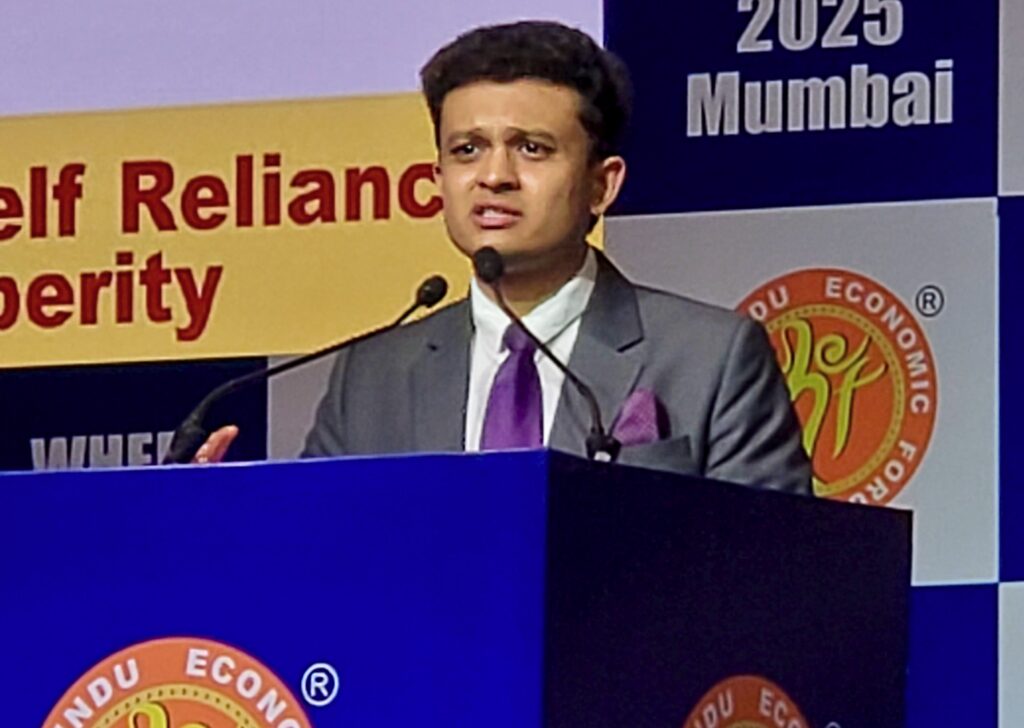
Kushaal Patel, Founder and CEO of AumAlpha, served as a member of the Organizing Committee for the World Hindu Economic Forum (WHEF) 2025, which took place on December 19–20 at the Grand Hyatt in Mumbai. Drawing on his background in digital asset advisory, algorithmic trading, and AI infrastructure, Patel helped curate dialogues linking policymakers, global capital allocators, and entrepreneurs. Following the summit, he emphasized that such platforms allow founders and investors to forge values-aligned partnerships focused on building resilient, long-term economic institutions.Operating under the theme “Innovation, Self-Reliance, and Prosperity,” the two-day conclave centered on ethical, Dharma-driven wealth creation.
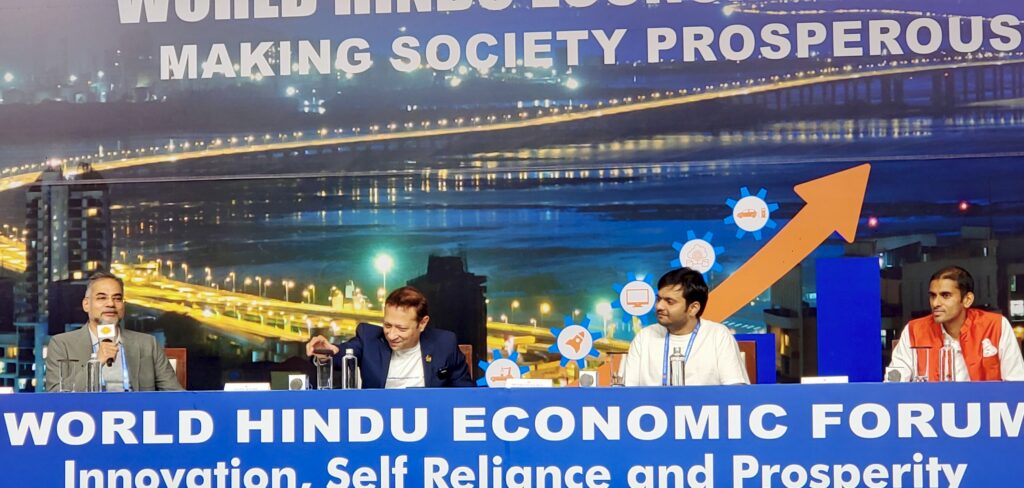
The panel “Capital Unlocked: Winning Investor Trust in 2026 and Beyond” at the World Hindu Economic Forum (WHEF) 2025 centered on shifting the startup and business ecosystem away from short-term vanity metrics toward durable, long-term value creation. Speakers including Prashant Sachan (AppsForBharat) emphasized building culturally rooted, “Bharat-first” businesses that solve real domestic needs rather than relying on imported Western models. Meanwhile, investors Rajesh Sehgal (Equanimity Investments) and Arjun Vaidya (V3 Ventures) highlighted that earning capital in 2026 requires institutional-grade governance, disciplined unit economics, customer retention, and clear paths to profitability over unchecked cash burn.
To unlock institutional capital across both consumer and capital-intensive sectors, the panelists stressed operational rigor and smart business structuring. Jimmy Mistry (Della Group) underscored the power of asset-light scalability, strategic partnerships, and experiential design differentiation to reduce upfront capital drag in industry like hospitality.
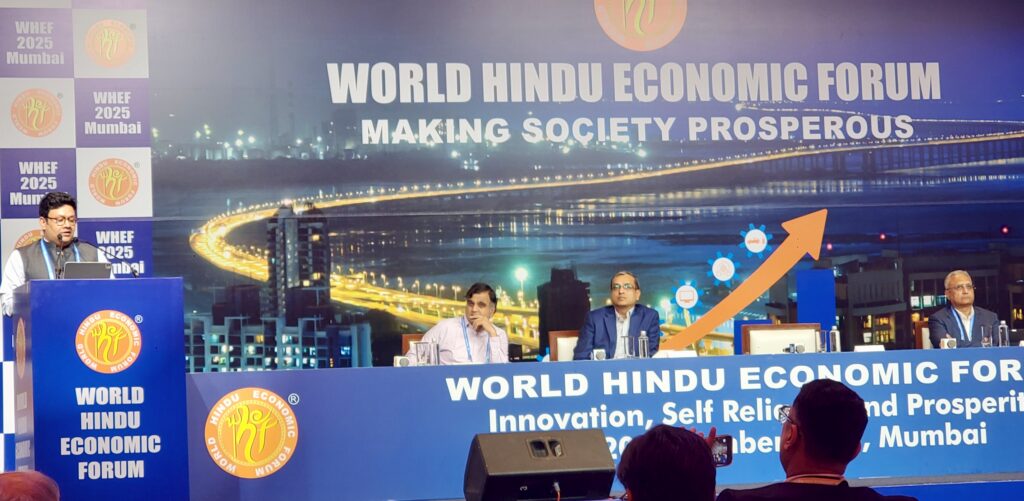
At the World Hindu Economic Forum (WHEF) 2025 in Mumbai, Plenary Session 2 examined how technological self-reliance and enterprise scaling can position Bharat as a premier global economic hub. Bringing together Dr. Nachiketa Tiwari, Paytm President & Group CFO Madhur Deora, Thyrocare CMD Rahul Guha, and Gaja Capital Executive Vice-Chairman Ranjit Jayant Shah, the discussion highlighted the synergy between academic research, digital public infrastructure, and institutional capital. The panelists emphasized that transitioning from service-led growth to owning indigenous intellectual property and deep-tech capabilities is essential for true economic sovereignty.
The session further underscored that long-term global competitiveness depends on pairing rapid digitization with disciplined financial governance and patient domestic capital. By leveraging India’s digital stack to lower transaction costs and formalize MSMEs, domestic enterprises can achieve the operational scale required to compete internationally. Ultimately, the leaders reinforced WHEF’s core vision of ethical, dharma-rooted wealth creation, advocating for strong corporate governance and global diaspora collaboration to build resilient, world-class Indian businesses.
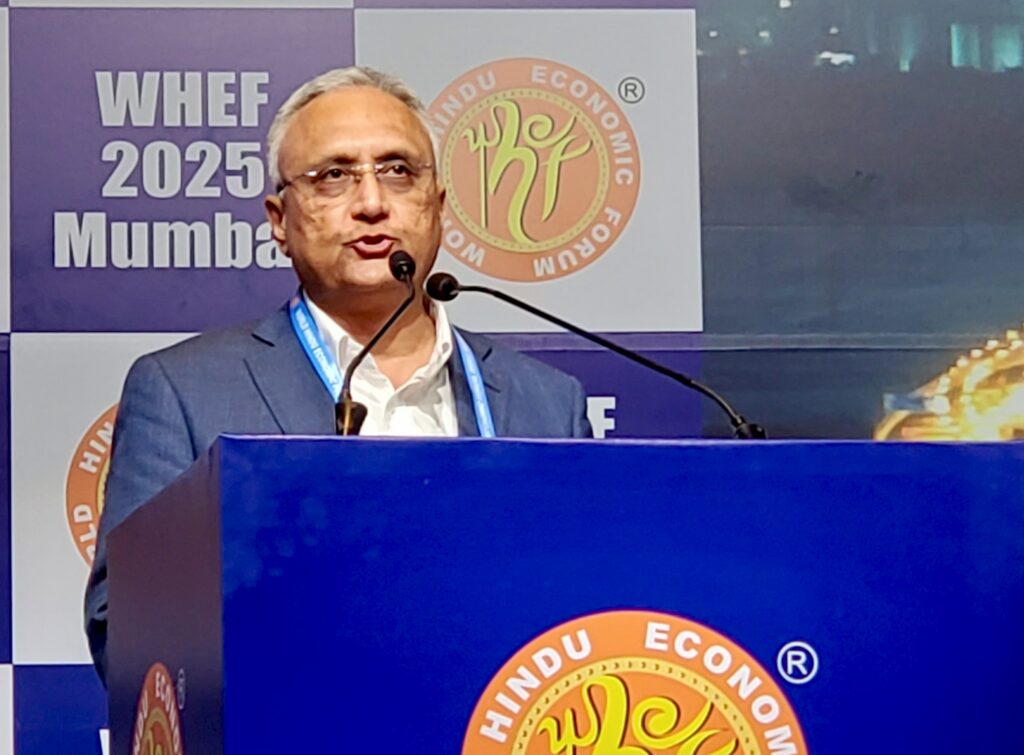
The session title—”Investing into Bharat’s Next Generation of Global Champions”—directly reflects the established mid-market private equity playbook that Shah and Gaja Capital advocate across industry forums:
Backing Domestic Scale First: Gaja Capital focuses on mid-market companies serving India’s expanding domestic consumption and enterprise needs. Building deep operational moats and profitability within India’s complex market serves as the springboard for global competitiveness.
Core Growth Sectors: The firm targets structural growth pillars essential to India’s economic transformation, specifically education, financial services, consumer goods, and enterprise software/technology.
Transitioning from Founders to Institutions: A central pillar of creating “global champions” is helping first-generation Indian entrepreneurs professionalize their leadership teams, strengthen corporate governance, and adopt scalable technology.
Capitalizing on Global Supply Chain Shifts: Mid-sized Indian enterprises in specialized manufacturing, SaaS, and financial infrastructure are uniquely positioned to capture global market share as international businesses diversify their supply chains and vendor networks.
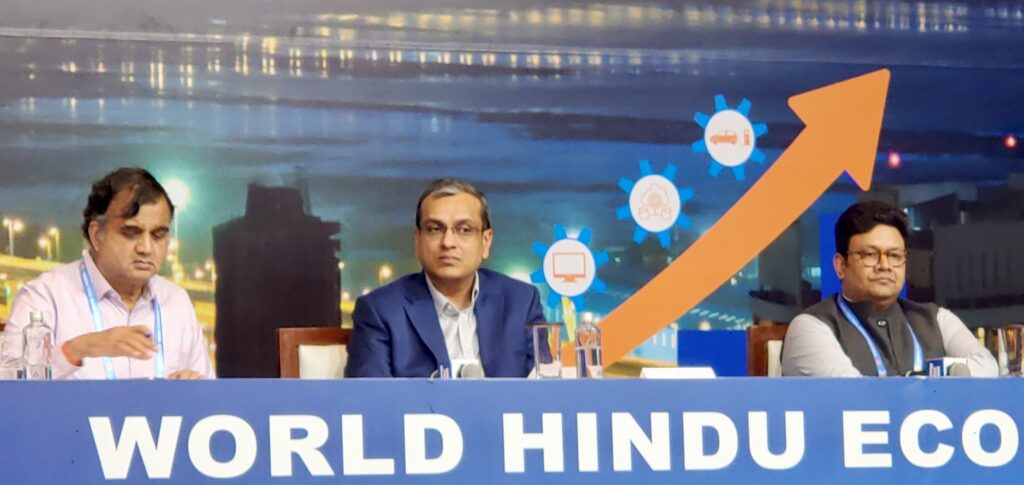
At the World Hindu Economic Forum (WHEF) 2025 in Mumbai (December 19–20, 2025), discussions on Innovation, Digitization, and Enterprise centered on transforming Bharat into a self-reliant (Atmanirbhar), globally competitive economy. Speakers emphasized that achieving this vision requires investing heavily in indigenous research and development, adopting frontier technologies like artificial intelligence, and blending modern innovation with India’s civilizational values to lead in the emerging global industrial landscape. Rather than viewing self-reliance as isolationism, the forum framed it as building resilient domestic supply chains across manufacturing, technology, and services capable of competing on the world stage.
A second major takeaway focused on empowering startups and Micro, Small, and Medium Enterprises (MSMEs) through rapid digitization and cross-border collaboration. Through dedicated enterprise tracks and initiatives like the WHEF LaunchPad, industry leaders and policymakers highlighted the importance of equipping smaller businesses with digital-first tools, capital access, and global market linkages. Ultimately, the discussions underscored ethical wealth creation—encouraging Indian enterprises to scale sustainably, capture shifting global trade opportunities, and generate shared economic prosperity.
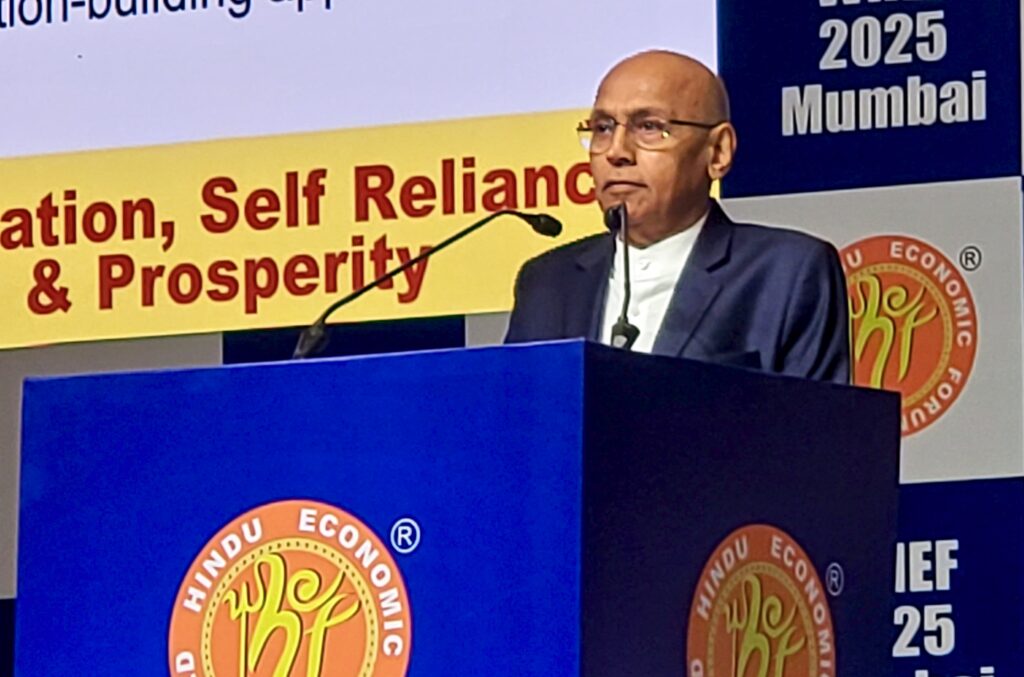
Polycab India Chairman and Managing Director Inder T. Jaisinghani addressed the World Hindu Economic Forum (WHEF) 2025 on December 20 at the Grand Hyatt in Mumbai, focusing on MSME growth, self-reliance, and values-driven enterprise. His remarks aligned with the forum’s core theme of “Innovation, Self-Reliance, and Prosperity,” emphasizing how smaller businesses and domestic manufacturers can scale operations amidst the Fifth Industrial Revolution. Drawing on his experience growing Polycab from a small family shop into a major manufacturer, he emphasized disciplined execution, automation, and long-term vision for emerging businesses.
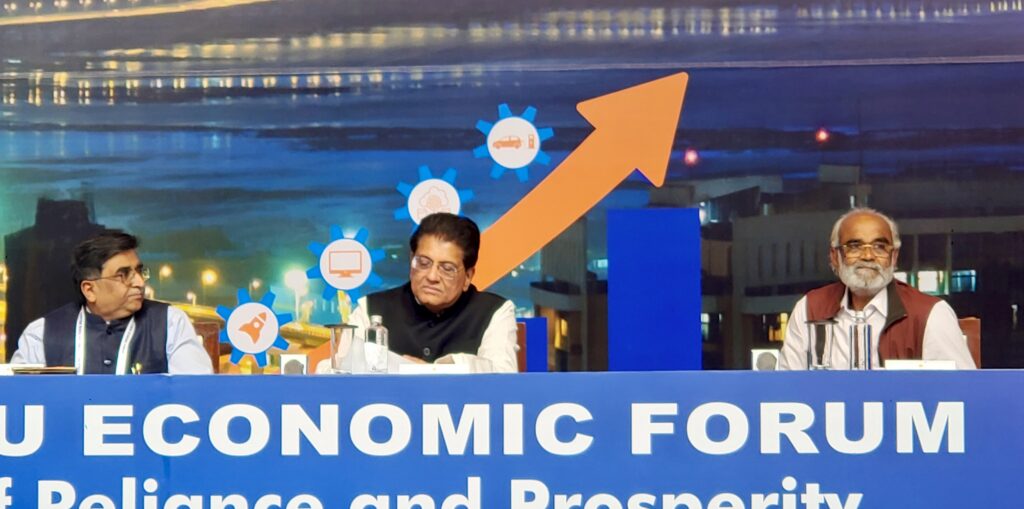
Plenary Session 1 on Governance, Enterprise & Innovation for Viksit Bharat at the World Hindu Economic Forum (WHEF) 2025 emphasized uniting policy reform, indigenous manufacturing, and ethical leadership to power India’s journey toward becoming a developed economy. Held at the Grand Hyatt in Mumbai on December 19–20, 2025, the discussion featured Union Minister Shri Piyush Goyal, who highlighted how updated labor codes, digital innovation, and rising exports have positioned India as a trusted global supply-chain partner under the guiding philosophy of Vasudhaiva Kutumbakam. Complementing this policy outlook, PTC Industries CMD Shri Sachin Agarwal underscored the need for deep-tech, high-precision manufacturing and long-term capital commitment to achieve genuine industrial self-reliance (Atmanirbharta).
The session also highlighted the vital role of grassroots entrepreneurship, corporate integrity, and value-driven scaling in building an inclusive economy. Padma Shri awardee Shri Savjibhai Dholakia shared insights on building resilient businesses anchored in trust, ethics, and wealth-sharing with employees and communities. Similarly, WHEF 2025 Vice Chairman Shri Sanjay Khemani noted that Bharat’s economic momentum is increasingly driven by first-generation entrepreneurs and MSMEs, stressing that financial discipline and strong governance are key to connecting local enterprises with global markets.
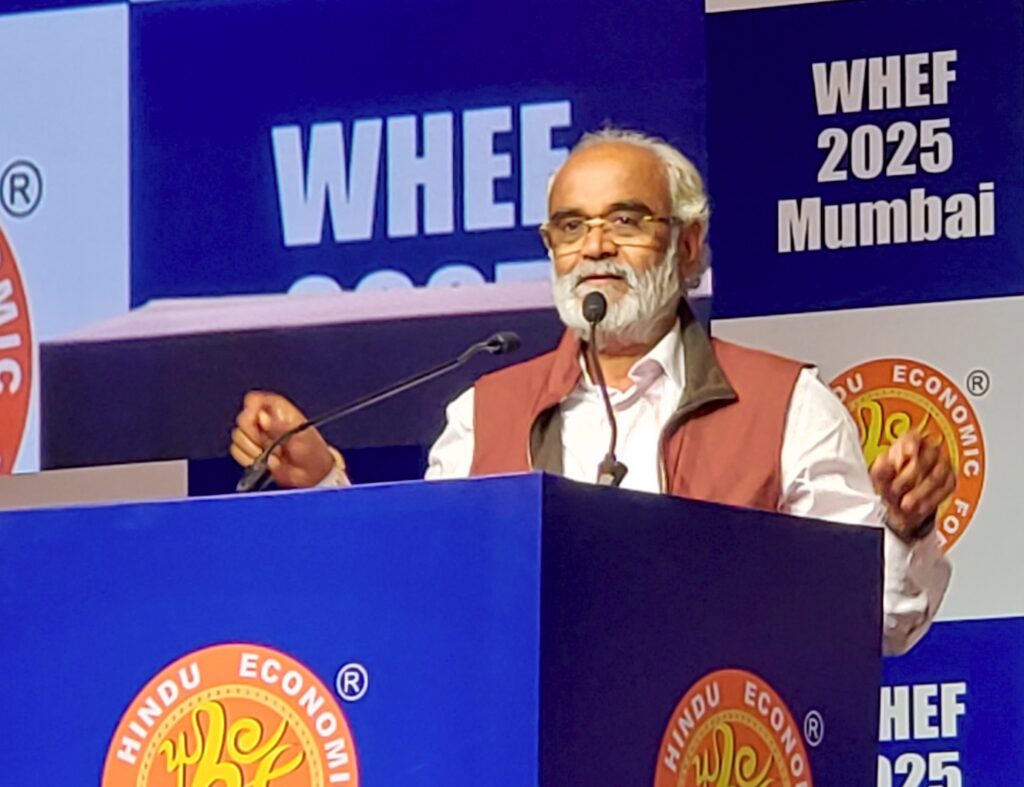
At the World Hindu Economic Forum (WHEF) 2025, held on December 19–20 at the Grand Hyatt Mumbai, Padma Shri Savjibhai Dholakia, Founder and Chairman of Hari Krishna Exports (HK Group), addressed entrepreneurs under the theme “Built from values. Scaled with belief.” Drawing from his journey of growing a small diamond business in Gujarat into a global enterprise employing over 9,000 people, he emphasized self-reliance (Svanirbharata) and inner resilience over formal credentials. He urged business leaders to treat trust as their strongest currency, noting that transparent relationships with workers, partners, and global clients are what truly enable a company to scale sustainably across borders.
Aligning closely with the forum’s broader mission of “Innovation, Self-Reliance, and Prosperity,” Dholakia underscored that ethical conduct and social responsibility must be embedded into daily operations rather than treated as separate corporate duties. He spoke on people-first leadership—viewing employees as extended family—and highlighted how combining traditional Indian values with modern execution creates businesses built to endure across generations. His insights stood alongside addresses from prominent leaders at the Mumbai summit, including Union Ministers Nitin Gadkari and Piyush Goyal, Sajjan Jindal, and Vijay Shekhar Sharma.