
AI IN FINANCIAL INTELLIGENCE
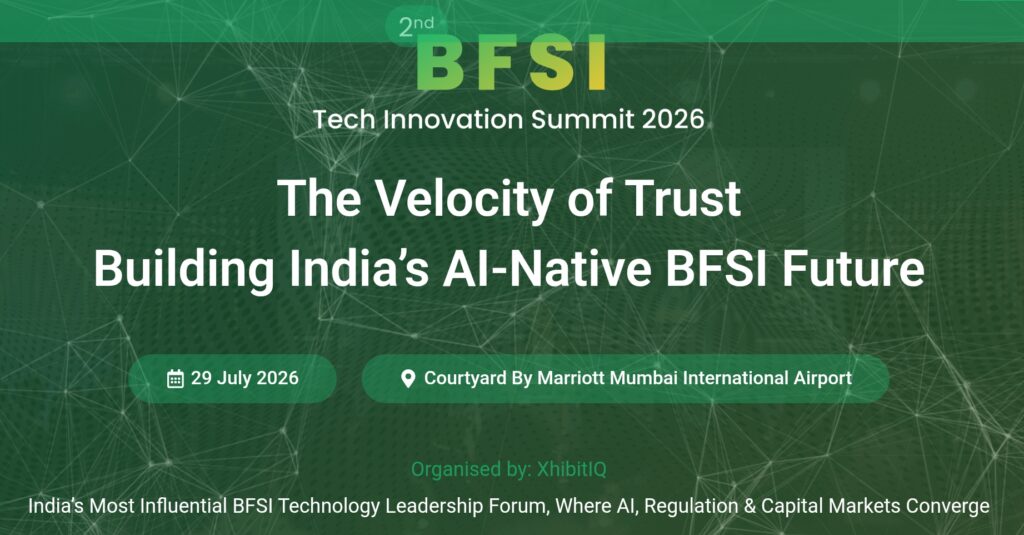
India’s financial moment is no longer on the horizon — it’s here. The 2nd BFSI Tech Innovation Summit lands at a turning point: UPI isn’t just moving money, it’s moving at machine speed. AI isn’t just helping with credit — it’s making the call. Aadhaar’s data is being used to predict, not just verify. And fraud? It’s no longer just stolen identities — it’s synthetic ones, built from scratch.
At the same time, regulators aren’t waiting — they’re building systems for real-time compliance, continuous reporting, and AI that can explain itself. So the question isn’t just about innovation anymore. It’s about control. Trust. And who gets to shape what comes next.In Mumbai — where finance and tech meet — this summit brings together the people who are building it, running it, and watching over it. Not to talk about the future. But to decide what happens now.
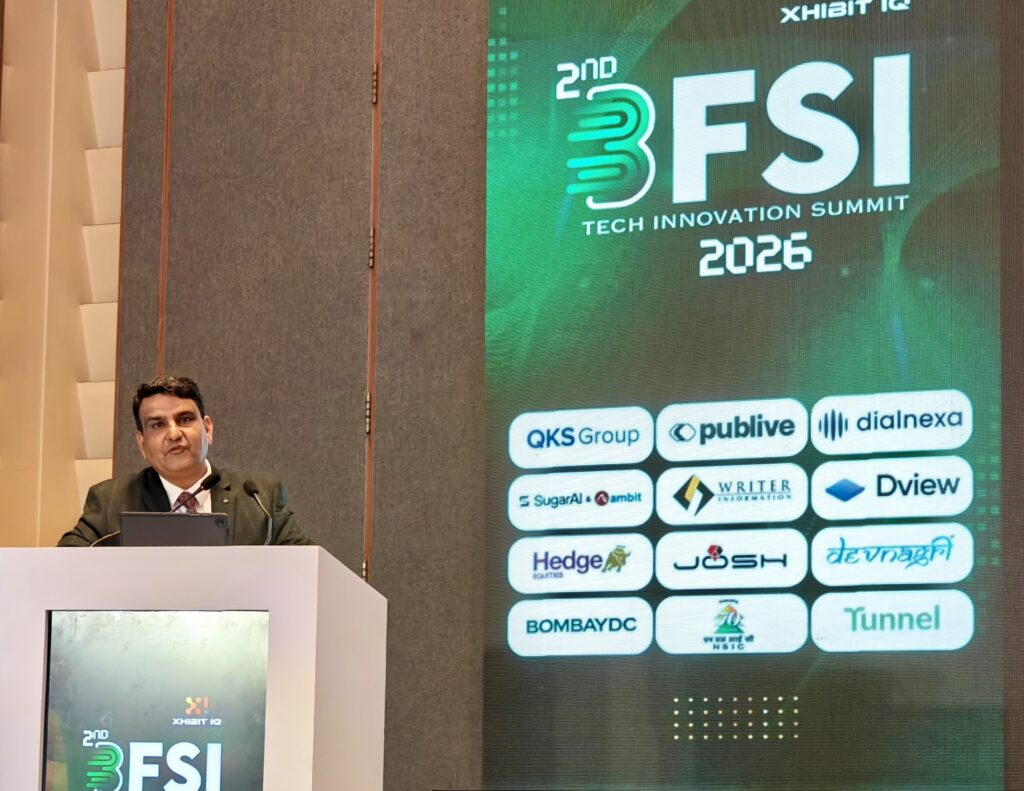
The opening keynote at the BFSI Tech Innovation Summit 2026, delivered by Captain Lovekesh Thakur (Deputy Director General of the Unique Identification Authority of India – UIDAI), centered on establishing “trust as the new currency” in the modern digital age. The session highlighted how India’s mature Digital Public Infrastructure (DPI)—specifically the convergence of Aadhaar 2.0, Unified Payments Interface (UPI), and agentic Artificial Intelligence—is orchestrating a massive global paradigm shift in financial inclusion, real-time risk mitigation, and automated credit delivery.
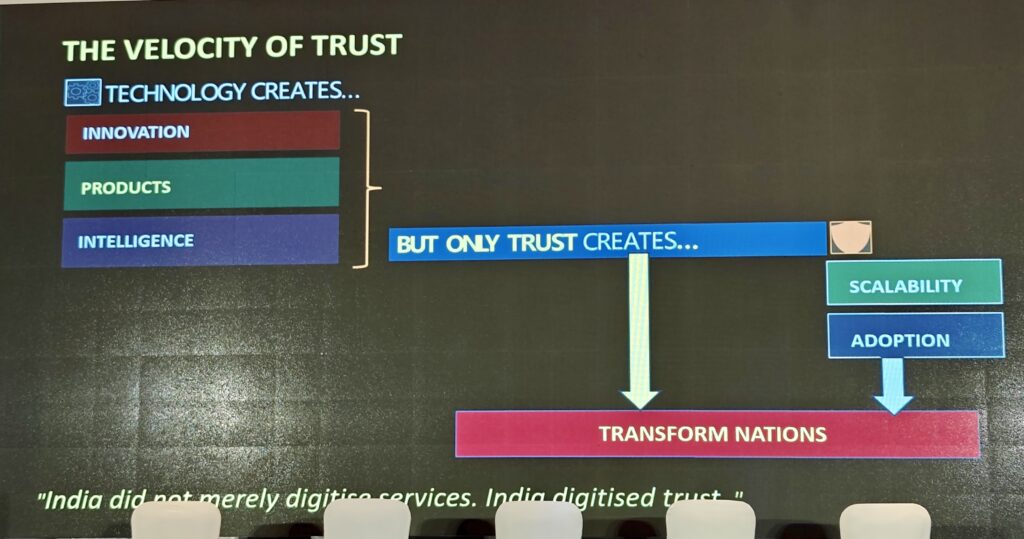
Mr. Thakur highlighted a major paradigm shift: turning digital identity into predictive financial intelligence. By upgrading the foundational India Stack into Aadhaar 2.0, the infrastructure moves past static verification into a privacy-preserving layer that powers agentic AI. These advanced AI agents are now actively driving financial inclusion by instantly approving loans, dynamically calculating alternative credit scores, and proactively detecting fraud and managing wealth at scale.
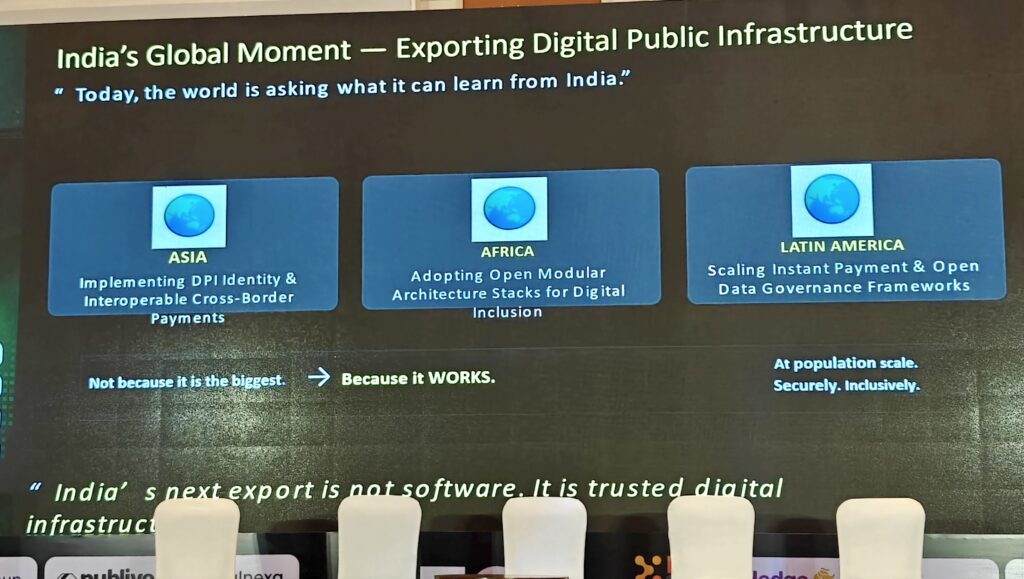
Simultaneously, the summit celebrated the explosive global momentum of UPI as it scales into a trusted, borderless financial ecosystem. By exporting the real-time payment architecture worldwide, the India Stack has evolved into a global benchmark for financial technology and inclusive governance. However, the keynote stressed that this rapid expansion must balance cutting-edge innovation with strict cybersecurity safeguards, data privacy, and algorithmic accountability to protect users against emerging synthetic identity threats and deepfakes.
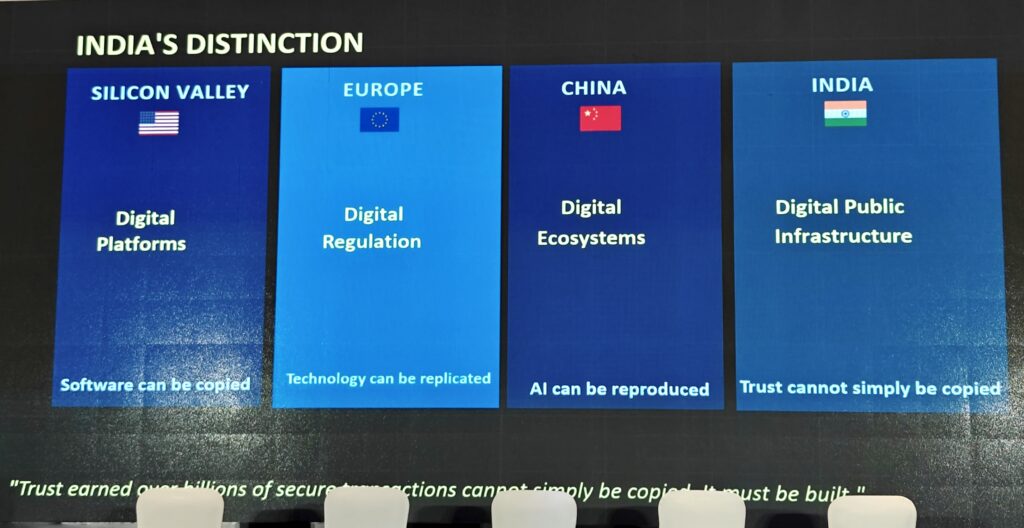
UPI has transformed from a domestic payment tool into a powerful global brand underpinned by robust digital identity frameworks. The summit emphasized the ongoing international expansion of the UPI architecture, positioning the India Stack as a global blueprint for cross-border real-time payments and inclusive governance.
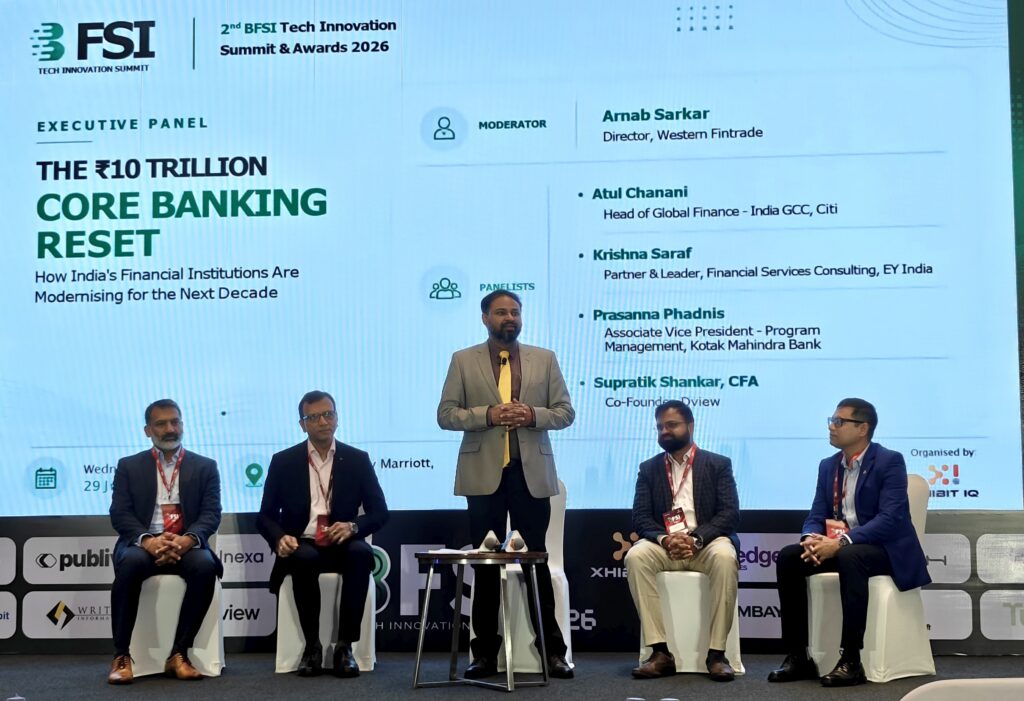
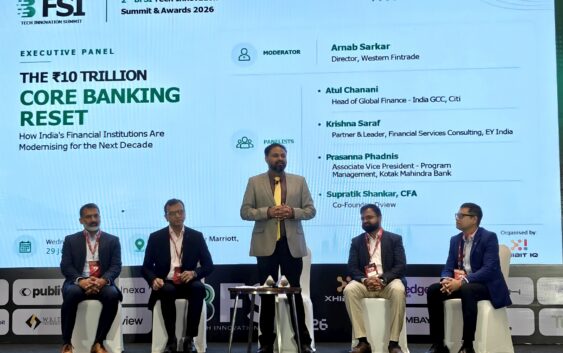
The ₹10 Trillion Core Banking Reset panel at the BFSI Tech Innovation Summit 2026 highlighted India’s massive migration from monolithic legacy platforms to modular, cloud-native architectures. Driven by exponential UPI volumes and embedded finance demands, financial giants like Citi and Kotak Mahindra Bank, alongside consultants from EY and innovators from Dview, emphasized that core systems must now be built “API-first.” This shift allows banks to seamlessly integrate with fintech ecosystems and scale operations dynamically while strictly adhering to the Reserve Bank of India’s (RBI) stringent data sovereignty and compliance mandates.
A major focal point of the modernization strategy is the deployment of Agentic AI over clean, real-time data pipelines. Moving beyond basic automation, institutions are adopting autonomous AI systems capable of executing complex treasury, compliance, and collection tasks. However, panel experts stressed that implementing these autonomous workflows requires absolute regulatory accountability. To satisfy compliance requirements, financial institutions are implementing rigorous, human-override-capable decision logs to ensure all AI-driven credit scoring and risk evaluations remain fully transparent and explainable.
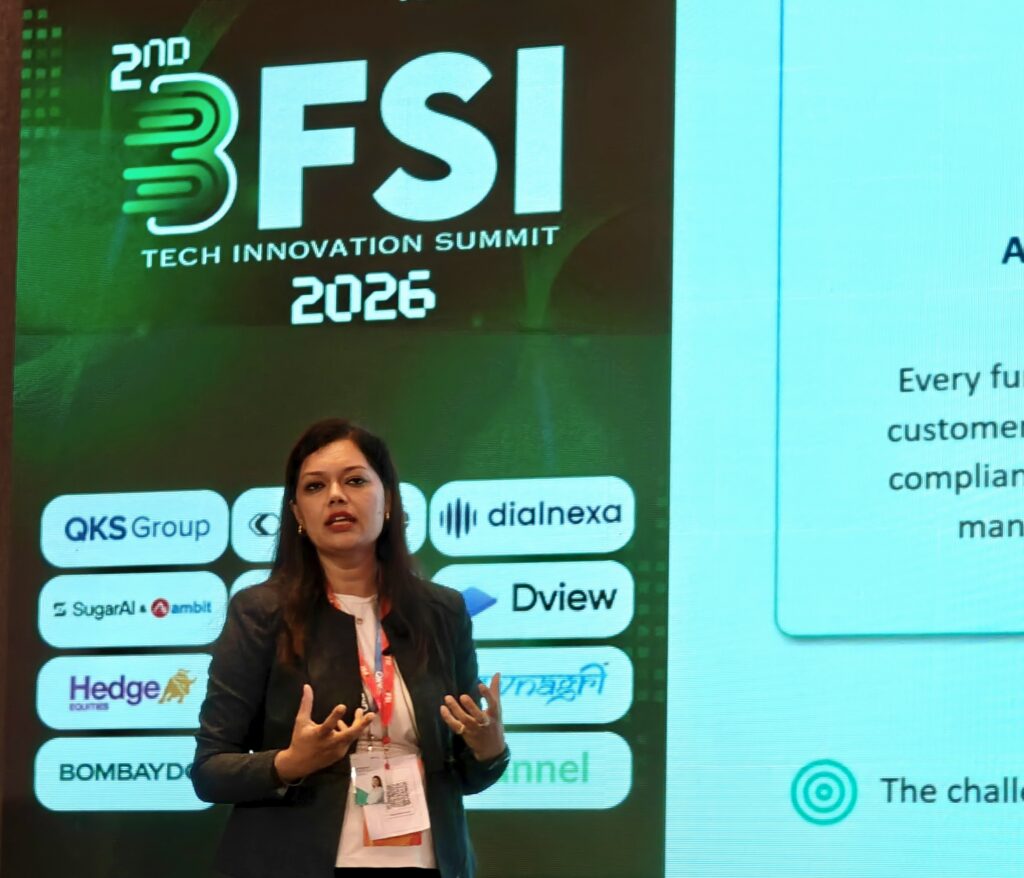
The AI Transformation Gap presentation, delivered by QKS Group’s Divya Baranawal and Devendra Pagnis at the BFSI Tech Innovation Summit 2026, focused on why banks struggle to turn AI pilots into measurable business outcomes. The session highlighted the ROI shortfall, explaining that while financial institutions are aggressively adopting AI, a disconnect remains between technology deployment and actual financial value. Leaders were urged to move away from isolated experimentation and instead focus on bridging the execution gaps that exist between high-level corporate strategies and front-line operational workflows.
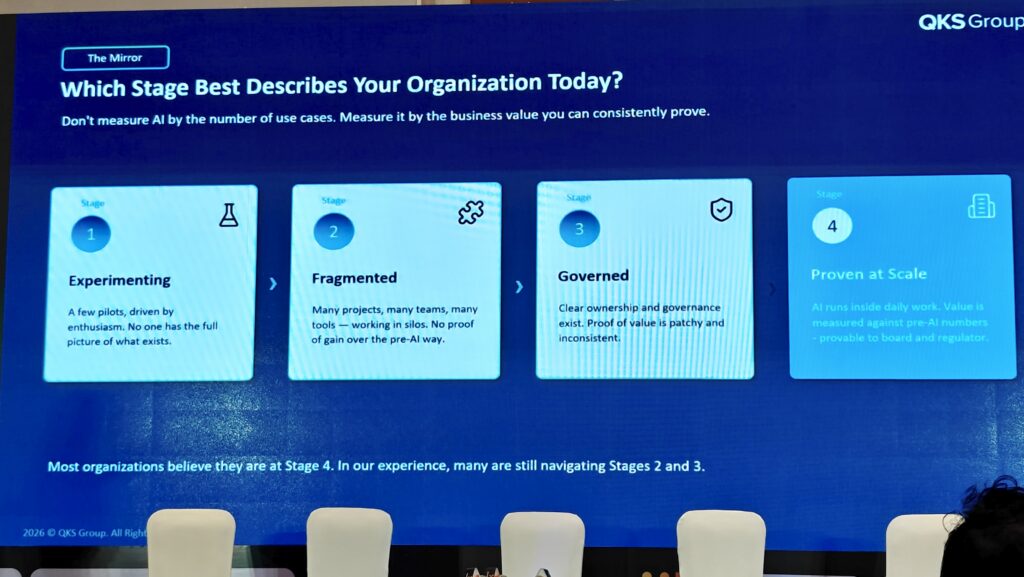
To successfully scale across complex banking infrastructures, the presentation outlined structural frameworks designed to build AI-ready financial institutions. A primary requirement is the modernization of organizational governance, risk compliance frameworks, and underlying data architectures. The session emphasized that true enterprise value is only realized when AI is deeply integrated into core legacy systems, allowing it to interact smoothly with real-time data sources and existing business rules.
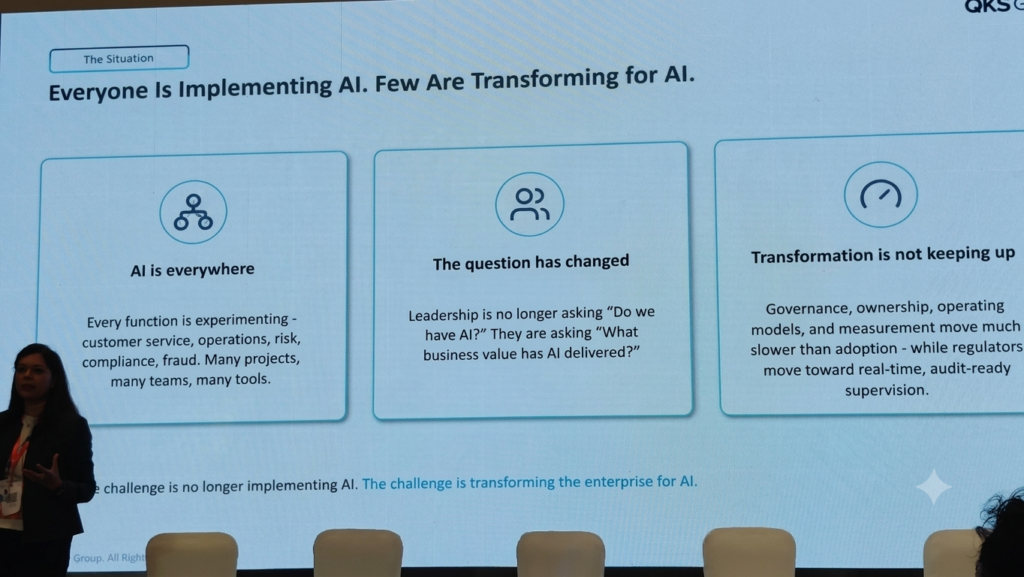
Finally, the session provided clear guardrails for the deployment of Agentic AI—such as autonomous debt collection and compliance tools. The speakers stressed the critical need to define clear boundaries, specifying exactly when an AI agent can act independently versus where human approval and explainable decision logs are mandatory. By shifting corporate metrics from the volume of AI features deployed to hard outcomes like customer retention and risk mitigation, financial institutions can successfully bridge the transformation gap.
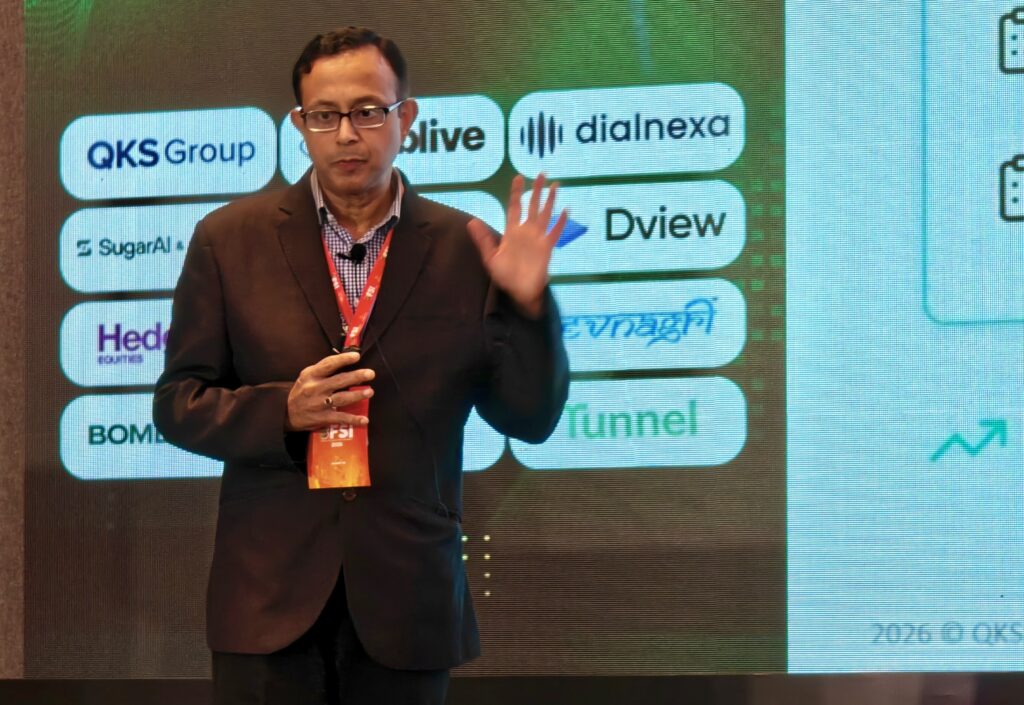
Devendra Pagnis, Associate Vice President and Principal Advisor at QKS Group, delivered a presentation titled “The AI Transformation Gap – From AI Experimentation to Enterprise Transformation.” The session addressed a critical challenge facing the banking, financial services, and insurance sectors: the transition from isolated AI pilots to scalable, value-driven operations.
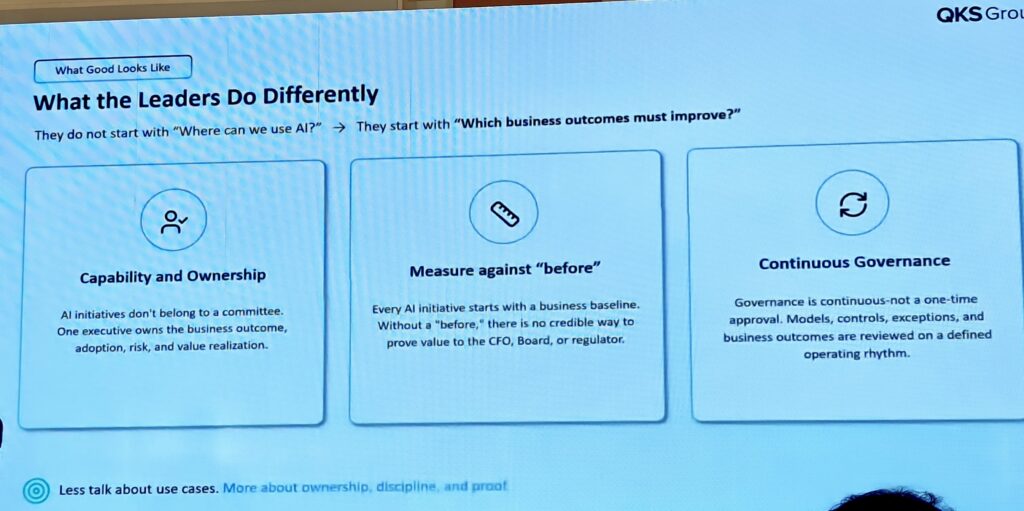
As financial institutions dramatically ramp up capital expenditure on artificial intelligence, a growing disconnect has emerged between technical deployment and tangible return on investment. Pagnis emphasized that the ongoing industry debate is no longer about whether to adopt AI, but rather how to extract measurable business outcomes from these deep technological investments.
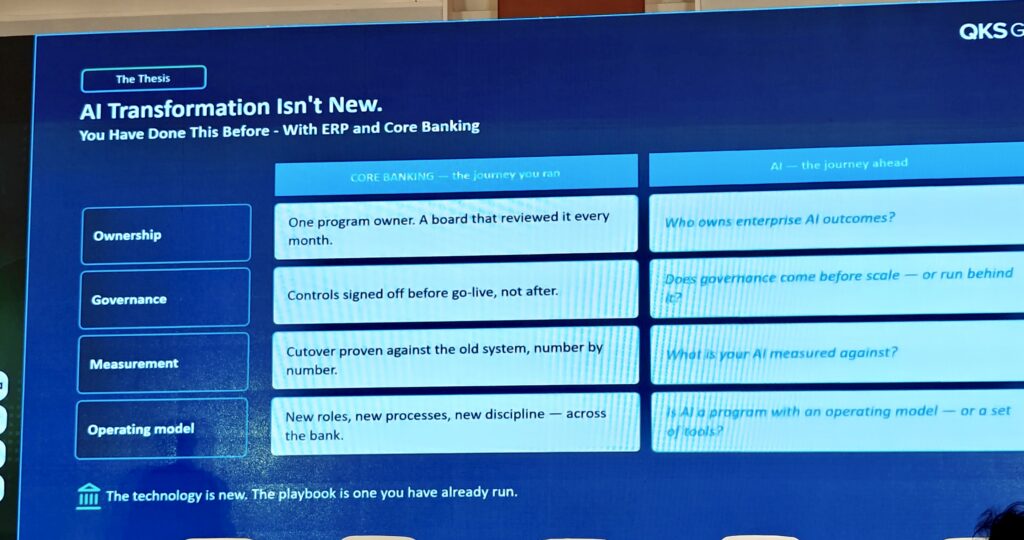
To overcome this “transformation gap,” the session highlighted the necessity of building comprehensive frameworks that align AI strategy directly with institutional execution. Pagnis underscored that scaling AI reliably requires a disciplined operating model alongside a unified control architecture balancing AI governance, AI security, and AI compliance. In this model, governance sets the direction and guardrails, security protects data and infrastructure, and compliance provides verifiable proof of regulatory alignment. By shifting from scattered, minor productivity tools to enterprise-wide standardized processes and agentic orchestration, financial institutions can avoid the trap of continuous experimentation and unlock sustainable, long-term enterprise value.
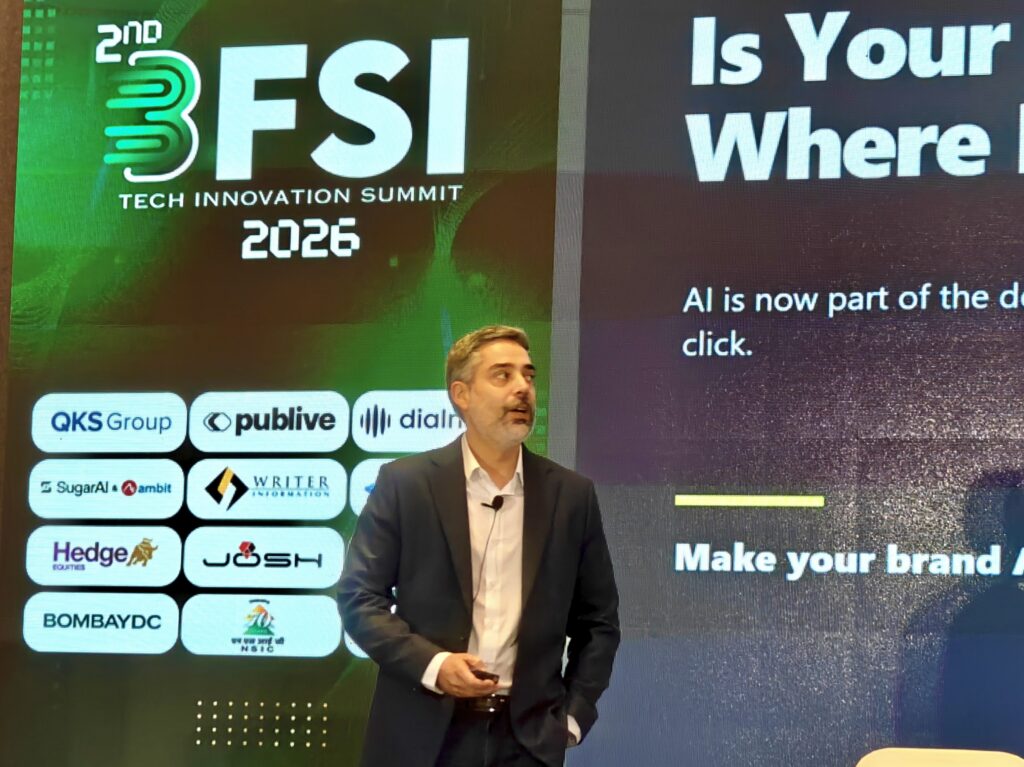
At the 2nd BFSI Tech Innovation Summit 2026 in Mumbai, Manavdeep Singh, Founder & CEO of Publive, delivered a definitive keynote on shifting from traditional SEO to AI Search Optimisation (GEO/AEO). He highlighted a massive shift in consumer behaviour: buyers are increasingly using LLMs like ChatGPT, Gemini, and Perplexity rather than standard search engines to research financial products.
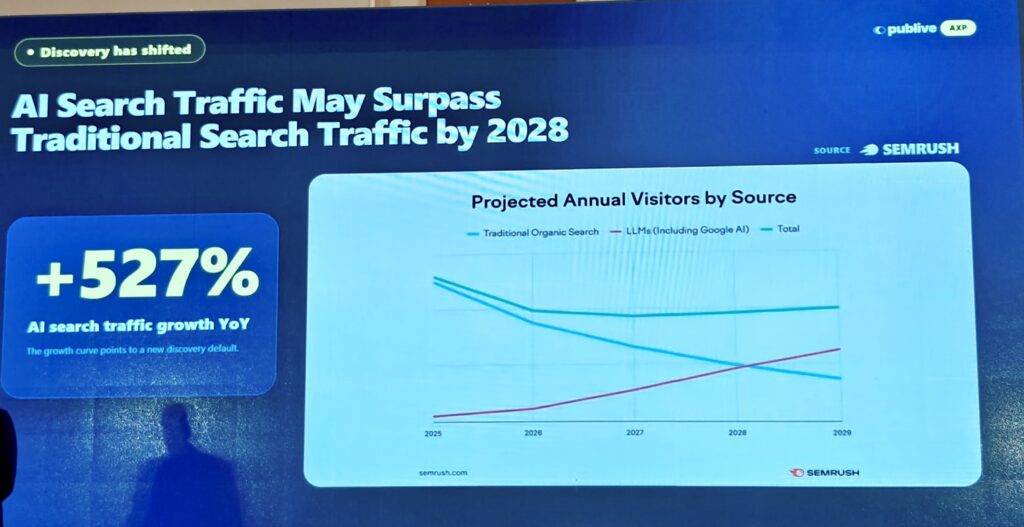
If a financial brand does not show up within these AI-generated answers, it becomes digitally invisible at the exact moment a consumer makes a decision. The presentation established that winning in this new era requires moving away from chasing website clicks and keyword rankings, and focusing instead on how to make a brand highly discoverable, accurately cited, and inherently trusted by AI crawlers.
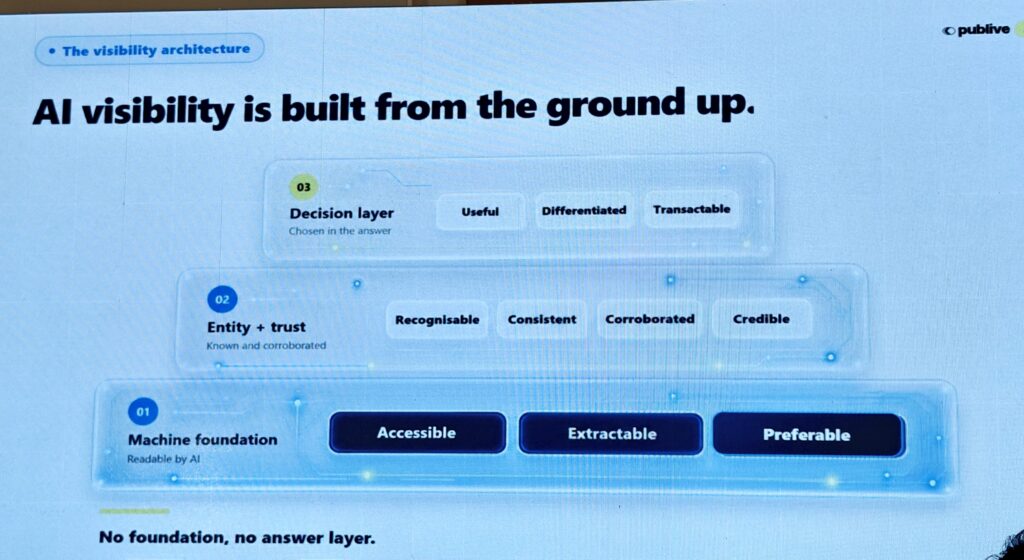
To achieve this visibility, financial institutions must optimise their content architecture and structured data frameworks so AI engines can seamlessly interpret product data, such as interest rates and insurance details. Because AI engines evaluate a brand’s credibility across the entire digital ecosystem, companies must build strong Entity Authority through consistent, high-quality mentions across independent news, expert reviews, and community threads to secure citations over large industry aggregators.
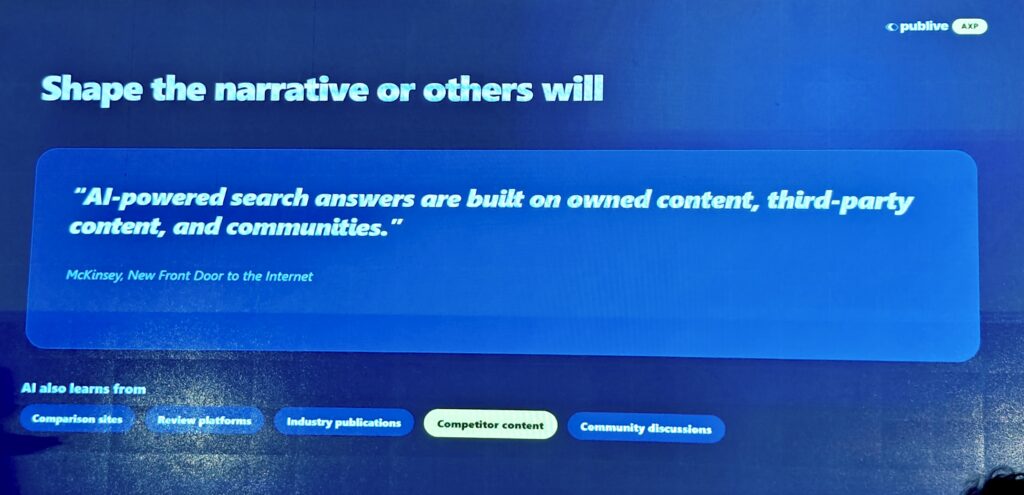
Furthermore, in a highly regulated sector governed by the RBI and SEBI, maintaining strict precision, real-time data freshness, and strong E-E-A-T credentials is vital to prevent AI models from hallucinating or misrepresenting critical financial facts.

The “WINNING WITH AI” CXO panel at the BFSI Tech Innovation Summit 2026 highlighted India’s shift from basic automation to building truly AI-native financial enterprises. Moderated by Manoj Chawla (CRO, SBM Bank) with insights from Abhishek Singh (DBS India) and Ankur Tandon (BOMBAYDC), the discussion emphasized that true innovation requires a “zero replacement” architectural approach. Instead of completely ripping out legacy systems, institutions are weaving AI seamlessly into existing core tech stacks, treating risk compliance as an active, continuous feature rather than a final check.
A major focus was the deployment of Agentic AI to move past simple productivity gains and actively drive new revenue streams. The leaders outlined a future where multi-step autonomous agents handle complex underwriting and customer journeys, while maintaining a strict structural divide between the deterministic core ledgers and the probabilistic AI orchestration layers. This ensures Indian financial enterprises scale their operations rapidly through continuous AI experimentation without compromising regulatory trust or system integrity.